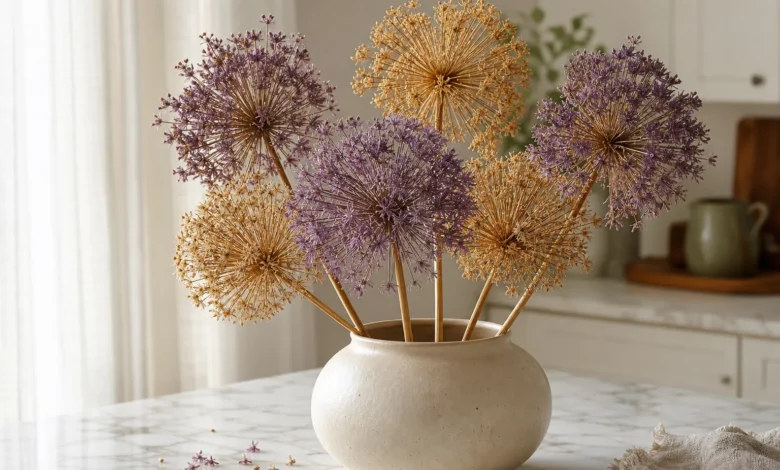
Three to six weeks upside down on a string – it doesn’t take much more to turn a spent allium flower into a permanent decoration. Drying ornamental garlic can almost be done on its own because the spherical seed heads are naturally stable and retain their shape. The reward: star balls that stand on the windowsill or in the floor vase all winter without a drop of water. The only thing that matters is the time at which the scissors are used – this determines whether the heads remain purple or ripen to golden brown.
When you should cut ornamental onions
The time of cutting determines the color – and therefore the entire look. Cut the balls at full flower height, while the tiny individual flowers still shine rich purple, preserving exactly this tone. When dried it fades a bit, but remains clearly purple.
If, on the other hand, you let the umbels ripen on the plant, you will get a completely different character: star-shaped, papery seed heads in a warm golden brown, as they will remain in the bed until autumn anyway. Both looks have their charm – you make the choice with scissors. In any case, the right moment is important: Harvest on a dry day, leave the stem as long as possible and never cut while there is still morning dew on the flowers. Moisture is the biggest enemy when drying.

Drying ornamental garlic in 5 steps
This is how the fresh cut becomes durable decoration. You don’t need a lot of equipment:
- a sharp pair of secateurs
- a few rubber bands
- String, wire or an old clothesline
- a dark, airy room (attic, closet, garage)
- Prepare the space: Find a cool, airy place without direct light and stretch a cord or clothesline.
- Cutting at midday: Harvest on a dry day around midday, when there is no dew on the flowers, and leave the stems as long as possible.
- Bundle: Loosely hold three to five stems together and secure them with a rubber band – it will tighten itself as the stems shrink.
- Hang upside down: Hang the bundles heads down on the line, with enough space between them.
- Wait: After three to six weeks, the heads are ready – they feel papery and rustle quietly when you move them.
Two little things make the difference. A paper bag placed over the top will catch any seeds that fall out in case you want to sow them later. And if you want to permanently fix particularly sensitive seed heads, apply a thin layer of clear varnish or hairspray over them from two steps away. The principle is familiar from preserving natural materials with leaves and twigs: the drier the air, the cleaner the result.

Attention, pet owners: Allium is a member of the allium family and contains the same sulfur-containing compounds as onions and garlic. The plant is poisonous to cats and dogs – both fresh and dried. Therefore, choose a drying area and later decoration location so that your animals cannot reach them.
These allium varieties dry best
Not every variety retains its good shape when dried. These four make it particularly reliable:
- Allium cristophii (Star of Persia): loose star balls up to 25 cm in diameter that have a metallic shimmer when dried – the classic for the vase.
- Allium schubertii: looks like frozen fireworks because the individual flowers are on stems of different lengths. Needs a lot of space, but attracts everyone’s attention.
- Allium giganteum: the most impressive solitaire with stems up to 150 cm, plus dense, spherical heads.
- ‘Purple Sensation’: compact and particularly colorfast – the rich purple lasts longer when dry than many other varieties.

The three most common mistakes when drying
Most of the time a dry attempt fails not because of chance, but because of one of three points. Anyone who knows them can easily avoid them.
Professional tips against the three most common mistakes
- Cut in time: If you wait too long, the seeds will fall out the first time you tap. It is better to harvest a few days earlier while the heads are still firmly in place.
- Store dry: Damp cellar air causes the cones to mold. A room with less than 60 percent humidity and some draft is ideal.
- Shade instead of sun: Direct sunlight bleaches the violet in particular within a few weeks – choose a bright but not sunny place for drying and later as decoration.
Six ideas for dried allium decorations
Dried allium heads are a valuable raw material for durable natural decorations because they do not require water and keep their shape for months. Six ideas that can be implemented quickly:
Tall floor vase in the living room: Three to five long stems in a simple floor vase, always in an odd number – that looks calmer than a densely stuffed bouquet.
Old zinc watering can: A used watering can, half filled with sand or floral foam, gives the stems a secure hold in the garden or on the terrace and develops a charming gray patina over time.

Welcome at the entrance: As a vase, simple wreath or in a lantern, Allium welcomes guests at the door – the place should only be protected from the wind, otherwise the first autumn storm will ruffle heads.
Garland over the seat: Thread the dried heads onto a string about a hand’s width apart and stretch them under a pergola or awning. Just a few balls are enough for an airy eye-catcher.

What’s Hot
DIY decoration
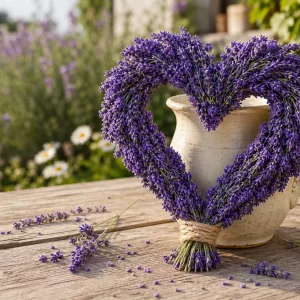
A lavender heart stays fresh for up to two weeks
Solitaire in a candle holder: A single stem in a narrow metal stand or a heavy candle holder is sufficient as a graphic decorative object.
Under glass: A glass dome, a shallow bowl or a large preserving jar frames the spherical geometry and at the same time keeps the dust away – practical for more sensitive varieties.
Combine allium in the dry bouquet
Allium looks graphic alone, but really comes to life in a bouquet. A simple rule helps when mixing: a distinctive shape, a soft fullness and an airy element. The allium balls themselves provide the distinctive shape. Pampas grass or oats provide the soft filling; The airy element is provided by gypsophila, poppy seed capsules or a dried hydrangea.
If you are unsure about putting it together, follow tried and tested recipes such as combining hydrangeas and grasses and transfer them to the dry version. Everything goes into a simple vase without water – so the bouquet stays fresh for a whole season.

Frequently asked questions
Is dried allium dangerous for cats or dogs?
Yes. Like all allium plants, allium contains sulfur-containing compounds that remain intact even when dried and pulverized. In cats and dogs they can damage red blood cells; Typical signs include vomiting, diarrhea, fatigue, an increased heart rate and, in severe cases, anemia. If your pet nibbles on it, call the vet’s office. The decoration is harmless to humans.
How do you remove dust from dried allium heads without damaging them?
The gentlest way is to use a soft brush or a hairdryer on the cold, lowest setting – from a distance so that the seeds don’t fly away. You should never wipe the heads with a damp cloth because water softens the papery structure and leaves mold stains.
Can you sow the seeds yourself from dried allium heads?
Yes. Simply shake the ripe, dark seeds out of the head over a bowl. It is sown directly into the bed in autumn, because Allium is a cold germinator and needs the winter cold as a starting signal. A little patience is required: it usually takes two to three years until the first flowering occurs.