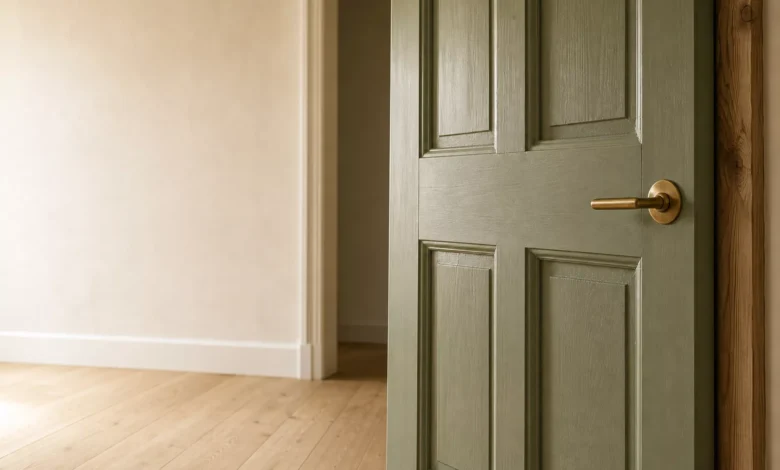

A new interior door can easily cost 150 euros or more – although the old one is often perfectly healthy and just needs a new look. Beautifying old doors can be done in a single weekend, with paint, foil or a few meters of adhesive tape. Before you get started, four questions determine the right method: What material is the door made of? Do you live in rent or own property? Does it really need to be sanded? And how permanent should the result be? This order saves you from making bad purchases and hassle.
In short
- Check material – Real wood accepts paint and glaze, laminate hardly accepts it; foil is the better choice there.
- Clarify rental status – Owners can design freely, tenants need reversible solutions or an agreement with the landlord.
- Test without loops – Chalk paint or an adhesive primer will adhere to intact, smooth surfaces, even if not sanded.
- Choose method – Coating for permanent, foil and washi tape for quick, residue-free transformations.
The first look: wood or laminate?
Grab the door and look at the edge. You can recognize a real wooden door or a veneered door by the continuous grain and the warm, slightly absorbent surface. These doors can be painted, varnished or varnished – the classic.
Laminate and coated tubular chip doors are different. Their smooth plastic surface repels normal paint; The paint cracks after a short time or can be removed with a fingernail. Painting is rarely worth it here. A self-adhesive furniture film, which is available in countless colors and wood decors, works much better. If you want to thoroughly clean the surface beforehand, you will find help in our guide on how to properly clean yellowed doors – a grease-free surface is half the battle for any coating.
Tenant or owner? What is legally allowed
You can do whatever you like in your own home. Painting, wrapping, installing new handles – no problem.
Things are different when it comes to renting. Doors are part of the apartment and when you move out you usually have to return them in their original condition. A permanent coat of petrol or anthracite can later become a requirement to paint everything white again. There are two ways around this: Talk to the landlord in advance and get permission in writing – many people agree with old, already worn doors. Or you can use reversible methods. Foil, washi tape and paper decorations can be removed without leaving any residue, making them a more relaxed solution for any tenancy.

Painting without sanding: When does it work?
Sanding is the least favorite step in painting doors — dusty, loud, tedious. The good news: It’s often possible without it. The trick is to replace the mechanical hold with chemical.
Chalk paint usually sticks to smooth, clean surfaces without any primer. It is matte, covers well and forgives unevenness. One point is important: Chalk paint must be sealed after drying – with clear varnish or a suitable wax, otherwise it will quickly rub off on a heavily used door. The second option is an adhesive base or primer. It acts like a glue between the old paint and the new paint and makes sanding unnecessary.
But there is a limit. If the old paint bubbles, peels off or the surface is cracked, no adhesive primer will help. Then the loose spots have to be removed, otherwise the new paint will flake off along with the old one. The honesty test: Stick a piece of painter’s tape firmly on and pull it off quickly. If paint sticks to it, sanding is mandatory.
The classic method: repaint step by step
If you want it to last and be flawless, there is no way around classic paintwork. How to proceed:
- Display and prepare: Lift the door off its hinges and lay it flat on two trestles. The paint doesn’t run when lying flat and you can reach every edge. Unscrew fittings and handle.
- Mend: Fill scratches and holes with a little wood filler, let dry and rub smooth.
- Sanding and degreasing: Lightly roughen the entire surface with 240-grit sandpaper, corners by hand. Then wipe with rubbing alcohol to remove grease and old residue.
- Prime and paint: First apply a white base coat, then the desired color. Preparing corners and profiles with a brush, large areas quickly with a foam roller – this creates the finest surface.
- Clean edges: Tape cassettes and glazing beads with high-quality painter’s tape. When it comes to crepe, quality is worth it; cheap ribbon allows color to creep through.
Two thin coats of paint always look better than one thick coat. Wait for the can to dry between passes. The same principle also applies to furniture – the professional tricks for painting furniture can be transferred almost exactly to doors.

Quick solutions without any paint: foil, adhesive tape and washi tape
Don’t have a weekend and don’t feel like spending paint cans? Then adhesive materials will transform your door in an hour.
Furniture foil They are available in plain colors, with a wood look or with a pattern, and many providers even print them as desired. A professional trick for large areas: spray the door with glass cleaner or a mixture of water and detergent beforehand. The film can be moved on the wet film and smoothed out without bubbles, only then does it dry firmly. To remove it later, simply heat it with a hairdryer – it comes off without leaving any residue. If you like the principle, you will find other techniques in our guide to wrapping furniture instead of painting that work just as well on the door.
Colored painter’s tape is ideal for graphic patterns. Draw stripes, diamonds or a herringbone pattern with a ruler and chalk and stick the tape exactly along the lines. This creates clear geometric shapes without a single brush stroke. Washi tape and stickers are even finer – perfect for dots, small patterns or lettering. One condition applies to all adhesive methods: the surface must be flat. Fill damaged wooden doors beforehand, otherwise every dent will show through the film.
Creative extras: blackboard paint for the children’s room and paper decorations
Finally, two ideas that go beyond pure renovation. Chalkboard paint turns the door into a surface that can be written on – you can paint on it with chalk, wipe it, and start again. This is a perennial favorite in the children’s room, and also practical for the shopping list on the kitchen door. Sliding doors without a handle are particularly suitable for continuous patterns or stripes because there is no handle to interrupt the surface.
Paper decorations are even quicker: a wreath, a few paper flowers or framed photos, attached with double-sided adhesive tape. This can be changed seasonally and removed again in no time at all – the most reversible option ever. And if a door has really served its purpose, it doesn’t have to go into the bulk waste: you can turn an old door into a new piece of furniture, from a dining table to a bed headboard.

Pro tips
- First test, then buy: Try paint or foil on an inconspicuous area — the top edge behind the frame — before tackling the whole door.
- Don’t skimp on crepe: High-quality painter’s tape costs a few euros more, but prevents undercut edges and torn paint surfaces when removed.
- Process foil when warm: A slightly warm room and a hairdryer make the film supple – it wraps around edges instead of bending.
- Painting lying down: Laying the unhinged door flat takes five minutes and saves you noses and runs in the paint.
Frequently asked questions
Can I paint a door in my rented apartment without permission?
Better not permanently. A solid coat of paint changes the door, and when you move out the landlord can demand that it be in its original condition. Obtain written permission in advance or use reversible methods such as foil and washi tape, which can be removed without leaving any residue.
Do I always have to sand an interior door before painting?
No. On intact, smooth surfaces you can use chalk paint or an adhesive primer without sanding. Sanding only becomes necessary when the old paint is peeling, bubbling or cracking – then the loose areas have to be removed.
How do I remove film from a door without leaving any residue?
Heat the film evenly with a hairdryer and slowly peel it off at a shallow angle. The heat dissolves the glue so no residue remains. Adhesive residue can be rubbed off with a little cleaning spirit or detergent water.
What color is best for interior doors?
For real wood doors, a durable acrylic varnish in white or a desired color is the classic. If you want to work without sanding, use chalk paint followed by sealing. Paint doesn’t hold well on laminate – foil is the more reliable choice there.