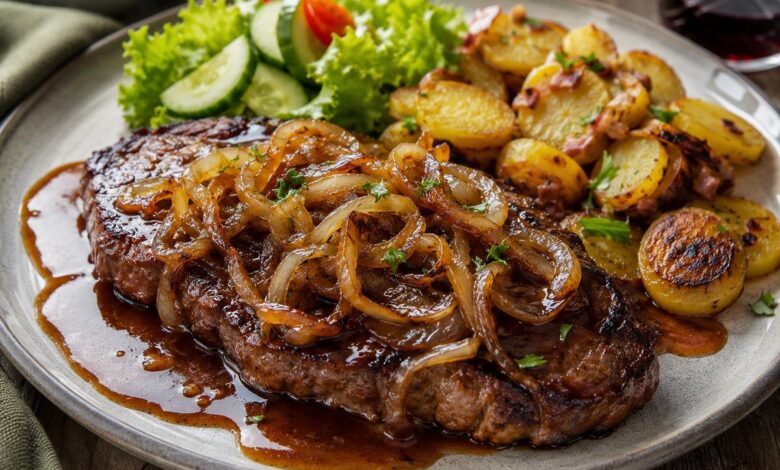

The Palatinate, or Pfalz, is one of Germany’s great wine regions, so it is no surprise that wine often finds its way into the kitchen as well as the glass. In this recipe, red wine is used to deglaze the pan and create a rich sauce with beef stock, tomato paste, mustard, and the browned flavor from the steak and onions.
This is a straightforward dish, but it rewards care. The steak should be deeply browned on the outside and rested before serving. The onions should be soft, golden, and sweet, not rushed. The sauce should be glossy enough to spoon over the meat, with just enough acidity to balance the richness.
Serve Palatinate Rump Steak with fried potatoes, Spätzle, potato dumplings, or a crisp salad, and pour a glass of Palatinate red wine or a dry Riesling alongside.
What Is Palatinate Rump Steak?
Pfälzer Rump Steak is a Palatinate-style steak dish usually made with rump steak, fried onions, and a dark sauce. The dish is simple, but very satisfying: beef, onions, pan drippings, wine, stock, and seasoning.
The onions are important. They give the dish its familiar German steakhouse character, adding sweetness and texture to the seared beef. Some versions serve the onions piled directly on top of the steak, while others fold them into the sauce or serve them on the side.
This version uses both: golden onions on top and a red wine pan sauce underneath.
Palatinate Rump Steak with Onions
Pfälzer Rump Steak with Onions is a hearty Palatinate-style steak dish made with seared rump steaks, golden fried onions, and a savory red wine pan sauce. Known in German as Palatinate rump steak with onions, it is a satisfying wine-country meal often served with fried potatoes, spaetzle, salad, or rye bread.
Ingredients
For the steak
- 4 rump steaks, about 8 to 10 ounces each
- salt and freshly ground black pepper, to taste
- 1 tbsp neutral oil
- 1 tbsp unsalted butter
- 2 sprigs of fresh thyme optional
- 1 garlic clove, lightly crushed optional
For the Fried Onions
- 3 large yellow onions, thinly sliced
- 2 tbsp butter or neutral oil
- 1/2 tsp salt
- 1/2 tsp sweet paprika optional
- 1 tsp flour for light thickening optional
For the Red Wine Pan Sauce
Instructions
-
Prepare the steaks
Remove the steaks from the refrigerator about 30 minutes before cooking so they are not ice-cold when they hit the pan.Pat them very dry with paper towels. Season generously with salt and black pepper.
-
Cook the onions
Heat the butter or oil in a large skillet over medium heat.Add the sliced onions and salt. Cook slowly, stirring often, for 15 to 20 minutes, until the onions are soft and golden.If using paprika, stir it near the end. If you want a slightly thicker onion topping, sprinkle in the flour and cook for 1 minute.Transfer the onions to a bowl and keep warm.
-
Sear the steaks
Wipe out the skillet if needed, then heat the neutral oil over medium-high heat.Add the steaks and sear until well browned on the first side, about 3 to 4 minutes depending on thickness. Turn and cook the second side to your preferred doneness.Add the butter, thyme, and garlic during the last minute of cooking, if using, and spoon the foaming butter over the steaks.Transfer the steaks to a warm plate and let them rest for 5 to 10 minutes.
-
Make the red wine sauce
Reduce the heat to medium.Add the tomato paste to the skillet and stir for 1 minute.Pour in the red wine, scraping up the browned bits from the bottom of the pan. Let the wine simmer for 2 to 3 minutes.Add the beef stock and mustard. Simmer until the sauce reduces slightly and tastes rich, about 5 to 8 minutes.Stir in the red currant jelly or cranberry preserves, if using.Taste and season with salt and pepper.
-
Finish the sauce
Remove the skillet from the heat and whisk in the cold butter until the sauce is glossy.Return some of the onions to the sauce if desired, or keep them separate for topping.
-
Serve
Place each steak on a warm plate. Spoon the red wine sauce around or over the steak.Top generously with fried onions and sprinkle with parsley.Serve immediately with fried potatoes, spaetzle, potato dumplings, rye bread, or a green salad.
Notes
Tips for the Best Palatinate Rump Steak
Pat the steak dry before searing. Moisture prevents good browning.
Don’t rush the onions. Slowly cooked onions give the dish its sweetness and depth.
Rest the steak before slicing or serving. This helps keep the meat juicy.
Use the steak pan for the sauce. The browned bits in the skillet are full of flavor.
Finish the sauce with cold butter. This gives it a glossy, restaurant-style texture.
Serve on warm plates. Steak and sauce are best when served hot.
Steak Doneness Guide
Use an instant-read thermometer for best results.
- Rare: 125°F / 52°C
- Medium rare: 130°F to 135°F / 54°C to 57°C
- Medium: 140°F to 145°F / 60°C to 63°C
- Medium well: 150°F to 155°F / 66°C to 68°C
The temperature will rise slightly as the steak remains.
What to Serve with Palatinate Rump Steak
Palatinate Rump Steak with Onions is rich and savory, so it pairs well with classic German sides.
Good pairings include:
- Bratkartoffeln, or German fried potatoes
- Spaetzle
- potato dumplings
- mashed potatoes
- rye bread
- green salad
- cucumber salad
- pickled vegetables
- braised red cabbage
- roasted mushrooms
For drinks, serve with Spätburgunder, Dornfelder, dry Riesling, or a crisp German lager.
Make ahead and storage
The onions can be cooked a day ahead and gently reheated before serving.
The sauce can also be made ahead, although it is best finished with butter just before serving.
Steak is best cooked fresh. If you have leftovers, store the steak and sauce in separate airtight containers in the refrigerator for up to 3 days.
Reheat gently in a skillet over low heat. Avoid overcooking the steak when reheating.
Variations
With white wine
Use dry white wine instead of red wine for a lighter Palatinate wine-country sauce.
With mushrooms
Add sliced mushrooms to the onions for an earthier version.
With crispy onions
Instead of soft fried onions, top the steak with crisp fried onions for more texture.
With cream sauce
Add a splash of cream to the sauce after reducing for a richer, softer finish.
With pork
Use pork loin steaks or pork neck steaks for a more casual Palatinate-style variation.
With fried potatoes
Serve with crispy fried potatoes and a simple salad for a German restaurant-style plate.
Frequently Asked Questions
What is Palatinate Rump Steak?
Pfälzer Rump Steak is a Palatinate-style rump steak served with fried onions and often a dark sauce.
What does Pfälzer mean?
Pfälzer means from the Palatinate, or Pfalz, a region in southwestern Germany known for wine, hearty cooking, and regional specialties.
What cut is rump steak?
Rump steak comes from the rear section of the cow. It is flavorful and lean, and it benefits from quick searing and proper resting.
Can I use another steak cut?
Yes. Sirloin, strip steak, ribeye, or even hanger steak can be used. Cooking times will vary depending on thickness.
What wine should I use for the sauce?
Use a dry red wine such as Spätburgunder, Dornfelder, or another dry red you enjoy drinking.
Can I do this without wine?
Yes. Replace the wine with extra beef stock and add a teaspoon of red wine vinegar for acidity.
Should the onions be crispy or soft?
For this version, the onions are cooked until soft and golden. If you prefer, you can make them crispier and use them as a topping.
What sides go best with this steak?
Fried potatoes, spaetzle, potato dumplings, rye bread, cucumber salad, and green salad all pair well.