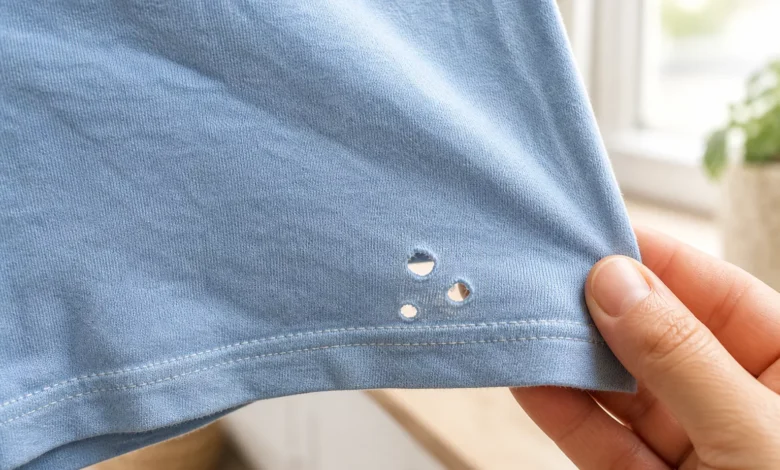

You pull your favorite T-shirt out of the laundry, hold it up to the light – and there they are: two or three small holes in the clothing that weren’t there yesterday. The first suspicion is almost always moths. But with cotton shirts, the tiny damage is usually at the bottom hem, exactly where the fabric rubs against the belt buckle or the edge of the table with every movement. Moths leave a completely different pattern. Where the hole is and what it looks like reveals the cause in most cases – and whether you need to check the wardrobe or just adjust your washing habits.
Quick test: Where are small holes in clothing – and what does that reveal?
Before you turn the entire cabinet upside down, it’s worth taking a look at the hole itself. The location, number and material narrow down the cause surprisingly reliably. The following overview will lead you to the most likely suspect in just a few seconds.
| hole pattern | Probable cause |
|---|---|
| Single or scattered near the bottom hem, cotton or jersey | Friction on belt, button or edge of furniture |
| Small dots at waist level, often at the front | Zipper, jeans button or bra clasp |
| Larger holes, grouped, away from the waist, wool or silk | Moth larvae |
| Holes along with dark streaks or streaks | Damaged dryer drum |
| Lots of small holes after a full wash cycle | Overloading, snagging on decorations |
| Frayed holes after washing with bleach | Too high a dosage of chlorine bleach |
So a single hole on the stomach of a T-shirt almost never has anything to do with moths. Only when there are several larger bites on a wool sweater does the wardrobe become a suspect.
Moths: when they are really the cause
You can recognize real moth holes by three features. They are usually larger than mechanical damage, occur in groups and are spread across the garment – not exactly where the belt pinches. But the material is crucial. Clothes moth larvae eat animal fibers: wool and cashmere provide them with keratin, the protein on which they live, and they also attack silk and leather as animal materials. Pure cotton or synthetics are rarely on their menu – so a hole in a cotton shirt is rarely eaten by moths.
A common misconception: If you don’t see a moth fluttering, you think you’re safe. However, the adult butterflies do no harm at all, only the larvae are voracious – and they hide in dark corners of the cupboard. More reliable indications are fine silky web tubes, remains of molt and sand-like fecal crumbs in the folds. Carpet beetles can also cause similar holes and are often confused with moths.
Consistent ventilation and washing of the affected textiles helps against a fresh infestation. Fragrances that avoid butterflies have a preventative effect: dried lavender in a mesh bag between the sweaters or a few drops of mint or lavender essential oil on a cotton pad. A DIY lavender bag can be sewn in ten minutes and will keep your closet fresh for months.

Friction from belts, zippers and bras
The most common cause of small holes in clothing is more banal than many people think: simple friction. On cotton tops, the damage almost always appears near the bottom hem because this area is constantly scraping over the edge of the countertop, the trouser button, or the belt buckle. The seat belt in the car also leaves its mark on thin jersey over time.
The game continues in the washing machine. The biggest culprit is the open bra clasp: its metal hooks hook into other items of laundry when spinning and tear fine holes with their sharp prongs. Close the clasp before each wash and put underwired bras in a laundry bag – this way even a broken wire stays where it belongs. Smooth rough metal edges on zippers or buckles with a fine metal file or some sandpaper.

Washing machine: overloading and incorrect spin speed
A drum that is full to the brim does not wash better, but worse – and it costs clothes. If the textiles can hardly move, buttons, zippers and decorative rivets get caught in each other and pull on the neighboring pieces when they spin. Fill the drum no more than three-quarters full and leave a hand’s breadth of air at the top.
A few simple habits will also protect sensitive parts.
Professional tips for gentle laundry
- Turn inside out: Turn items with buttons, rivets or beads before washing so that the hard details are on the inside.
- Stagger spin speed: Bed sheets can handle high temperatures, cotton medium, silk and delicates belong on the lowest setting.
- Sort by weight: Do not wash rough jeans together with thin shirts – the heavy seam will chafe on the fine fabric.
- Filters at a glance: If you clean the washing machine filter regularly, you will prevent foreign bodies from getting stuck in the drum and pulling on the fabric.
By the way, the two are connected: unpleasant smells after washing often have similar causes – an overloaded machine neither gets the laundry clean nor spun gently.
Dryer drum: the underrated culprit
If your laundry shows small holes and fine dark streaks at the same time, it’s rarely the washing machine’s fault – then it’s worth taking a look at the dryer. An unbalanced or warped drum pinches fabric at the edge while also rubbing metal debris into the fabric, leaving the telltale streaks behind.
You can take the test in two minutes. With the device empty and switched off, open the drum and shine a flashlight on the inside wall. Sharp burrs, rust spots or a noticeable height difference between the drum and the housing are warning signs. Carefully feel the edges with your hand – if a thread gets stuck, you have found the culprit.

Chlorine bleach: too strong
Chlorine bleach makes white things shine again – but if the concentration is too high, it literally eats through the fibers. Applied undiluted directly to the fabric or significantly overdosed, it leaves frayed holes after drying, often with a light edge. Always dilute bleach according to the manufacturer’s instructions, never apply it to dry fabric and always keep colored and animal fibers away from it.
Repair a hole: iron-on fleece in five steps
A small hole does not mean the end of a piece of clothing. With iron-on fleece – iron-on patches from the haberdashery shelf – you can patch it almost invisibly from the inside in just a few minutes:
- Preheat the iron to medium heat and lay the garment flat on the ironing board.
- Turn the fabric inside out so the inside of the hole is on top.
- Cut a piece of iron-on fleece that is about two centimeters larger all around than the hole.
- Place the fleece over the hole with the adhesive side down and cover it with a slightly damp cloth.
- Press the iron firmly for around ten seconds – do not move back and forth – let it cool down briefly, and you’re done.
For larger holes or clearly visible areas on the front, it is better to use a needle and thread. A mattress stitch with matching colored thread pulls the edges together neatly and lasts significantly longer than any ironed-on patch.

What’s Hot

bathroom
Washing machine under the vanity top: How to install it successfully
Frequently asked questions
I discovered a hole but didn’t see any moths – what now?
A sighted moth is a poor indicator because the moths fly at night and hide during the day. Instead, look specifically for traces: shine a flashlight into seams, pockets and folded edges of your wool and silk items. Fine, silky web tubes or sand-like crumbs confirm the infestation. As an immediate measure, place affected textiles in the freezer for 72 hours – the cold reliably kills larvae and eggs. If the damage returns despite thorough cleaning on several parts, an exterminator is a wiser investment than a new sweater.
Why are wool sweaters more susceptible to moths than T-shirts?
Because the larvae can only utilize animal fibers. Wool and cashmere contain keratin, a protein that serves as food for the larvae; They attack silk and leather as other animal materials. Cotton and polyester, on the other hand, are made of cellulose or plastic and are indigestible for animals. A cotton shirt is only nibbled if there is sweat or food left on it – then the larvae eat the covering and damage the fabric as collateral damage. Otherwise, holes in cotton are almost always mechanical in nature.