The International Civil Aviation Organization (ICAO) has launched Aviation Climate Week in Montréal, bringing together governments and industry leaders to accelerate efforts toward net-zero carbon emissions by 2050. Discussions focus on sustainable aviation fuels, cleaner energy solutions, financing, and global cooperation to strengthen aviation climate action.
MONTREAL, Canada – Stronger and faster efforts to decarbonize global air transport are at the center of discussions this week as the International Civil Aviation Organization (ICAO) opens its Aviation Climate Week in Montréal.
The three-day gathering brings together governments, industry leaders, aviation experts, and environmental stakeholders to accelerate progress toward achieving net-zero carbon emissions from international aviation by 2050.
ICAO, the United Nations specialized agency responsible for establishing international standards and policies for civil aviation, plays a central role in coordinating global efforts to ensure safe, secure, efficient, and sustainable air transport. Founded in 1944 and headquartered in Montréal, ICAO works with its 193 Member States to address challenges facing the aviation sector, including climate change.
The Aviation Climate Week meeting comes amid growing political commitment, investment in cleaner energy solutions, technological innovation, and operational improvements across the aviation industry. These developments are helping accelerate implementation of the global climate strategy for air transport, unanimously endorsed by ICAO Member States at the organization’s 2025 Assembly.

International Civil Aviation Organization
The International Civil Aviation Organization (ICAO) is a United Nations agency which helps 193 countries to cooperate together and share their skies to their mutual benefit.
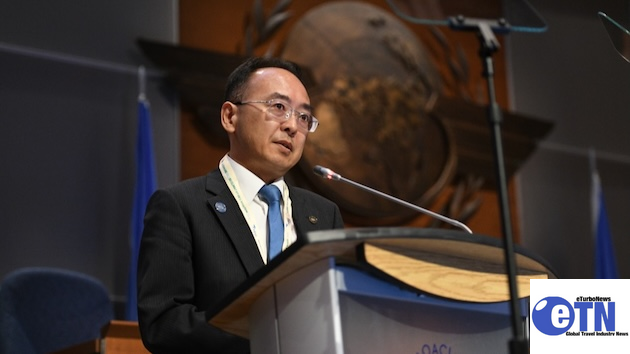
Opening the event, ICAO Council President Toshiyuki Onuma emphasized aviation’s leadership role in addressing climate challenges.
“Air transport is setting an example for other industries to follow,” Onuma said. “Through decisive leadership and a shared commitment to climate action, we will ensure a vibrant future for flight.”
Throughout the week, delegates will address some of the sector’s most pressing challenges, including scaling up sustainable aviation fuels (SAF), lower-carbon aviation fuels and cleaner energy alternatives, financing the industry’s transition to net-zero emissions, and implementing ICAO’s global market-based emissions reduction measures.
Sessions will also highlight breakthroughs in aircraft technology, operational efficiencies, climate adaptation and resilience strategies, and advances in emissions monitoring. Participants are expected to explore new cross-sector partnerships and coordinated action plans designed to accelerate sustainable aviation worldwide.
“Aviation has proven that international cooperation solves complex challenges. We will now showcase that very cooperation to the world,” Onuma remarked. “We must identify the gaps in existing carbon reduction measures and strengthen understanding among all stakeholders. We need immediate, harmonized, and inclusive action.”
The meeting concludes on June 4, with outcomes expected to provide governments and industry stakeholders with practical recommendations and proven strategies to advance climate action across the global civil aviation sector.
As international aviation seeks to balance continued growth with environmental responsibility, ICAO’s Aviation Climate Week is expected to serve as an important platform for shaping the next phase of the industry’s journey towards a sustainable, net-zero future.