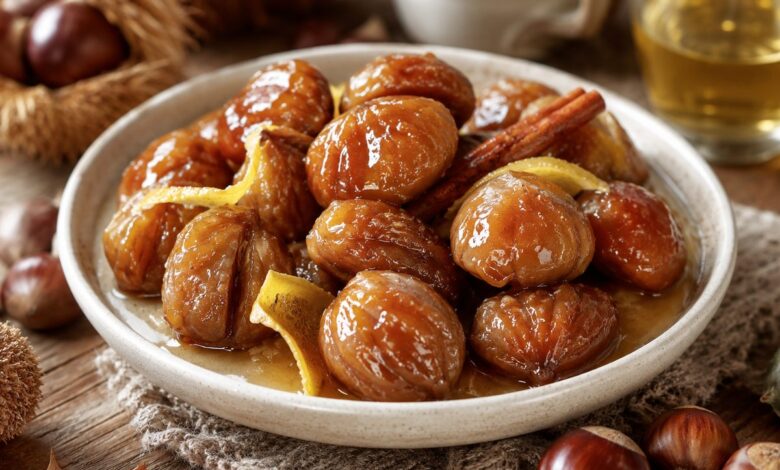

This recipe turns cooked chestnuts into a glossy, gently sweet dish with butter, honey, white wine, cinnamon, and a little lemon. The flavor is warm and nutty, with just enough sweetness to make the chestnuts feel festive without becoming heavy.
Serve Glazed Keschde alongside roast pork, duck, goose, venison, or pheasant, where their sweetness balances savory meats beautifully. They can also be served as a dessert, spooned warm into small bowls with whipped cream, vanilla sauce, or ice cream.
What Are Glazed Keschde?
Glazed chestnuts are glazed chestnuts. The chestnuts are first cooked and peeled, then gently simmered in a buttery syrup until they become shiny, tender, and coated.
The dish can lean sweet or savory depending on how it is served. With roasted meat or game, the chestnuts work like a seasonal side dish. With cream or ice cream, they become a simple dessert.
In the Palatinate, where chestnut trees grow near vineyards and forest paths, this kind of recipe fits beautifully into the autumn table. It is rustic, seasonal, and just elegant enough for a holiday meal.
Glazed keshde
Glazed Keschde are sweet chestnuts glazed with butter, honey, white wine, and warm spices until glossy, tender, and fragrant. Known as Keschde in the Palatinate, chestnuts are a beloved autumn ingredient in southwestern Germany. Serve these glazed chestnuts as a seasonal side dish with roast meats, game, or poultry, or enjoy them as a simple dessert with whipped cream or vanilla ice cream.
Ingredients
For the Glazed Chestnuts
- 1 lb cooked and peeled sweet chestnuts
- 2 tbsp unsalted butter
- 2 tbsp honey
- 1 tbsp brown sugar optional
- 1/2 cup dry or semi-dry German white wine
- 1/4 cup water or apple juice
- 1 cinnamon stick
- 1 small strip of lemon peel
- 1 tsp lemon juice
- pinch of salt
Instructions
-
Prepare the chestnuts
If using cooked and peeled chestnuts, check them for any bits of shell or skin and set them aside.If using fresh chestnuts, score the shells, roast or boil them, and peel them while warm. The chestnuts should be tender before they go into the glaze.
-
Start the glaze
In a wide skillet or shallow saucepan, melt the butter over medium heat.Add the honey and brown sugar if using. Stir gently until the mixture begins to bubble.
-
Add wine and spices
Pour in the white wine and water or apple juice. Add the cinnamon stick, lemon peel, lemon juice, and a pinch of salt.Bring the mixture to a gentle simmer.
-
Glaze the chestnuts
Add the cooked chestnuts to the pan and stir carefully to coat them.Simmer gently for 10 to 15 minutes, stirring occasionally, until the liquid reduces to a shiny glaze and the chestnuts are warmed through.Be gentle when stirring so the chestnuts stay mostly whole.
-
Finish and serve
Remove the cinnamon stick and lemon peel.Taste the glaze. Add a little more lemon juice if it needs brightness, or a little more honey if you prefer it sweeter.Serve warm as a side dish or dessert.
Notes
Tips for the Best Glazed Chestnuts
Use chestnuts that are already tender before glazing. The glaze is not meant to cook raw chestnuts from start to finish.
Keep the heat gentle. A hard boil can break the chestnuts apart and make the glaze too sticky.
Use a wide pan. This helps the glaze reduce evenly and coat the chestnuts well.
Stir carefully. Chestnuts can be delicate once cooked.
Adjust the sweetness depending on how you plan to serve them. For a savory side dish, use less sugar. For dessert, add a little more honey or serve with cream.
What to Serve with Glazed Keschde
Glazed Keschde are very flexible. They can be served as part of a savory autumn meal or as a simple sweet course.
Good savory pairings include:
- roast pork
- duck
- goose
- venison
- pheasant
- pork tenderloin
- red cabbage
- sauerkraut
- potato dumplings
- Spaetzle
For dessert, serve them with:
- whipped cream
- vanilla sauce
- vanilla ice cream
- curd cream
- apple compote
- poached pears
A glass of Riesling or Silvaner pairs beautifully with the chestnuts, especially if the wine is also used in the glaze.
Make ahead and storage
Glazed Keschde are best served warm, soon after glazing, but they can be made ahead.
Let the chestnuts cool completely, then store them in an airtight container in the refrigerator for up to 3 days.
Reheat gently in a small pan over low heat. Add a splash of water, apple juice, or wine to loosen the glaze if needed.
Freezing is not recommended, as cooked chestnuts can become crumbly after thawing.
Variations
Savory Glazed Keschde
Use less honey and skip the brown sugar. Finish with chopped parsley and serve with roast meats.
Dessert Glazed Chestnuts
Use apple juice instead of water, add a little extra honey, and finish with orange zest. Serve with whipped cream or ice cream.
Red Wine Glazed Chestnuts
Use a light red wine instead of white wine for a deeper, richer glaze.
Spiced Holiday Chestnuts
Add one clove, a small piece of star anise, or a pinch of ground cardamom for a Christmas-style version.
Chestnuts with bacon
For a savory side dish, brown a little diced bacon first, then use some of the fat with the butter to glaze the chestnuts.
Frequently Asked Questions
What does Keschde mean?
Keschde is the Palatinate dialect word for sweet chestnuts.
Are Keschde the same as chestnuts?
Yes. In this recipe, Keschde refers to edible sweet chestnuts, not horse chestnuts.
Can I use vacuum-packed chestnuts?
Yes. Vacuum-packed cooked chestnuts are the easiest option and work very well for glazing.
Can I use fresh chestnuts?
Yes. Fresh chestnuts should be roasted or boiled and peeled before they are added to the glaze.
Are glazed chestnuts a side dish or dessert?
They can be either. Serve them less sweet with roast meats, game, or poultry, or make them sweeter and serve with cream, vanilla sauce, or ice cream.
What wine works best for glazed chestnuts?
A dry or semi-dry German white wine such as Riesling, Silvaner, or Pinot Blanc works well. For a richer variation, use a light red wine.
Can I make this recipe alcohol-free?
Yes. Replace the wine with apple juice or white grape juice, and add a little extra lemon juice for balance.