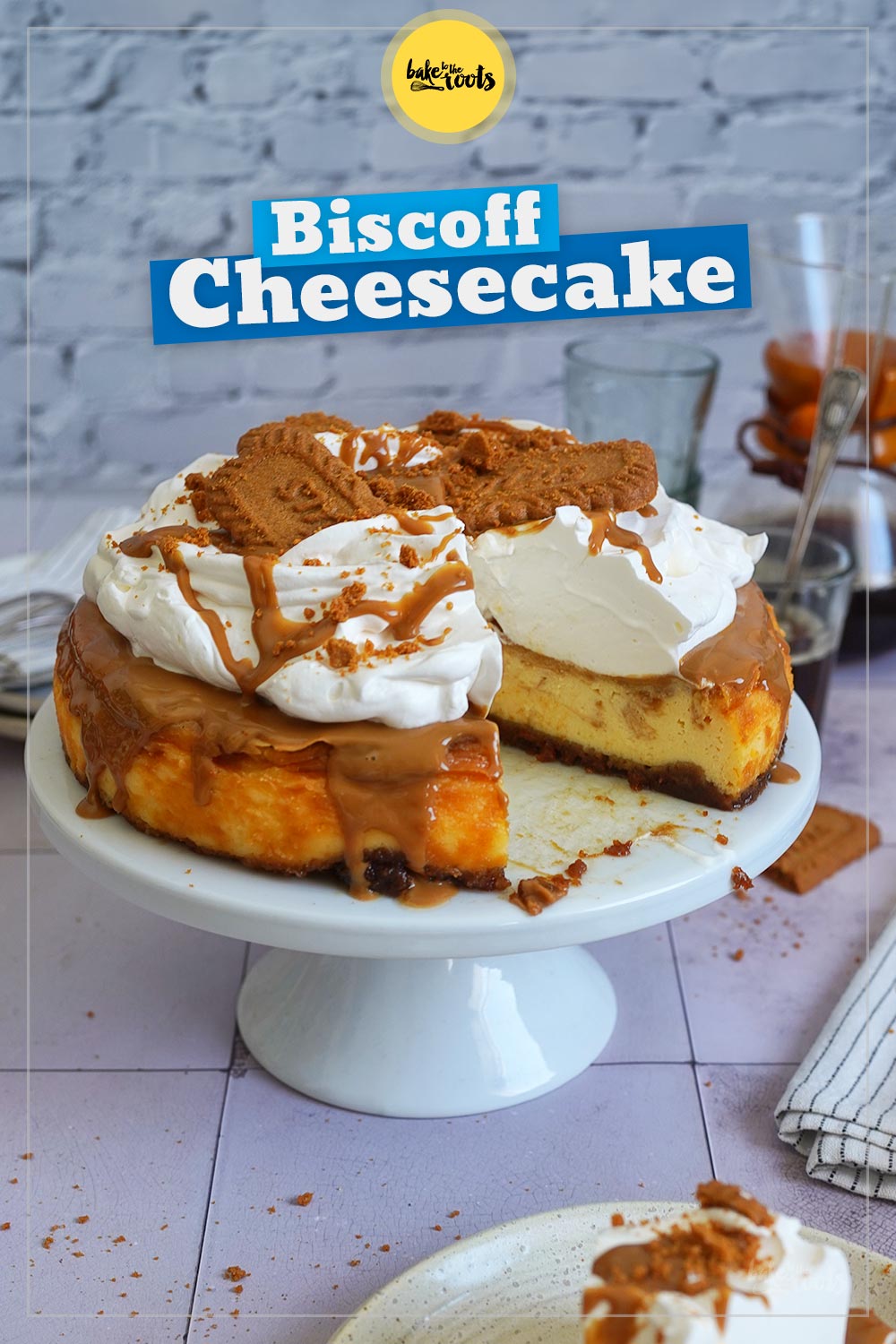
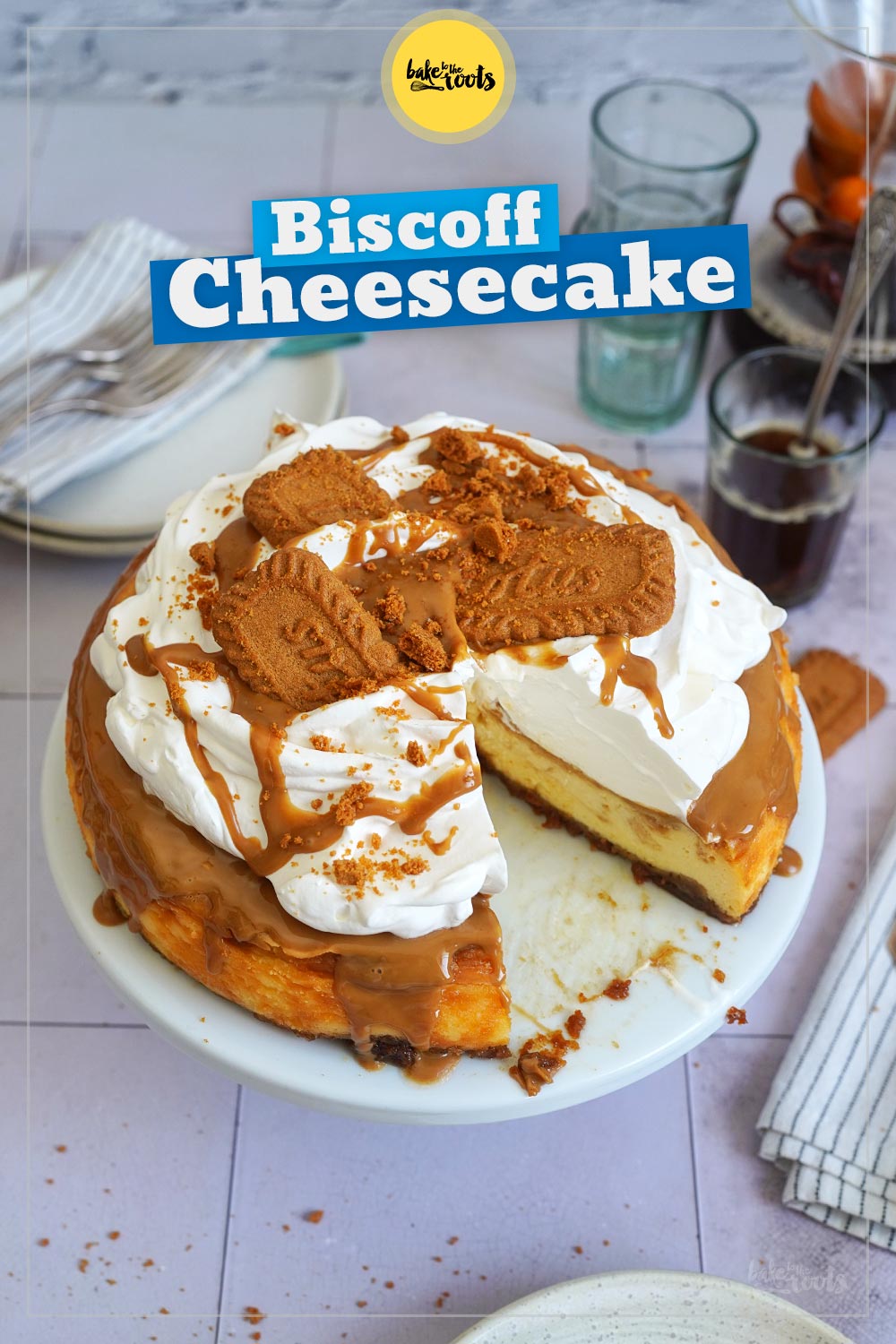
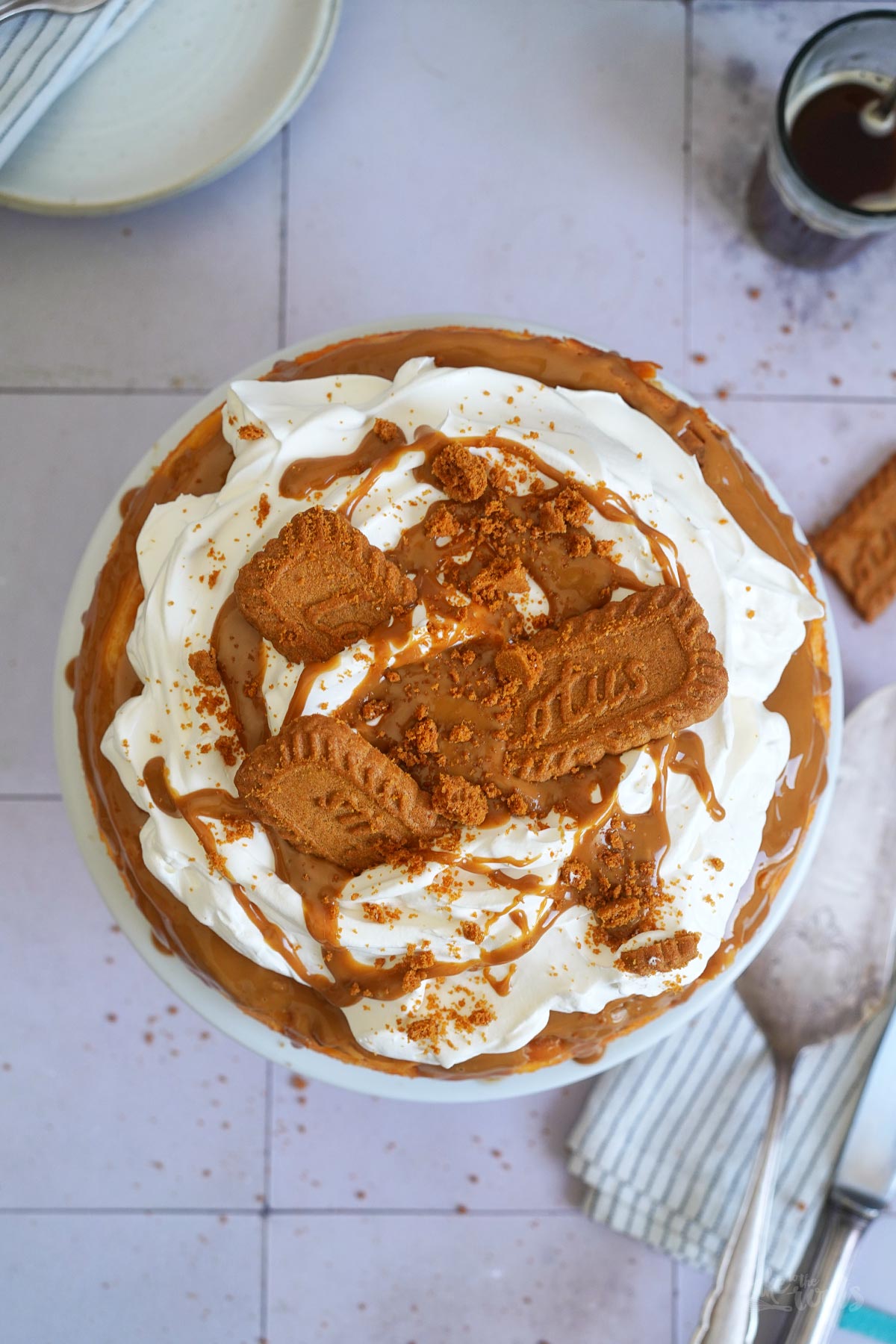
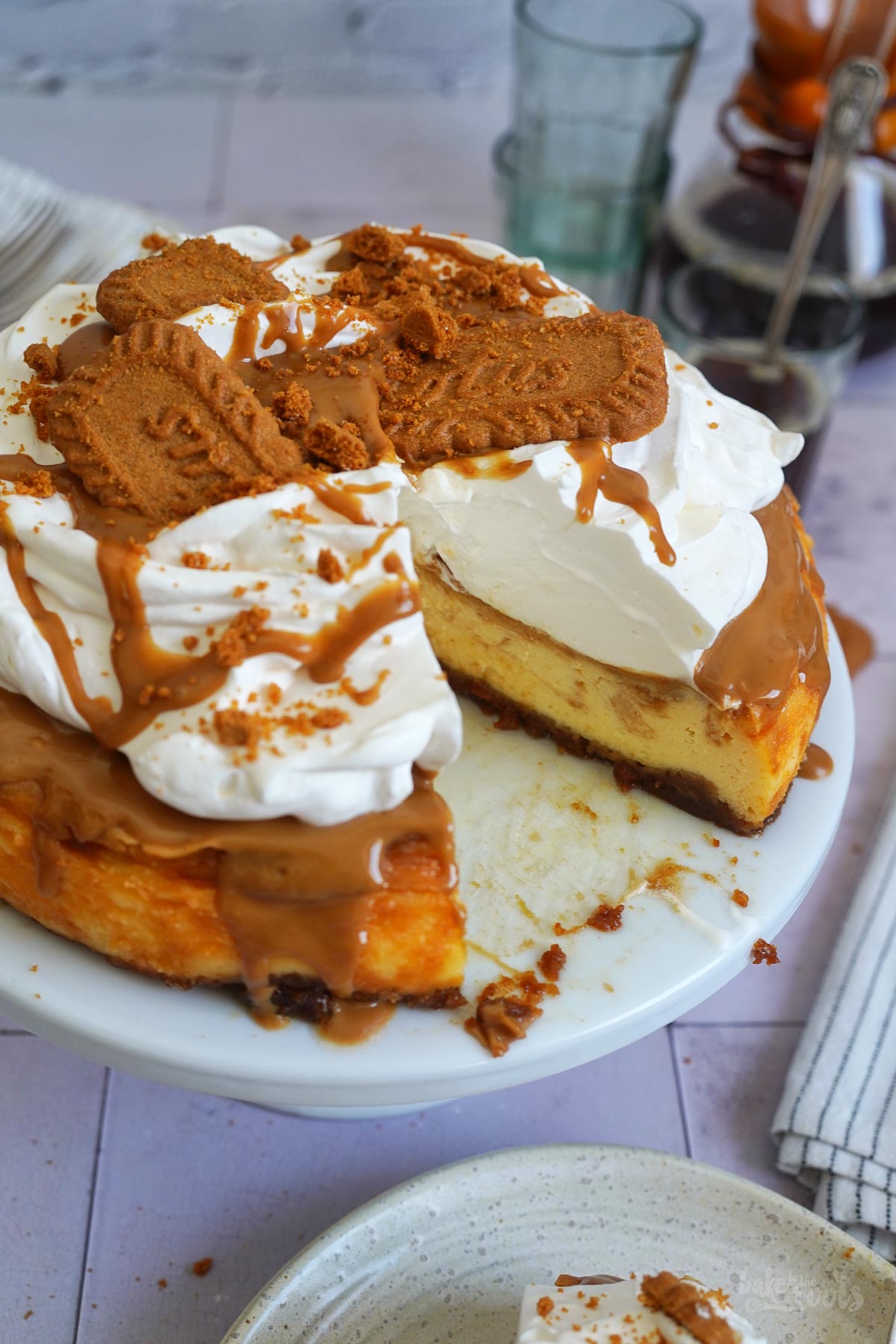
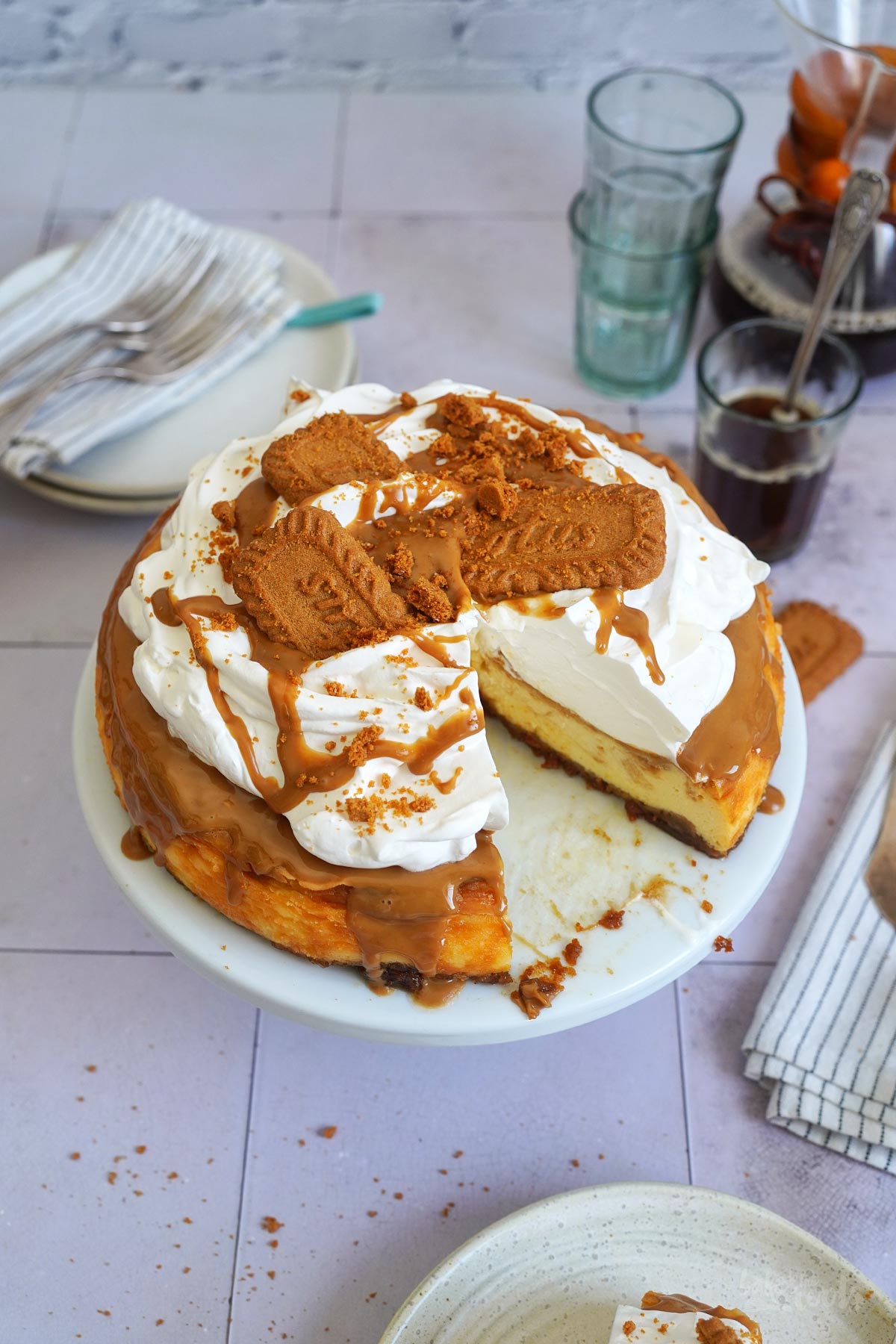
Cheesecakes are almost always a delicious treat – and if you add something like Biscoff cookies and/or Biscoff spread, they get even better. This Baked Biscoff Cheesecake is super easy to make and absolutely delicious. We like to top it with a generous mountain of whipped cream, but you don’t have to serve it like that if that’s too much for you. The cake tastes really good even without the topping!

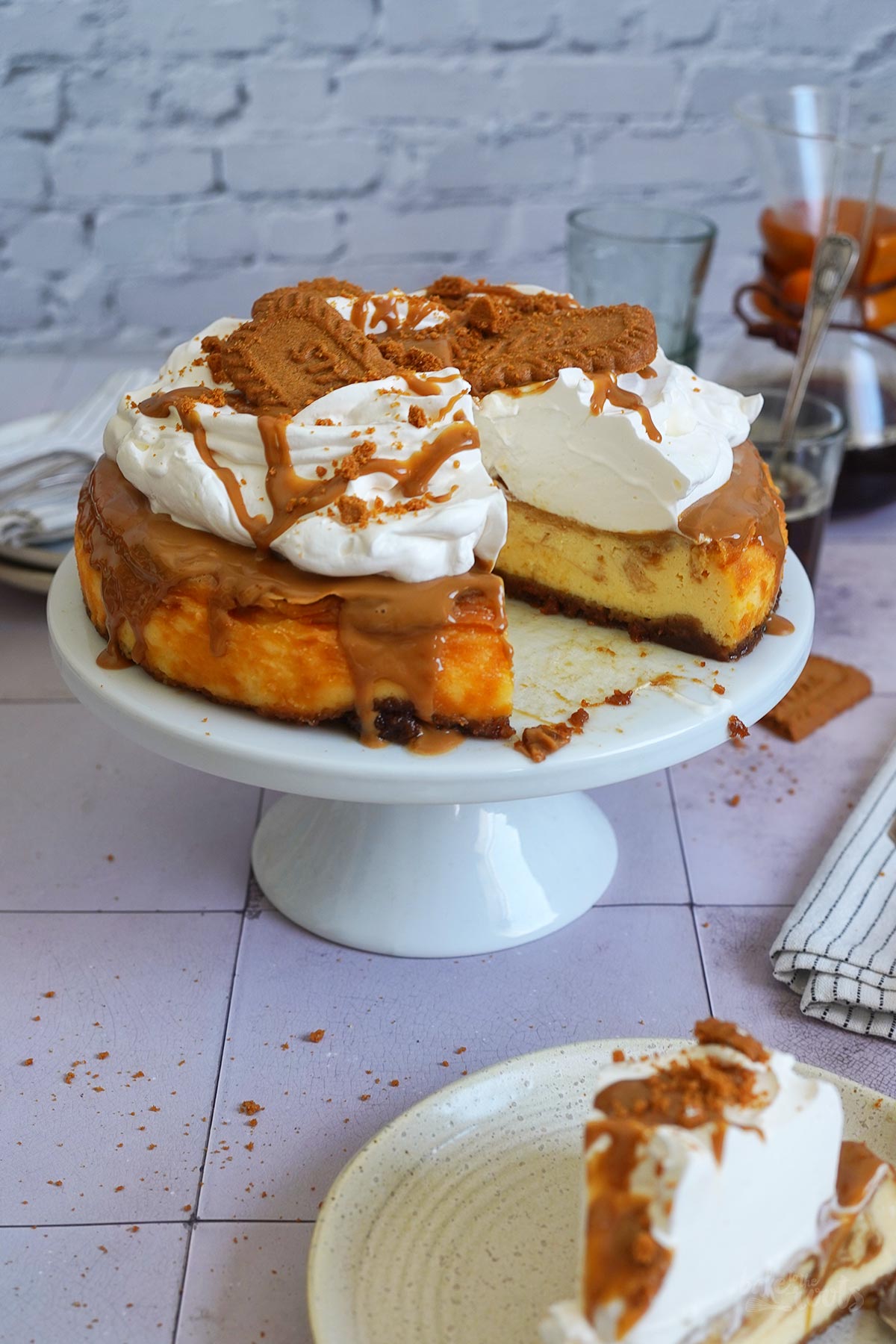
We’re big fans of cheesecake here. If you take a look at the overview page of all our cheesecake recipes, that quickly becomes clear. With over 150 recipes in this category, you could say we’re ready for anything when it comes to cheesecakes. It’s a similar story with Biscoff – both the cookies and the spread. Really delicious. We don’t have quite as many recipes for those yet, though. But with this cheesecake here, we’re adding a new one today…
We already have a Biscoff cheesecake here that’s quite popular and has been made by many people. This cheesecake here is quite similar to that one, although a bit less complicated when it comes to the decoration. Since not everyone has a knack for piping cream swirls and stuff like that, we decided to make this one here a little easier. Anyone can scoop whipped cream onto a cake, right?!
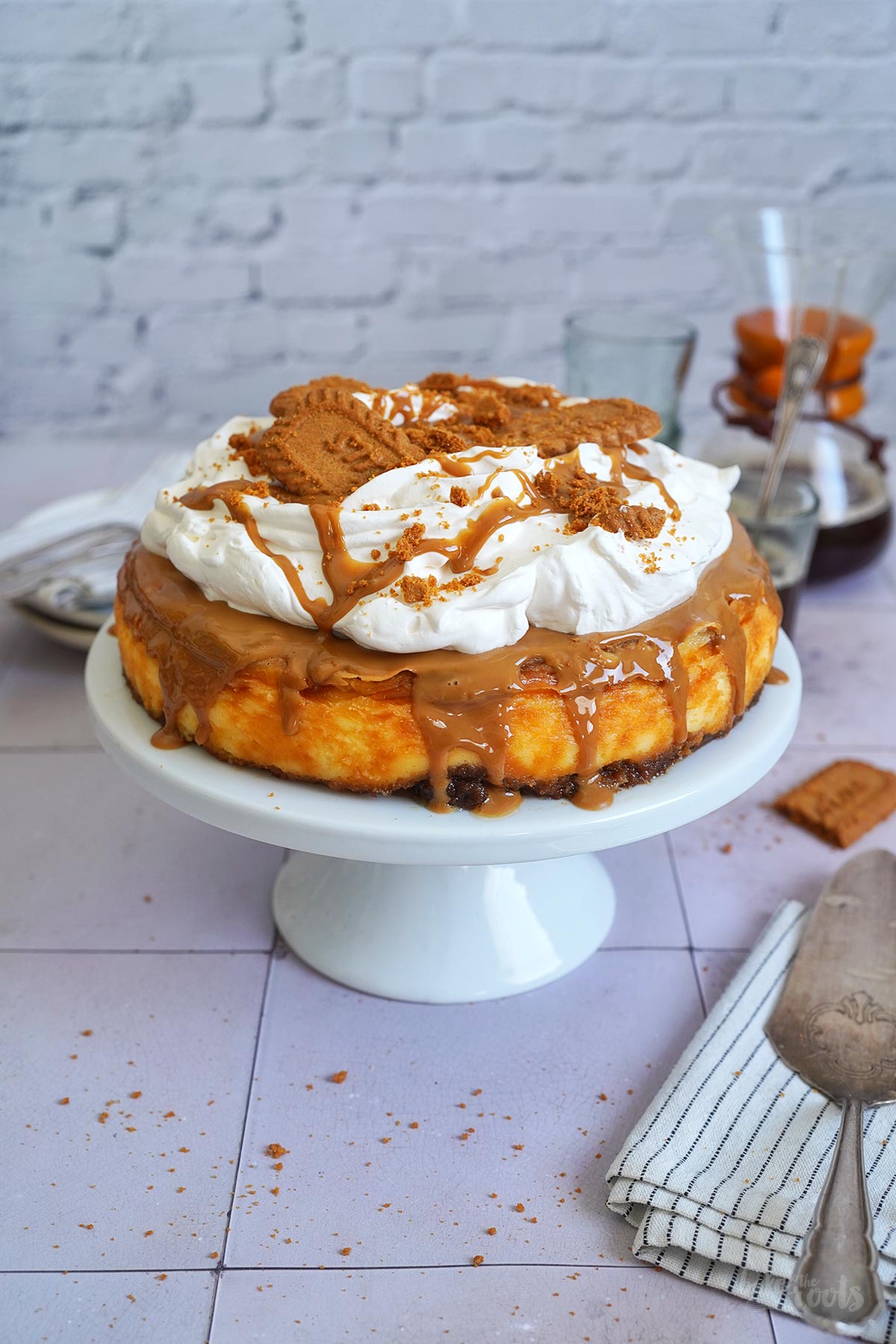
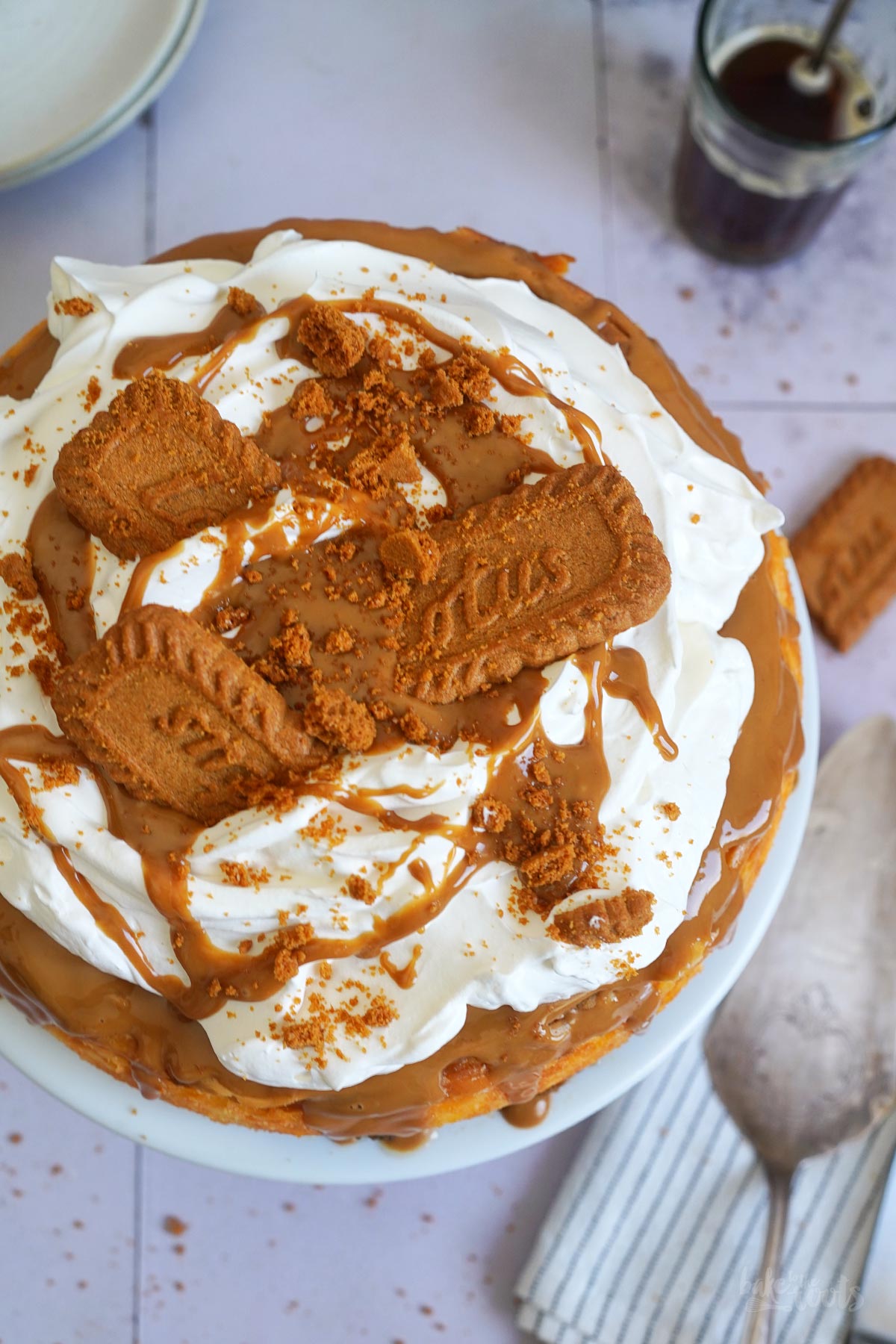
Anyway. I’m not exactly sure what it is, but the combination of cheesecake and Biscoff is just excellent. Apparently, there are even people who stick Biscoff cookies into yogurt and call it cheesecake. Probably not bad, but not our thing. You definitely won’t find a recipe like that here on the blog. For that, you’ll have to head over to TikTok, where you can almost always find stuff like that…
This cheesecake here requires a little more attention. Not a lot, but it takes a bit longer to prepare than the trendy TikTok “fake” cheesecake. Crush a few cookies, mix up the cheesecake batter, then bake it in a springform tin and after that decorate with whipped cream. That’s it. A classic, baked cheesecake that’s been nicely elevated with Biscoff cookies and spread.
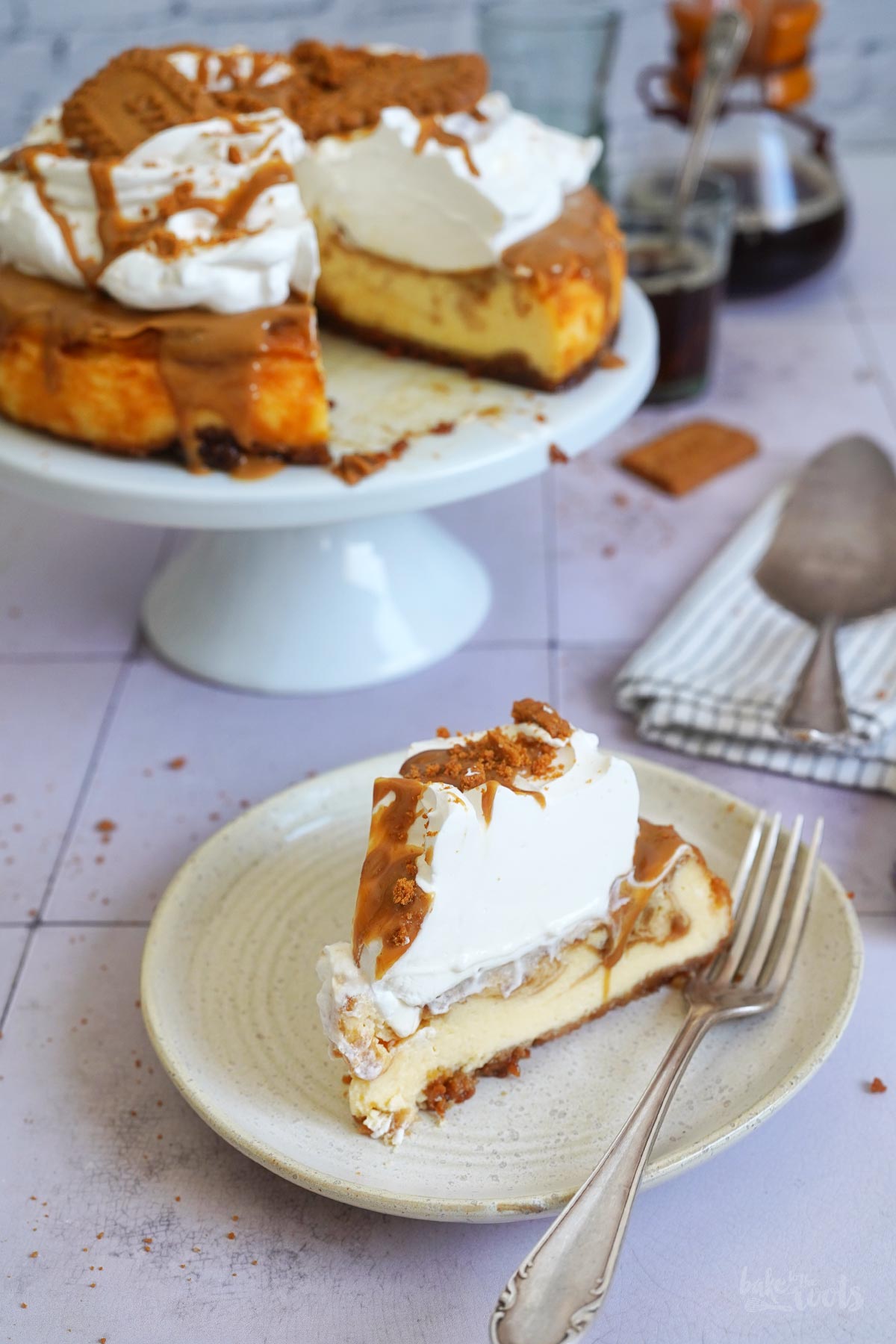
As with many baked cheesecakes, you need to crumble some cookies first, then you mix them with a little sugar and melted butter. Thereafter, you press the mix into a baking tin to create the base for the cake. Much easier than a shortcrust pastry crust, which is often used for German cheesecakes, for example. That’s why we really like the cookie version – it’s much faster to prepare.
As for the filling – pretty easy to do as well. You don’t need a food processor or anything like that to make it. A simple whisk is perfectly sufficient. If necessary, a wooden spoon would work as well. There’s no need to beat anything for a long time or whip it into stiff peaks – the filling is really super »basic«. Even your great-great-grandmother could have whipped this up just as easily with her kitchen tools back in the day.
Anyone who reads through the recipe will quickly realize that this cake isn’t rocket science. It’s really quick and easy to make. The only part that requires a little patience is the cooling. Unfortunately, that takes a bit longer…

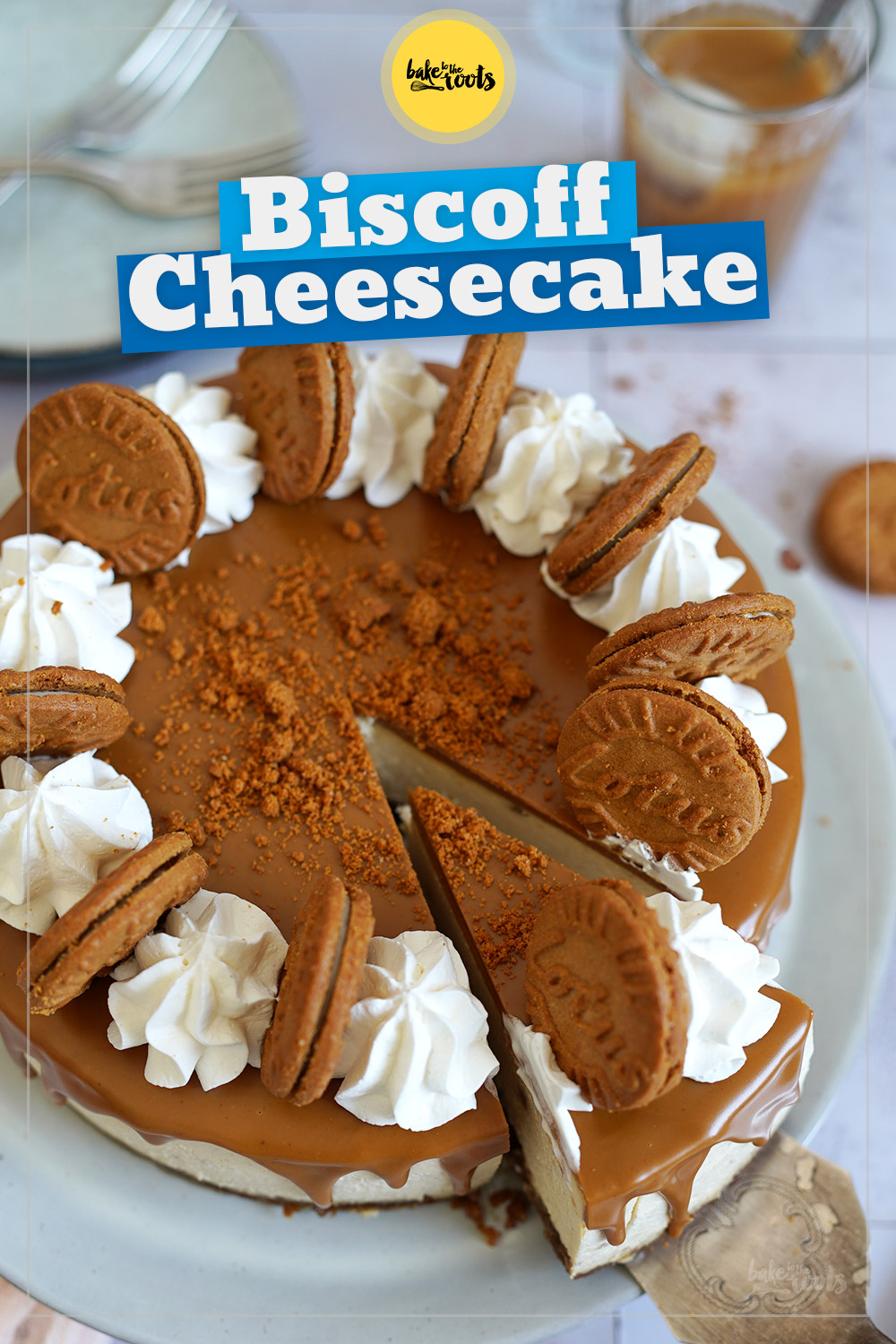
Anyway. If you want to try the inspiration for this cheesecake, just check out the recipe for our other Baked Biscoff Cheesecake (you could call it “Cheesecake Number 1”). It’s not really any more complicated than this cake, but you might need a bit more practice for the decoration.
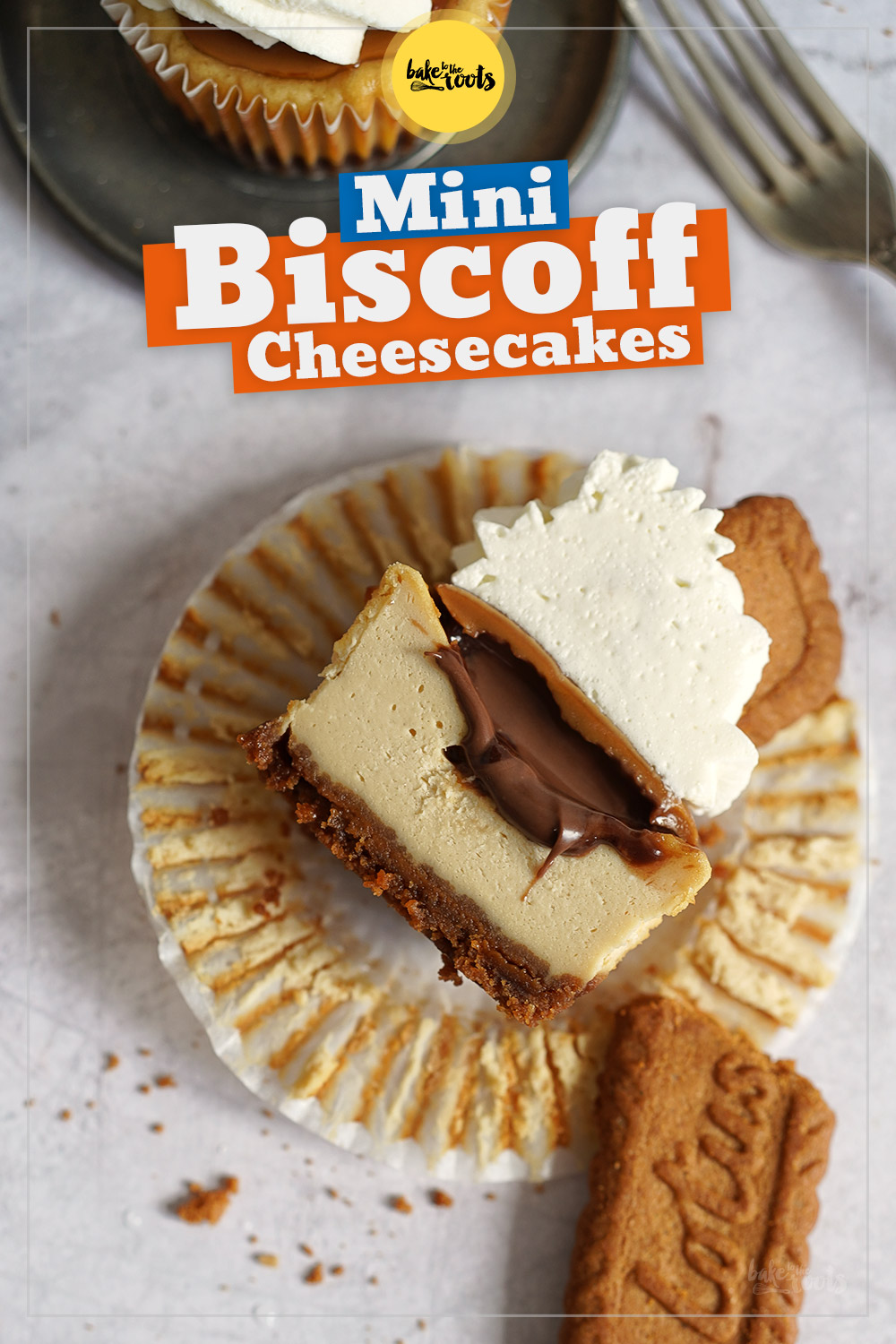
Do you perhaps prefer small, bite-sized cakes? Then I would definitely recommend our Biscoff Mini Cheesecakes. The same combination as here, except a little chocolate hazelnut spread has snuck its way in there as well… It never hurts to add a bit of chocolate to a cake, right?!
INGREDIENTS / INGREDIENTS
DIRECTIONS / PREPARATION
1. Preheat the oven to 180°C (350°F). Line a 20cm springform tin* with parchment paper or grease it lightly.
2. Crush the cookies for the crust to get fine crumbs – this works well in a food processor by blitzing them shortly or with a freezer bag and a rolling pin. Mix the cookie crumbs with the brown sugar and melted butter until the crumbs are evenly moist. Transfer the crumbs to the prepared baking tin and press them down to create an even and compact layer. Place in the fridge until needed.
3. For the filling, combine the cream cheese, sour cream, sugar, and vanilla extract in a large bowl and mix until well blended. Lightly whisk the eggs in a separate bowl, then add them to the large bowl and mix well. Pour this mixture into the prepared baking tin, then pour the warmed Biscoff spread on top and gently mix it into the cheesecake mixture using a spoon or spatula. Shake the pan a bit to get a smoother surface. Bake the cheesecake in a preheated oven for about 55-60 minutes. The edges should have set, but the center should still wobble slightly when you move the baking tin. Remove the cake from the oven and let it cool completely inside the baking tin on a wire rack. When cooled, place it in the fridge for at least 1-2 hours.
4. For the decoration whip the heavy cream until stiff peaks form. Pile it onto the cooled cheesecake and decorate further with warmed Biscoff spread and some Biscoff cookies to your liking.
1. Preheat the oven to 180°C (350°F) top/bottom heat. Line a 20cm springform pan* with baking paper or lightly grease it.
2. Process the cookies for the base into fine crumbs – this works well in a blender or with a freezer bag and a rolling pin. Mix the cookie crumbs with the brown sugar and melted butter until the crumbs are evenly moist. Pour the crumbs into the prepared pan and then press them together into a compact layer. Place in the refrigerator until further use.
3. For the filling, mix the cream cheese with sour cream, sugar and vanilla extract in a large bowl until everything is well mixed. Whisk the eggs briefly in a separate bowl, then add them to the large bowl and stir well. Pour the mixture into the prepared form, then spread the liquid Biscoff spread on top and mix lightly into the cheesecake mixture using a spoon or spatula, for example. Then shake the mold a little to compensate for any unevenness. Bake the cheesecake in the preheated oven for about 55-60 minutes. The cake should be firm around the edges, but should still wobble slightly in the middle when you shake the pan. Remove from the oven and let cool completely in the tin on a wire rack. Place the cooled cake in the refrigerator for 1-2 hours.
4. Whip the cream for decoration until stiff, then spread it over the cooled cake. Decorate with liquid Biscoff spread and Biscoff biscuits if desired.
Craving more? Keep in touch on Facebook, Instagram and Pinterest for new post updates and more. You can also contact me with any questions or inquiries!
Here is a version of the recipe you can print easily.
Description
If you like Biscoff cookies or Biscoff spread, this cake might be the perfect treat for you – this Baked Biscoff Cheesecake got a lot of both. We love it!
1. Preheat the oven to 180°C (350°F). Line a 20cm springform tin* with parchment paper or grease it lightly.
2. Crush the cookies for the crust to get fine crumbs – this works well in a food processor by blitzing them shortly or with a freezer bag and a rolling pin. Mix the cookie crumbs with the brown sugar and melted butter until the crumbs are evenly moist. Transfer the crumbs to the prepared baking tin and press them down to create an even and compact layer. Place in the fridge until needed.
3. For the filling, combine the cream cheese, sour cream, sugar, and vanilla extract in a large bowl and mix until well blended. Lightly whisk the eggs in a separate bowl, then add them to the large bowl and mix well. Pour this mixture into the prepared baking tin, then pour the warmed Biscoff spread on top and gently mix it into the cheesecake mixture using a spoon or spatula. Shake the pan a bit to get a smoother surface. Bake the cheesecake in a preheated oven for about 55-60 minutes. The edges should have set, but the center should still wobble slightly when you move the baking tin. Remove the cake from the oven and let it cool completely inside the baking tin on a wire rack. When cooled, place it in the fridge for at least 1-2 hours.
4. For the decoration whip the heavy cream until stiff peaks form. Pile it onto the cooled cheesecake and decorate further with warmed Biscoff spread and some Biscoff cookies to your liking.
Links marked with an asterisk