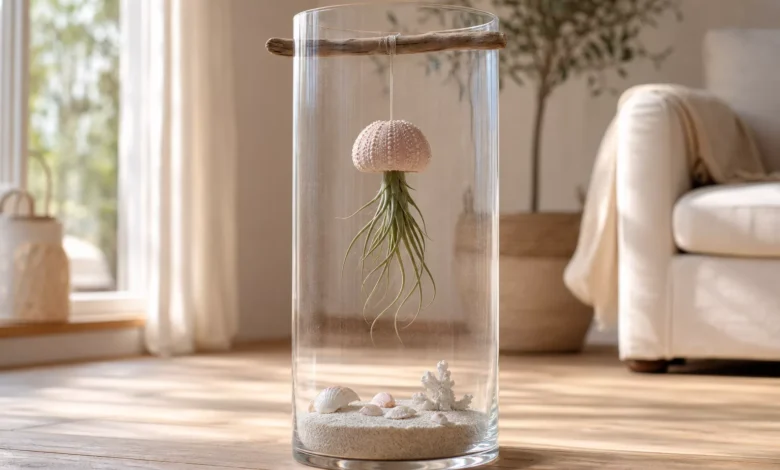
It stands in the corner of many living rooms: a tall glass floor vase, bought for a grand entrance and then mostly empty. If you want to decorate the floor vase, you quickly end up with the same standard filling in summer – and it often looks arbitrary. It could be fresher: a tillandsia hanging upside down under a sea urchin shell floats in the glass like a small jellyfish. This requires no water in the ground, no soil and no green thumb. A good half hour and a handful of materials from the craft store are enough.
Why the tillandsia jellyfish trick is so popular right now
The appeal lies in the contrast: lots of clear glass, lots of air and in the middle a single, living object that seems to float. Tillandsias are air plants. They draw their nutrients from the air via small scales on the leaves and do not require soil or root balls. That’s exactly why they can be hung freely – the basis for the jellyfish effect. The whole thing is not complicated: Anyone who has ever knotted a cord can handle it.
And it fits in more places than you first think:
- on the chest of drawers in the hallway, where a single vase immediately becomes an eye-catcher
- as a summer table decoration or on the patio table
- in the tall floor vase that otherwise remains empty in the living room
- next to lanterns and lanterns for the evening
- in a protected outdoor area, as long as no blazing midday sun hits the glass

What you need: Material list for the DIY jellyfish
For a single jellyfish you need surprisingly little. This list is enough for one or two arrangements:
- Tillandsia – one to three pieces depending on the size of the vase; Varieties with fine, drooping leaves (such as Tillandsia usneoides or T. bulbosa) appear most tentacle-like
- Sea urchin shells – empty and dried, in rosé, white or cream
- Transparent fishing line or fine sewing thread for hanging
- A small piece of driftwood or a branchwhich fits across the vase opening
- Contact adhesive (e.g. E6000) for bowls without a natural opening
- The glass vase itself – high and cylindrical so that the jellyfish hangs freely
- Decorative sand, small shells, gravel or glass stones for the floor
If you like working with glasses anyway, you can make your own tealight holders out of empty jam jars and coordinate the colors of the vase and candlelight.
Please note when purchasing materials
- Origin: Do not collect sea urchin shells, mussels and sand yourself on the beach – many species are protected, and taking them with you is restricted in many countries (according to an overview by ÖKO-TEST). It is better to buy from a craft or specialist store.
- Glue: Only place a tiny spot and never at the plant’s growing point. Allow solvent-based adhesives to air-cure for 24 to 48 hours beforehand.
- Peel: Dried sea urchin shells are fragile – hold loosely when threading and do not squeeze.

Here’s how to make the floating jellyfish in four steps
Now we’re crafting. Four steps and the first jellyfish floats in the glass:
- Attach cord. Thread the fishing line through one of the small natural openings in the sea urchin shell – many shells have a hole at the top and bottom. If there is no suitable opening, attach the end of the string to the shell with a tiny drop of hot glue.
- Insert tillandsia. Place the air plant under the tray with the base facing up so that the leaves hang down like tentacles. The bowl sits like a cap over the plant; if necessary, another mini adhesive dot holds them in place.
- Tie a knot to driftwood. Tie the top end of the string to the piece of driftwood or branch. The length of the string determines how deep the jellyfish will later float in the glass.
- Hang in the vase. Place the driftwood across the vase opening. The jellyfish now hangs freely in the glass – the bottom with sand and shells is added at the end.

The right soil: sand, shells and color combinations that work
The floor decides whether the arrangement looks harmonious or random. First fill in a few centimeters of light decorative sand and then place individual shells, a piece of bleached coral or flat pebbles on top – this way the most beautiful pieces remain visible.
When it comes to colors, it’s worth being cautious. Sand beige, off-white and a single accent, such as a dusty blue-green, appear more high-quality than a colorful mix of ten tones. It gets really classy with several vases at different heights: three cylinders next to each other, each with its own floor motif, create a small coastal landscape instead of a single decoration.
And if you prefer fresh flowers every now and then – the same tall glasses are also suitable for this, and summer flowers in the vase last longer if you change the water regularly.

Caring for tillandsias properly: watering, light and the finishing touches
A Tillandsia like this will last for several years with appropriate care – and it’s really uncomplicated. Spray the plant once or twice a week, or three to four times in hot summer weeks. Once a week you can also treat her to an immersion bath: 15 to 60 minutes in lukewarm, lime-free water (rainwater, distilled or still mineral water).
After that, one point is crucial. Allow the tillandsia to dry completely, preferably upside down. If water remains in the base of the leaf, the plant is rotting from the inside. A rough condition check helps when dosing: Firm, plump leaves mean well cared for; Soft, curled leaves are a signal of thirst.
You can fertilize sparingly every four weeks – 25 to 50 percent of the normal houseplant dose in spray water is sufficient. Carefully pull off dry lower leaves and trim brown leaf tips at an angle to preserve the natural shape. The following applies to the location: bright, but indirect. Blazing midday sun directly behind glass creates a build-up of heat that burns the leaves.

What’s Hot

DIY gifts
Flower pots with faces become the funniest money gifts
Where to put the finished decorated floor vase?
Complete? Then it’s just a matter of finding the right place. On the dresser in the hallway, the floating jellyfish greets guests at the door; On the terrace table it becomes a topic of conversation in the evening next to a few lanterns. A sheltered balcony works just as well, as long as the midday sun doesn’t shine directly on the glass.
If you want to take the look further, combine the vase with maritime decoration without kitsch on the dining table or bring a coastal atmosphere into the other rooms with other maritime decoration ideas for the entire home. This means a piece of summer stays in your home all year round – without sand in your shoes.
Frequently asked questions
Are purchased sea urchin shells safe, or do I have to pay attention to something?
Basically yes, as long as they come from a reputable craft or decoration store and are not sold as a beach souvenir. If in doubt, ask about its origin; some dealers carry bowls from regulated collections. If you want to be on the safe side, you can use deceptively real replicas made of synthetic resin or ceramic – they also last longer.
Is the glue safe for plants and indoor air?
Once cured, contact adhesive such as E6000 is harmless, but it smells strongly during processing. After gluing, allow the arrangement to off-gas in a well-ventilated area for 24 to 48 hours before moving it to the bedroom or living room. If you don’t want to do this, just use the natural holes in the shell and tie the cord without any glue.
How long does a tillandsia live in such a hanging arrangement?
With good care, a tillandsia can live for several years. Some varieties even bloom in strong pink or purple and then form small offshoots, so-called Kindel. You can carefully separate these as soon as they are about a third the size of the mother plant – supplies for the next jellyfish.