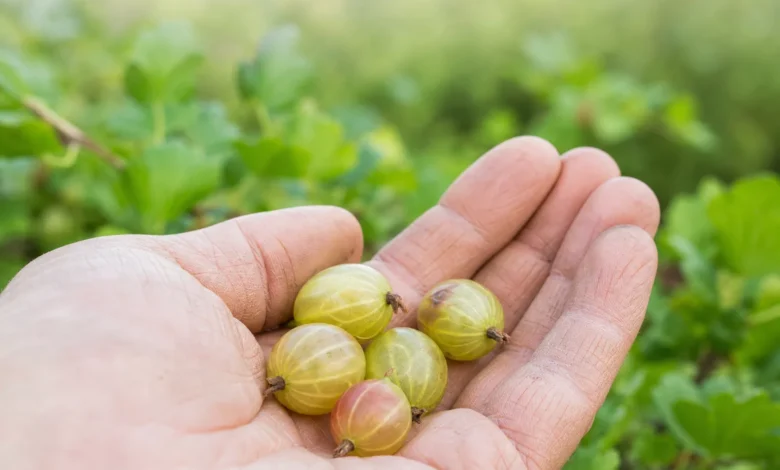
Are there more gooseberries in the grass than on the bush? Then you are probably wondering whether the plant is sick or whether this is still normal. Your gooseberries are falling off even though they are still small and green – and the good news is: The reason can usually be identified in a few minutes.
Six causes regularly come into question in the home garden. Some are completely harmless, others will cost you half your harvest if you don’t take action: natural trickling, nutrient deficiencies, American powdery mildew, sunburn and drought, voracious caterpillars and some rarer fungal diseases. Before you reach for the syringe, it’s worth looking at the most harmless explanation.
Check first: Are the gooseberries only falling because they are trickling?
Before you suspect illness, do a quick count of how many fruits are actually on the ground. About three to four weeks after flowering, a gooseberry bush automatically drops some of its young fruits – experts call this trickling. Usually only individual berries at the tips of the fruit clusters are affected, while the rest of the bush remains healthy and inconspicuous.
This is not a disease, but rather self-regulation: the plant keeps as many fruits as it can safely support and drops the excess. As long as the leaves are lush green, there are no deposits or spots and there are only a few fruits in the grass, you don’t have to do anything. Only when entire shoots fall empty or the berries change color does one of the following causes arise.

Detect nutrient deficiencies and quickly compensate for them
A hungry bush simply cannot hold its fruit. Over the course of the season, gooseberries need potassium and phosphorus for flowering and fruit setting as well as nitrogen for the foliage – if any of this is missing, the plant drops the fruits first. Nitrogen deficiency in particular becomes apparent early on: the leaves become pale, growth stops, and fruit setting fails. How you interpret yellow leaves like this as a warning signal will also help you with other berry bushes.
Organic fertilizer about every two years is sufficient for the basic supply of gooseberries – a proper layer of ripe compost around the root disc usually covers the requirement. If the deficiency is acute and the season is already advanced, a quick treatment can help: diluted bird droppings in a ratio of 1:20 with water, applied in the morning. The early timing protects the roots from burns because the solution does not take effect until the midday heat.

American mildew: when the berries turn brown
If the berries are initially grey-white and floury and then brown and soft, it is almost always caused by American powdery mildew (Sphaerotheca mors-uvae). The fungus initially forms a felty, light-colored coating over the tips of shoots, leaves and fruits; Over time, this coating turns brown, the affected berries develop brown spots and begin to rot. According to the North Rhine-Westphalia Chamber of Agriculture, dense, poorly ventilated bushes also promote the infestation.
When the first covering occurs, act immediately: Cut out the affected shoot tips and fruits, shorten the affected shoots by around five centimeters and dispose of the fallen leaves around the plant – not in the compost, otherwise the spores will overwinter there. Then disinfect your cutting tool so that you don’t spread the fungus from shoot to shoot. The sooner you intervene, the sooner the mildew can be stopped early.

Professional tips for prevention
- Winter pruning: Shorten the shoots by about a third in winter so that the crown remains light and airy – wet leaves then dry more quickly and fungi have a harder time.
- Location: Plant sunny and airy, if possible not in damp depressions where waterlogging and stagnant air collect.
- Fall leaves: Thoroughly rake and dispose of in the fall to remove overwintering fungal spores.
- Pour: Water directly to the roots in the morning so that the foliage dries during the day and does not remain permanently moist.
- Choice of variety: If the infestation recurs, switch to resistant, less susceptible varieties.
Sunburn and drought in midsummer
If the thermometer rises above around 30 degrees, it becomes critical for ripening gooseberries. In the blazing midday sun, the inside of the fruit can heat up to 50 degrees – the skin on the sunny side bleaches, becomes light, burnt, and the berry falls off before it is ripe. If dryness occurs, the stress increases even further. Anyone who can identify the causes of drought damage will see the first warning signs on the leaves.
Prevention starts with planting: a spot with some midday shade in the hottest weeks is worth its weight in gold. If the bush is already in full sun, a parasol or a light shade net during the midday hours helps at harvest time, as well as regular, thorough watering. If individual fruits are already damaged, harvest them immediately: almost ripe berries will ripen in the refrigerator, while green, unripe gooseberries are not suitable for consumption raw.

Pests: gooseberry moth and sawfly
If the leaves suddenly become perforated or entire shoots are eaten bare, caterpillars are usually at work – those of the gooseberry moth or the gooseberry sawfly. Both can largely defoliate a shrub within a few days. Without enough leaf mass, photosynthesis breaks down, the plant lacks the energy to supply the fruit, and it rejects the berries prematurely.
Acting quickly counts here. For small infestations, simply collect visible caterpillars and check the bush daily, especially the undersides of the leaves. The sooner you discover the animals, the greater the chance of saving the harvest before the caterpillars start the next generation.

What’s Hot
Garden and plants
Recognize chickweed: The poisonous lookalike often grows next to it
A brief overview of rarer fungal diseases
If a cause remains unclear despite all examination, it is worth taking a look at three fungal diseases that most guides ignore:
- Alternaria: appears with late spots in spring and leads to deformed, inelastic berries.
- Leaf drop disease (Drepanopeziza ribis): occurs mainly in damp weather – first small yellow-brown spots that grow together, then premature leaf fall, which weakens the fruit supply.
- Red pustular disease (Nectria cinnabarina): Preferably attacks weakened or injured bushes and causes individual shoots to wilt; Small red pads on the wood are the typical sign.
All three particularly affect stressed plants. An airy cut, clean tools and removed fallen leaves – the same steps as against mildew – take away their foundation.
Frequently asked questions
How do I know if it’s just trickling and not an illness?
You can tell if there are three things: it happens about three to four weeks after flowering, it only affects a few individual fruits at the tips of the fruit clusters, and the rest of the bush remains completely healthy – green leaves, no coating, no spots. However, if many berries fall at the same time or the leaves and fruits show discoloration, there is an illness or heat stress behind it.
Can I still use fallen green gooseberries?
Raw, unripe green gooseberries are too sour and hard to taste. But they are easy to process: For compote, jam or chutney, collect firm, undamaged fruits, cook them and balance out the additional acidity with a little more sugar. However, soft, rotten or mildew-affected berries do not belong in the pot.
Which gooseberry varieties are particularly mildew resistant?
If you’re always struggling with mildew, you’re best off with robust varieties. The red variety Rokula and the green variety Invicta are considered particularly resistant – both show significantly less susceptibility to American mildew. Buying a new one is particularly worthwhile if an old shrub is heavily infested year after year.