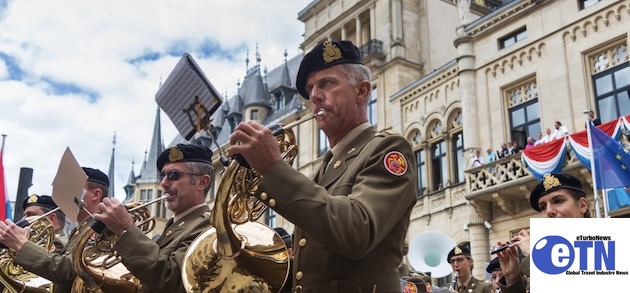
Luxembourg is leveraging its unique strengths—free nationwide public transport, safety, cultural diversity, and exceptional quality of life—to position itself as a leading small-city destination. Tourism leaders meeting in Luxembourg City explored how culture-driven development and sustainable growth can help smaller urban destinations compete internationally.
LUXEMBOURG CITY – Tucked between Belgium, France, and Germany, the Grand Duchy of Luxembourg is often overlooked by travelers rushing between Europe’s larger and better-known destinations. Yet this small nation of just over 670,000 residents has quietly built a reputation for offering an exceptional quality of life, remarkable accessibility, and a visitor experience that many larger destinations struggle to match.
Its capital, Luxembourg City, reflects the country’s unique character. Compact, safe, and remarkably easy to navigate, the city combines centuries-old fortifications and UNESCO World Heritage sites with modern European institutions, vibrant cultural venues, and abundant green spaces. Visitors frequently cite one particularly distinctive advantage: Luxembourg is the first country in the world to offer free nationwide public transportation, allowing residents and tourists alike to travel throughout the country without purchasing tickets.
Combined with one of Europe’s lowest crime rates, multilingual hospitality, and a high standard of public services, Luxembourg has developed a tourism product that remains relatively low-profile internationally but consistently impresses those who discover it.
Against this backdrop, national and international tourism leaders recently gathered at Cercle Cité in Luxembourg City at the invitation of the Luxembourg City Tourist Office (LCTO) to discuss the future of urban tourism and explore how smaller destinations can compete in an increasingly crowded global marketplace.
Learning from Other Cities
Representatives from several European destinations, including Oslo, Tallinn, and Nantes, shared insights into their tourism development strategies.
Among the speakers was Xavier Theret, responsible for promoting Nantes, a French city that has undergone a remarkable transformation from an industrial center into a thriving cultural destination.
“We started with culture,” Theret explained. “Culture generated interest, which brought in visitors. At first, we did things primarily for the people of Nantes, but soon the French media started talking about the city, and that’s when tourists started arriving.”
His remarks resonated strongly with attendees and reinforced a growing consensus that successful tourism development begins by creating value for local communities rather than targeting visitors alone.
Culture as a Driver of Tourism
Luxembourg’s Minister for Culture and Delegate Minister for Tourism, Eric Thill, highlighted the important relationship between culture and tourism, suggesting that Luxembourg City and the country as a whole can draw valuable lessons from the Nantes experience.
According to Thill, cultural initiatives should not only attract visitors but also enhance daily life for residents. Bringing culture into public spaces and creating shared experiences can strengthen community identity while simultaneously making destinations more appealing to tourists.
This philosophy aligns closely with Luxembourg’s broader approach to tourism development, which emphasizes sustainability, authenticity, and quality of life over mass tourism.
Luxembourg’s Competitive Advantages
Antje Voss, Director of the Luxembourg City Tourist Office, believes the city already possesses many of the attributes modern travelers are seeking.
She pointed to the capital’s extensive cultural offerings, including museums, festivals, and public events, many of which are free of charge.
“We also have plenty of green spaces and parks, which really enhance the quality of life,” Voss said. “What’s more, the city is compact and can easily be explored on foot, and public transport is free. Many visitors comment on these strengths.”
In an era when many European cities are struggling with overtourism, Luxembourg’s manageable scale has become one of its most attractive assets. Visitors can experience historic neighborhoods, cultural attractions, government institutions, and scenic natural areas within short distances, creating an experience that feels both accessible and authentic.
The Advantage of Being Small
Thea Gunnes from Visit Oslo echoed this sentiment, encouraging smaller cities to embrace rather than compete against their size.
“In Oslo, you can reach almost everywhere on foot, and I think that’s also the case in Luxembourg,” Gunnes observed. “Distances are short, and even when visitor numbers increase, you can nudge people to be in different places. I think that’s a good asset.”
For Luxembourg, where tourism growth remains measured and sustainable, this perspective reinforces a key strategic advantage. Unlike larger urban destinations facing overcrowding and infrastructure pressures, smaller cities can often offer visitors a more relaxed and personalized experience while maintaining a high quality of life for residents.
Looking Ahead
As Luxembourg continues to refine its tourism identity, the Luxembourg City Tourist Office is preparing a new initiative designed to better understand how the city is perceived both at home and abroad.
Later this year, the organization will launch a “Place Identity Scan,” bringing together stakeholders from multiple sectors to evaluate whether Luxembourg City is effectively positioning and presenting itself to international audiences.
Luxembourg City Tourist Office (LCTO)
Visit the city of Luxembourg with Luxembourg City Tourist Office and experience a unique moment with over 40 guided tours and 80 locations to discover.
The project, scheduled to begin in the autumn, will explore how the city can further leverage its strengths—from culture and sustainability to accessibility and quality of life—to strengthen its profile in the competitive European tourism landscape.
For a destination that remains one of Europe’s best-kept secrets, the challenge may not be creating new attractions, but simply ensuring that more travelers discover what Luxembourg already offers: a safe, welcoming, culturally rich capital where everything is within reach and where quality, rather than quantity, defines the visitor experience.