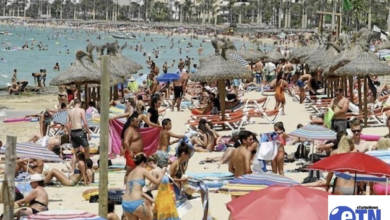
Momentum is growing after WTN members launched an advocacy campaign for the creation of a dedicated UN Tourism thematic office representing all small island tourism economies worldwide. Leaders from the Indian Ocean, including Seychelles and the Vanilla Islands Organization, say island destinations share unique vulnerabilities requiring stronger institutional coordination beyond the existing Small Island Developing States framework.
The call for a dedicated thematic office within UN Tourism focused on small island tourism economies is gaining momentum across the global tourism community, following renewed debate sparked by a recent report from eTurboNews on an advocacy initiative by the World Tourism Network.
The initiative, titled “Beyond SIDS: Why UN Tourism Needs a Thematic Office for All Small Island States,” has reopened longstanding discussions about how island tourism economies are represented within the international tourism governance system.
At the center of the proposal is a growing recognition that no permanent coordination mechanism currently exists within UN Tourism to address the unique realities faced by small-island tourism economies as a distinct global category.
While the existing SIDS (Small Island Developing States) framework focuses on development vulnerabilities, many island territories and states remain outside that classification despite facing similar structural challenges. These include dependence on air connectivity, exposure to climate change and cyclones, vulnerability to fuel-price volatility, reliance on cruise tourism, and persistent labor shortages.
Indian Ocean Stakeholders Back the Proposal
Support for the initiative has emerged strongly from the Indo-Pacific and Indian Ocean regions, where tourism remains a cornerstone of many island economies.
Pascal Viroleau, Director-General and Founder of the Vanilla Islands Organization, said the proposal responds to a genuine institutional need.
WTN Membership Application – World Tourism Network (WTN)
Join 33,000+ Members Across 133 Countries WTN Membership Benefits Showcase Your AffiliationProudly display the WTN logo at your business, on […]
The organization brings together six Indian Ocean island territories and nations: Réunion, Mauritius, Madagascar, Seychelles, Comoros, and Mayotte.
“The idea is particularly interesting and should make it possible to better recognize our specificities at the global level,” Viroleau said. “We stand ready to take part in the discussion so that the Indian Ocean has its rightful place in implementing this idea, and to share our experience in bringing island territories together. This work should indeed be placed under the auspices of UN Tourism.”
Backing also came from Alain St Ange, Ambassador-at-Large of Seychelles and former Minister of Tourism.
“Islands share so many common realities, even when far apart, that bringing them together under the auspices of UN Tourism makes complete sense,” St Ange stated. “I stand ready to work alongside the Secretary-General, Shaikha Al Nowais, to move the idea forward.”
Réunion’s Saint-Pierre Offers to Host First Meeting
The proposal is now beginning to move from advocacy toward practical coordination.
Local authorities in Saint-Pierre have stepped forward to offer the city as host for a first working meeting bringing together governments, tourism organizations, and institutional stakeholders interested in advancing the initiative.
The proposed gathering would mark the first structured attempt to examine how a permanent thematic office within UN Tourism could operate and what mandate it could carry for island tourism economies worldwide.
A Broader Governance Debate
The discussion also raises larger questions about global tourism governance and whether existing institutional frameworks adequately reflect the realities of island economies.
For many island destinations, tourism accounts for the overwhelming majority of export earnings, in some cases exceeding 80% of national revenue. Recent crises — including the COVID-19 pandemic, climate-related disruptions, and global airline restructuring — have highlighted the disproportionate vulnerability of island destinations to external shocks.
Supporters of the proposal argue that a dedicated thematic office could improve coordination, policy advocacy, resilience planning, and international representation for island tourism economies that often remain fragmented across regional and development-based frameworks.
As momentum builds across the Indian Ocean and beyond, the proposal is increasingly being viewed not only as a tourism initiative but as part of a broader effort to redefine how island economies are represented within international institutions.