Uganda’s tourism industry is urging the international community to distinguish between Uganda and the Democratic Republic of the Congo amid Ebola-related travel restrictions. As KLM suspends flights and global connectivity declines, tourism leaders warned that inaccurate reporting and travel advisories could severely damage Uganda’s visitor economy.
KAMPALA, Uganda – larger Uganda’s tourism industry is facing a growing crisis as international travel restrictions linked to the Ebola outbreak in neighboring Democratic Republic of the Congo (DRC) trigger airline disruptions, traveler anxiety, and renewed concerns that the country is being unfairly grouped with its much neighbor.
In the latest blow, Dutch carrier KLM suspended flights to and from Entebbe after international travel and entry restrictions linked to the Ebola outbreak began affecting airline crew operations. KLM said that while Entebbe itself is not considered an active Ebola risk zone, measures imposed by several countries on travelers passing through Uganda made it impossible to continue operating scheduled services.
For Uganda’s tourism sector, the suspension carries significance far beyond a single airline route.
For decades, KLM has served as one of Uganda’s most important gateways to Europe, providing direct connectivity between Entebbe and Amsterdam and linking Uganda to a vast global network. Other major international carriers serving Uganda include Qatar Airways, Emirates, Turkish Airlines, Brussels Airlines, Ethiopian Airlines, and RwandAir, all of which play critical roles in bringing international visitors to East Africa.
Industry stakeholders warned that Uganda now faces a “perfect storm.”
Alongside Ebola-related travel concerns, ongoing conflict involving Iran has disrupted regional aviation networks, forcing Gulf carriers to alter schedules and routes across parts of the Middle East. Reduced accessibility and fewer global connections are adding further pressure to a tourism industry still rebuilding international visitor confidence.
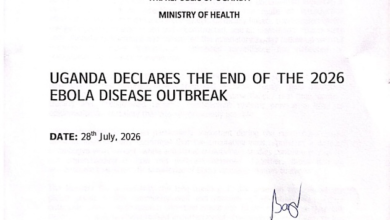
At the same time, the United States and several other countries have imposed stringent travel measures affecting travelers from Uganda, the DRC, and South Sudan following the World Health Organization’s declaration of a Public Health Emergency of International Concern. Enhanced screening and entry restrictions have added to traveler uncertainty.
Uganda Travel Advisory | Travel.State.gov
Prepare for your trip to Uganda by reviewing the State Department Travel Advisory, entry and exit requirements, local laws, and US embassy tips.
Yet tourism leaders argue that an important distinction is being lost in much of the international reporting.
While the Ebola outbreak remains centered in eastern DRC, Uganda has reported a limited number of cases, many linked to cross-border movement. Health authorities have emphasized rapid detection, contact tracing, isolation, and containment efforts, with no evidence of widespread community transmission comparable to conditions in the most affected areas of DRC.
Despite repeated requests for comment, the Uganda Tourism Board has remained publicly silent regarding the impact of Ebola-related perceptions on tourism and the country’s international image.
Uganda Tourism Board recently joined the World Travel and Tourism Council as a destination partner. WTTC has been closely monitoring the unfolding situation and may be best positioned to guide Uganda and, with its powerful members, give a jump-start once the situation is under control.
Tourism authorities in neighboring countries, including Kenya and Tanzania, have likewise not publicly outlined contingency plans or addressed concerns that negative perceptions surrounding the outbreak could spread to the wider East African tourism region.
As official voices remain largely absent, private-sector leaders are increasingly stepping forward.
One of the strongest statements came from a senior Ugandan tourism leader who serves as Vice President of the Uganda Tourism Association (UTA), Managing Director of Pristine Tours Ltd, Executive Director of the Great Lakes Tourism Institute, and Management Consultant (MBA – Management).
Speaking on behalf of concerns shared by many tourism professionals, he said:
“Here is something that has been bothering me about the international reporting around the current Ebola situation.
Uganda and the DRC are often being mentioned in the same breath, creating the impression that both countries are experiencing the same level of outbreak and risk, yet the reality is different.
Uganda’s cases have been limited, largely linked to cross-border movement from DRC where the outbreak originated. More importantly, Uganda’s public health system has once again demonstrated its ability to detect, isolate, trace contacts and respond swiftly.
The question should not simply be whether a country has recorded a case. The question should be how effectively that country is managing the situation.
As a tourism and business destination, Uganda deserves to be assessed on facts, not assumptions. A country that quickly identifies and contains imported cases is not the same as a country facing widespread community transmission. Risk communication must be accurate, proportional and evidence-based.
No one is asking for Uganda to be excluded from reporting. We are asking for precision. Travelers, investors and international partners deserve reporting that distinguishes between proximity to an outbreak and actual outbreak conditions on the ground.
Uganda has spent decades building expertise in managing public health emergencies. “That story deserves to be told too.”
His comments reflect growing frustration across Uganda’s tourism sector, where operators fear that inaccurate perceptions may inflict economic damage disproportionate to the actual public health situation.
For an industry heavily dependent on international connectivity and traveler confidence, the challenge now extends beyond managing health risks. It is also about ensuring that Uganda is judged on its own circumstances rather than being automatically equated with developments across the border in the Democratic Republic of the Congo.
As airlines adjust schedules, governments tighten entry requirements, and travelers reconsider plans, many in Uganda’s tourism industry are calling for a more nuanced global conversation—one that recognizes a simple but critical fact:
Uganda and the Democratic Republic of the Congo are not the same country, and they should not be treated as such.”