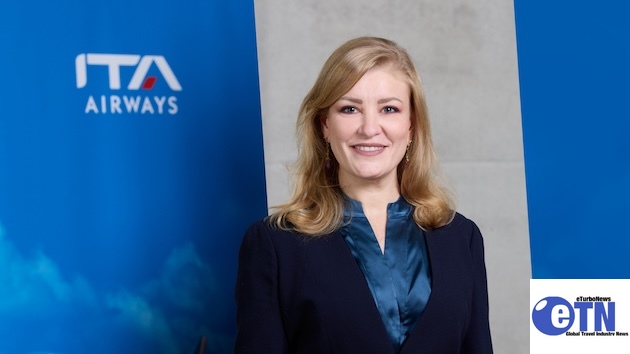
Lufthansa Group has appointed Lorenza Maggio as the next CEO of Brussels Airlines, placing one of its most experienced executives at the helm of Belgium’s national carrier. She inherits a profitable but challenged airline with a unique Africa network, growing Star Alliance importance, and increasing pressure to balance national identity with deeper Lufthansa integration.
BRUSSELS, Belgium – Lufthansa Group has selected one of its most experienced international executives, Lorenza Maggioto become the next Chief Executive Officer of Brussels Airlines, placing her in charge of one of Europe’s most strategically important niche network carriers at a time of transformation for both the airline and the wider Lufthansa Group.
Pending approval by the Board of Directors of SN Airholding, Maggio will succeed Dorothea von Boxbergwho leaves the airline on August 31 at her own request for leading Brussels Airlines through post-pandemic recovery and renewed profitability.
Beyond leading Belgium’s national airline, Maggio will also become Executive Board Representative to the European Commissionhighlighting Brussels Airlines’ unique position—not only as Belgium’s flag carrier but also as Lufthansa Group’s airline headquartered in the political capital of the European Union.
An Insider with Lufthansa Group DNA
Unlike many airline CEOs recruited from outside the industry, Maggio has spent years inside the Lufthansa ecosystem.
The 48-year-old Italian currently serves on the Board of ITA Airways as Chief Strategy and Integration Officer, overseeing the Italian carrier’s integration into Lufthansa Group following its acquisition. Before joining ITA, she led Lufthansa Group’s sales across Europe (outside home markets), the Middle East and Africa, directed brand and customer strategy at Eurowings, and previously managed a subsidiary of LSG Group.
Her appointment suggests Lufthansa is prioritizing continuity and integration rather than radical change.
Industry observers also note that Maggio has maintained a relatively low public profile compared with many airline executives. Her professional presence on LinkedIn and industry events reflects a reputation built more on strategic execution than personal branding—a leadership style increasingly common among Lufthansa Group executives.
More Than Just Another Lufthansa Airline
Although wholly owned by Lufthansa Group, Brussels Airlines occupies a unique position.
It serves simultaneously as:
- Belgium’s national carrier
- Lufthansa Group’s Africa specialist
- A key Star Alliance hub in Western Europe
- An important diplomatic airline connecting Brussels with Europe, Africa and North America
Unlike Lufthansa in Frankfurt or SWISS in Zurich, Brussels Airlines inherited much of its African network from Sabena, giving it one of Europe’s strongest positions in sub-Saharan Africa.
Today, the airline serves 18 destinations across sub-Saharan Africamaking it one of Lufthansa Group’s most strategically differentiated airlines.
That specialization also explains why Brussels Airlines has little presence in Asia. Aviation enthusiasts and industry discussions frequently point out that Lufthansa Group deliberately positions Brussels Airlines as its Africa expert rather than duplicating long-haul Asian services already offered by Lufthansa, SWISS, Austrian, and ITA Airways.
Strengths within the Lufthansa Family
Being part of the Lufthansa Group provides Brussels Airlines with significant competitive advantages.
Among them:
- access to the Lufthansa Group purchasing power
- integrated commercial sales
- joint fleet planning
- Miles & More loyalty benefits
- Star Alliance’s worldwide network
- fuel hedging that softens market volatility
- coordinated schedules with other Lufthansa hubs
Passengers also benefit from seamless Star Alliance connectivity to more than 1,100 destinations worldwide through partner airlines.
Recent examples of group synergies include Lufthansa Group’s decision to equip Brussels Airlines’ fleet with Starlink-powered high-speed Wi-Fi beginning in 2026, part of a fleet-wide investment across approximately 850 aircraft.
The Challenges Ahead
Despite these strengths, Maggio inherents several significant challenges.
Political disruption
Unlike many competitors, Brussels Airlines has repeatedly suffered from nationwide Belgian strikes and demonstrations that forced flight cancellations even though the airline itself was not involved in the labor disputes.
Management has identified these recurring disruptions as one of the principal reasons for the decline in profits in 2025 and the first quarter of 2026.
Rising costs
Fuel prices and geopolitical instability in the Middle East have increased operating costs, while European airlines continue adapting to stricter environmental regulations.
Although Lufthansa’s fuel hedging program helped cushion the blow, higher fuel expenses significantly affected first-quarter 2026 performance.
Profitability
Brussels Airlines remains profitable, but margins remain thin.
The airline carried over 9.1 million passengers in 2025increased revenues above €1.6 billionyet adjusted EBIT fell to €28 milliondemonstrating how vulnerable network airlines remain to external shocks.
Fleet modernization
The airline has modernized its European fleet with eight Airbus A320neo aircraft since late 2023, improving fuel efficiency and reducing emissions. However, many aviation observers continue to question when Brussels Airlines will receive new-generation long-haul aircraft to replace its aging Airbus A330 fleet. That subject has generated considerable discussion among Lufthansa followers on social media and aviation forums.
Recent Achievements
Despite economic pressures, Brussels Airlines continues investing heavily in its product.
Recent initiatives include:
- expansion of European services
- upgraded Premium Economy offerings
- Renovations of THE LOFT lounge in Brussels,
- free fleet-wide Starlink Wi-Fi rollout,
- award-winning Belgian branding initiatives,
- new cinematic safety video directed by acclaimed Belgian filmmakers Adil El Arbi and Bilall Fallah,
- continued investment in Belgian culinary partnerships onboard.
The airline also continues leveraging its identity as Belgium’s ambassador through collaborations promoting Belgian culture, food, and art worldwide.
Strategic Importance for Star Alliance
For Star Alliance, Brussels Airlines remains a crucial connector between Europe and Africa.
While Lufthansa dominates Central Europe, SWISS focuses on premium traffic, Austrian strengthens Eastern Europe and ITA expands Southern Europe, Brussels Airlines provides the alliance with unmatched connectivity to numerous African destinations.
This complementary role reduces internal competition while expanding Star Alliance’s overall global reach.
Looking forward
Lorenza Maggio arrives at Brussels Airlines during an important phase for the Lufthansa Group. The group expects continued travel demand, accelerated transformation, and ongoing fleet modernization across its airlines in 2026.
Her experience integrating ITA Airways may prove especially valuable as Lufthansa increasingly coordinates its network airlines while allowing each to preserve its national identity.
For Brussels Airlines, the challenge will be balancing Belgian identity with deeper integration into Lufthansa—a delicate task that has defined the carrier since its joining the German aviation group.
If Maggio succeeds, Brussels Airlines could strengthen its role not merely as Belgium’s airline but as the Lufthansa Group’s gateway to Africa and one of Star Alliance’s most distinctive carriers.