There are roads that connect places, and there are roads that define nations. For 100 years, Route 66 has done both.
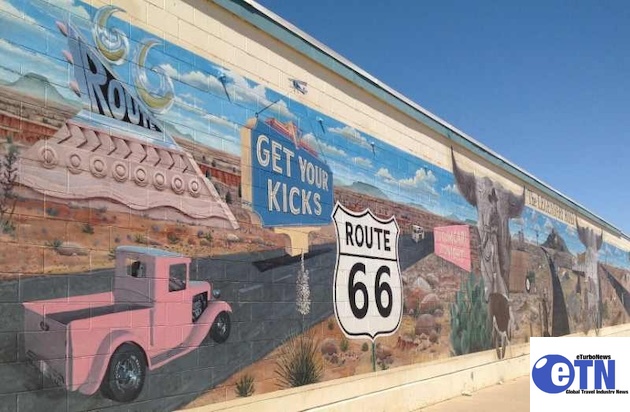
As America celebrates the centennial of the legendary Mother Road in 2026, the highway remains one of the world’s most recognized tourism icons. Stretching approximately 2,448 miles (3,940 kilometers) across eight states—Illinois, Missouri, Kansas, Oklahoma, Texas, New Mexico, Arizona, and California—Route 66 is more than asphalt connecting Chicago to Santa Monica.
It became the road that introduced America to itself—and America to the world.
For generations, Route 66 represented opportunity. It connected farms to factories, families to new beginnings, entrepreneurs to customers, and dreamers to the promise of the American West. It helped build an image of the United States that millions around the world came to admire: a nation of open roads, small businesses, welcoming communities, and endless possibilities.
One could argue that Route 66 helped make America great—not through politics or slogans, but through mobility, commerce, optimism, and the belief that tomorrow could be better than today.
That may be his greatest legacy.
More Than a Highway
The Eight States Along Route 66
Officially commissioned on November 11, 1926Route 66 quickly became America’s “Main Street.”
Unlike today’s Interstate highways, which were designed to move traffic around communities as quickly as possible, Route 66 moved travelers through them.
- Every town matters.
- Every cafe.
- Every motel.
- Every gas station.
- Every family-owned business.
The Mother Road transformed thousands of entrepreneurs into business owners and hundreds of communities into destinations. The economic engine created by travelers supported restaurants, auto repair shops, diners, trading posts, motels, souvenir stores, and countless local businesses that depend on visitors to stop, not simply pass by.
For many communities, Route 66 was not just a means of transportation. It was survival.
A Tourism Economy Before Tourism Was an Industry
Long before “heritage tourism” became a marketing term, Route 66 was demonstrating how travel could sustain local economies.
When the Interstate Highway System diverted traffic beginning in the 1960s, many of those same communities suffered overnight. Some nearly disappeared.
- Others refused to surrender.
- Instead of giving up, they embraced their history.
- Historic motels were restored.
- Neon signs lit up once again.
- Classic diners reopened.
- Museums preserved memories that otherwise would have been lost.
Today, Route 66 has become an economic powerhouse once more—not because of heavy industry or manufacturing, but because of tourism.
Every visitor who spends the night in a restored motel, enjoys breakfast in a family-owned diner, buys Native American art, fills a rental car with fuel, or purchases souvenirs contributes directly to local economies.
Few tourism routes anywhere in the world distribute visitor spending across so many small communities.
Why the World Still Comes
Few roads carry the international appeal of Route 66.
Visitors arrive from Germany, Japan, Australia, the United Kingdom, France, Brazil, South Korea, and dozens of other countries to experience the America they have imagined for years.
Driving the entire route usually requires two to three weeks to truly appreciate its attractions, although the distance can technically be covered in about 40 hours without stops.
But Route 66 has never been about efficiency. It has always been about discovery. International visitors rarely remember how many miles they drove. They remember conversations with motel owners.
- Fresh pie in a roadside diner.
- The glow of vintage neon after sunset.
- Classic cars parked outside family-run cafes.
- Native American culture.
- Wide-open deserts.
- Friendly conversations with strangers.
Those experiences cannot be recreated on an interstate.
America’s Soft Power
Governments invest billions in promoting their national image. Route 66 has done it for a century.
Hollywood films, television series, music, literature, and photography transformed the Mother Road into one of the world’s most recognizable travel dreams. Long before the phrase “soft power” entered political vocabulary, Route 66 projected an image of freedom, adventure, hospitality, and opportunity.
For many international visitors, driving Route 66 remains as iconic as seeing the Grand Canyon, Yellowstone, New York City, or the Golden Gate Bridge.
It is one of America’s greatest tourism brands.
The Meaning of Nostalgia
Yet the centennial arrives at a moment when America is debating not only its future, but also its past.
For many Americans, Route 66 represents “good old America”—a time remembered for optimism, opportunity, thriving Main Streets, and communities built around independent businesses. They see the Mother Road as a reminder of values worth preserving: hard work, hospitality, entrepreneurship, and local pride.
For others, that same nostalgia is more complicated. The century that Route 66 spans also includes stories of inequality, segregation, displacement, and communities that did not share equally in the American dream. For them, celebrating the road without acknowledging those realities risks turning history into mythology.
A third group raises a different concern overall. They ask whether America is becoming too nostalgic. Is preserving yesterday enough if the communities along Route 66 struggle to create opportunities for tomorrow? Can a road survive as more than a museum piece if young people leave and small businesses disappear?
These are fair questions.
- And perhaps that is exactly why Route 66 still matters.
- History should neither be erased nor romanticized.
- It should be understood.
The Next Hundred Years
The Route 66 Centennial is far more than an anniversary. It’s an opportunity.
Few destinations already enjoy worldwide recognition. Few tourism brands unite eight states under one identity. Few experiences encourage travelers to spend their money in locally owned businesses across hundreds of communities rather than in a handful of major cities.
The Mother Road demonstrates that heritage preservation is not merely about saving old buildings.
- It’s about sustaining local economies.
- It’s about giving independent businesses a future.
- It is about reminding visitors that America’s greatest treasures are often found far beyond its skylines.
The next century of Route 66 should not be built on nostalgia alone.
It should be built on investment, preservation, entrepreneurship, and welcoming visitors from around the world.
The Road That Still Defines America
Route 66 has never simply connected Chicago with Santa Monica.
- It connects generations.
- It connects cultures.
- It connects dreams.
For a hundred years, it helped shape how Americans saw themselves—and how the world saw America.
Whether one believes the Mother Road “made America great,” reflected America’s greatness, or simply witnessed it unfold, there is little doubt that it became one of the country’s defining symbols.