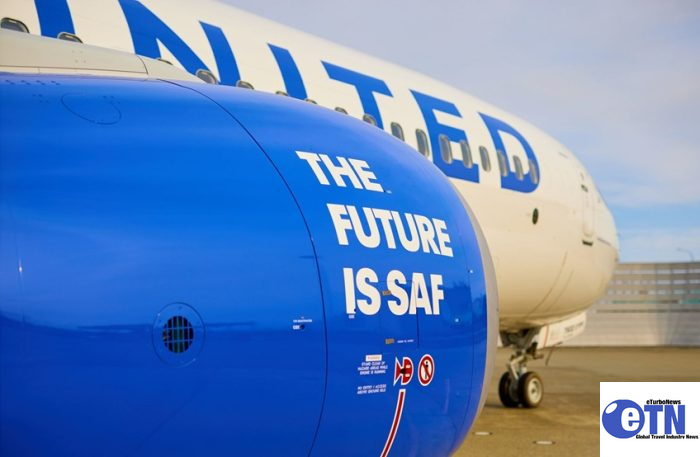
United Airlines is doubling down on premium travel, announcing plans to add over 250 aircraft and introduce upgraded onboard experiences across all cabins. The move reflects a broader aviation trend: airlines are prioritizing higher-paying passengers and fuel-efficient fleets despite economic uncertainty and volatile fuel prices affecting global tourism.
Despite persistent headwinds in global tourism—ranging from economic uncertainty to volatile fuel costs—United Airlines is making one of the most aggressive expansion bets in modern aviation history.
The Chicago-based carrier announced plans to add more than 250 aircraft by April 2028alongside sweeping upgrades to onboard products, route strategy, and customer experience. The move is not just about growth—it’s about redefining what “premium” means across everyone cabin, including domestic and regional flights.
A Strategic Pivot: Premium Everywhere
United’s strategy reflects a broader industry shift: airlines are increasingly chasing high-yield passengers rather than pure volume.
Key highlights from the announcement include:
- A new one “Coastliner” Airbus A321neo subfleet for premium transcontinental service
- Introduction of lie-flat Polaris seats on narrowbody aircraft—a first at scale
- Expansion of long-haul premium capacity via Boeing 787-9 “Elevated” interiors
- A redesigned CRJ450 regional jet with a private jet-like experience
- Fleet modernization, replacing older, less fuel-efficient aircraft like the Boeing 757
CEO Scott Kirby framed the move as a long-term play for loyalty: investing billions to win repeat customers rather than compete on price alone.
US Aviation Trends: Premiumization Amide Pressure
United’s expansion comes at a paradoxical moment for US aviation.
1. Record Fuel Costs vs. Fleet Efficiency
Historically, spikes in jet fuel prices—often tied to global oil markets—have forced airlines to:
- Retire older aircraft (like the Boeing 757)
- Invest in fuel-efficient models (A321neo, 737 MAX)
United’s plan aligns perfectly with this trend: new aircraft are up to 20–30% more efficienthelping offset fuel volatility.
2. Demand Is Uneven—but Premium Is Strong
Post-pandemic travel patterns show:
- Leisure travel recovered quickly
- Business travel remains below 2019 levels—but higher-end segments are rebounding faster
Airlines, including Delta Air Lines and American Airlines, have reported that premium cabins generate disproportionate profitseven when overall demand fluctuates.
United’s move to nearly double lie-flat seat capacity is a direct response.
3. Domestic Routes Are Becoming “Internationalized.”
The Coastliner concept reflects a growing US trend:
- Turning high-demand domestic routes (eg, New York–Los Angeles) into luxury corridors
- Offering international-style service domestically
These mirrors strategies already used by competitors but pushes them further—especially with Polaris lounge access on domestic tickets.
Global Aviation: Expansion Despite Uncertainty
1. International Carriers Lead in Premium Innovation
Airlines like Emirates, Singapore Airlines, and Qatar Airways have long dominated premium travel.
United’s upgrades—especially the Polaris Studio suites with doors, caviar service, and 4K OLED screens—signal an attempt to close that gap.
2. Narrowbody Long-Haul Is Reshaping Routes
The introduction of the Airbus A321XLR is one of the most important global trends:
- Enables long-haul flights with smaller planes
- Opens “thin routes” (less demand, previously unprofitable)
- Reduces fuel burn and operational risk
United’s plan to deploy A321XLRs to Europe and South America mirrors moves by airlines like JetBlue and Aer Lingus.
3. Tourism Volatility vs. Airline Confidence
Even with:
- Inflation is dampening discretionary travel
- Geopolitical instability affecting routes
- Lingering post-pandemic recovery in Asia
Airlines are still expanding. Why?
Because:
- Long-term demand forecasts remain strong
- Airlines are optimizing for profit per passenger, not volume
- New aircraft unlock previously impossible routes
The Big Picture: A Shift in Airline Economics
United’s announcement reflects a deeper transformation:
| Old model | New model |
|---|---|
| Maximize seat count | Maximize revenue per passenger |
| Uniform cabins | Tiered, premium heavy cabins |
| Hub and spoke dominance | Flexible, long-range narrowbody routes |
| Price competition | Experience competition |
Analysis: Risky Timing or Smart Bet?
At first glance, United’s aggressive expansion during a period of:
- High fuel prices
- Fragile tourism recovery
- Economic uncertainty
might seem counterintuitive.
But strategically, it aligns with where aviation is heading:
- Premium demand is more resilient than economy travel
- Fuel-efficient aircraft reduce exposure to oil shocks
- Customer experience is becoming the primary differentiator
In short, United isn’t betting on more travelers—it’s betting on better-paying travelers.
Conclusion
United Airlines’ latest move underscores a defining trend in modern aviation: growth is no longer just about scale—it’s about quality, efficiency, and differentiation.
While global tourism remains uneven, the skies are far from quiet. Instead, they are being reshaped by airlines willing to invest heavily now to dominate the next decade of travel.
And if United’s gamble pays off, the future of flying—whether across oceans or across the US—may look a lot more like first class, even in economy.