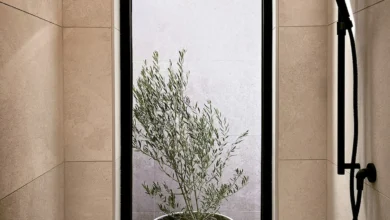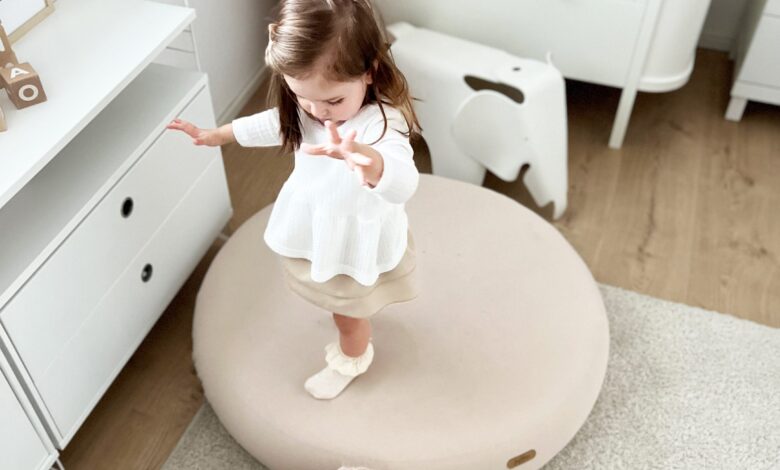
Hello everyone, today’s blog series about building our house is all about a very special area: the children’s rooms. When planning, it was important to us to create spaces that not only function today, but also grow with our children. Places of retreat, scope and suitability for everyday use were just as important as clear structures and well-thought-out architecture. Children’s rooms and an additional backup room are much more than just functional areas in the floor plan – they are an expression of forward-looking, intelligent architecture. When building a house, it becomes particularly clear how valuable it is not only to plan for the current phase of life, but also to think about possible developments. Children grow, needs change, and life models are rarely static. A floor plan that takes these dynamics into account creates long-term flexibility and avoids later restrictions. Sufficiently large and well-proportioned children’s rooms are a central component. They should not be seen as a sideshow, but as full-fledged living spaces that can evolve over the years – from the play area for toddlers to the retreat for school children to the personal space for teenagers. Bright, well-lit rooms with clear structures not only give children space to play and learn, but also the opportunity to create their own little cosmos. But real future viability only arises when the floor plan thinks beyond the immediate “now”. An additional, flexibly usable room – the so-called backup room – is an architectural wildcard. What may initially be empty, serves as a storage room or is only used occasionally can take on very different roles over the years: It becomes a guest room when family or friends come to visit. To the second office if two people regularly work from home. To the hobby room, studio or fitness area when personal projects need space. Or – should the family situation change – of course to another children’s room. This additional space creates a freedom that you often only really appreciate after years in everyday life. It prevents later compromises, hasty renovations or the feeling that the house has become too small for your own life. Instead, a floor plan is created that grows, adapts and opens up possibilities. A house that thinks for itself is a house that functions in the long term. And a floor plan that leaves room for development is ultimately a gift to the future of the family – architecturally valuable, functionally clever and humanly far-sighted. We have created a clearly demarcated children’s area on the upper floor. There are two children’s rooms here, which were deliberately planned to be equal and offer enough space for playing, learning and retreating. The rooms are connected via a separate children’s hallway, which gives the area structure and separates it from the rest of the house. Particularly practical in everyday life: the children’s own shower room, which is accessible directly from the hallway and allows the children maximum independence. A key architectural feature of this floor is the exceptionally high ceilings. With room heights of up to 3.5 meters, an open, airy living feeling is created. This generosity not only creates visual space, but also opens up a wide range of possible uses – from loft beds to individual storage solutions. The knee height of 1.80 meters is a decisive factor for the high suitability of the rooms for everyday use. It ensures that the rooms can be fully furnished despite the shape of the roof and that there are no compromises in use. The sloping ceilings were deliberately planned to give the rooms character without restricting them. Important: Areas under a height of 1 meter do not count as living space, which was consistently taken into account when planning and calculating the area. This means that the living space shown is realistic, transparent and corresponds to the actual usage possibilities. There is also an add-on room on the upper floor that can be used flexibly. It currently serves as a dressing room for Tom and adds valuable storage space to the private area. The conscious separation of the sleeping and dressing areas creates more peace, order and comfort in everyday life – a detail that quickly proves to be a real added value. Overall, the upper floor shows how important well-thought-out planning is: clear zones, realistic area calculations and rooms that not only look good but also function in the long term.
Sincerely,
Looks like…COJA