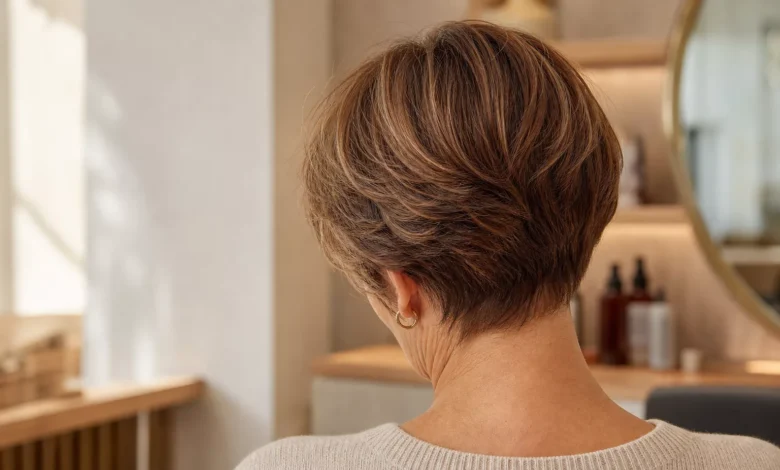

A short, layered bob from 50 depends on a detail that most women don’t even mention in the hairdresser’s chair: the neck. If it is kept a few centimeters shorter at the back than at the front, the entire cut stands up, the top hair gains volume and the face appears more open. It is precisely this transition that decides whether the bob looks cheeky and light or like a good helmet. In this article you will read why the cut is so rejuvenating, what words you can use to really get it at the hairdresser and how you can keep it in shape afterwards.
In short
- Length: At the front, usually up to the chin or just above it, 2-3 cm shorter at the neck – this provides support and shape.
- Stages: bring movement to the lengths and prevent the hair from falling heavy and compact.
- Neck shorter: creates volume on the top of the head and a well-groomed, upright overall appearance.
- Care: Uncomplicated in everyday life, but trim every 6-8 weeks, otherwise the steps will lose their shape.
Why the short, layered bob has such a rejuvenating effect after 50
The effect has nothing to do with magic, but with statics. Long hair cut to the same length visually pulls the face down – it falls heavily and lies flat against the head. If the hairdresser shortens the lengths and sets layers, the opposite happens: the ends become lighter, the hair gets movement and stands up.
The crucial point is at the back. A neck that is cut a few centimeters shorter than the front section lifts the back of the head and pushes the volume to where it is often missing after 50: the top of the head. The result appears fresher without being harsh. There is enough length at the front to fall softly around the face – this combination of short neck and longer top hair is the real secret of the cut.
There is also a practical side effect: hair that becomes finer looks short and thicker because the layers are placed on top of each other in several levels and thus create the illusion of fullness.
How to properly brief your hairdresser
The most beautiful inspiration is of little use if it peters out on the chair in vague wishes. “Just a little shorter and fresher” can mean five different cuts. Instead, say specifically what you want – preferably in this order:
- Basic length: “Chin length at the front, two to three centimeters shorter at the neck.” This makes the defining angle of the bob clear.
- Stages: “Soft layers in the top hair for movement, but a smooth, clean transition to the nape.” This will prevent it from looking frayed at the back instead of neat.
- Contour: “Please allow the contours around the ear and the back of the neck to be fine, not sharp.” This keeps the look casual instead of strict.
- Facial area: “Leave some length at the front so it falls softly around the face.” Especially important for round faces.
It is just as helpful to anticipate the typical misunderstandings. Firstly: For some hairdressers, “stepped” means thinning with thinning scissors – with fine hair this can take away the fullness. Be clear about whether you want movement through the length of the cut or thinned ends. Second: “Short in the neck” quickly becomes too short. Say a number, not a gesture. Third, bring a photo from the back, not just the front – the rear view shows the cut in question much more honestly than any frontal portrait.

Which face shape suits this cut?
The short, layered bob is versatile, but the length at the front should match the shape of the face. As a rough decision-making aid:
- Round face: Leave the front area a little longer, just below the chin. The length visually stretches and takes away the width from the curve.
- Angular face: Soft steps and slightly inwardly falling tips balance out distinctive features. Hard, straight edges would emphasize the edges of the face.
- Oval face: The classic – almost every variation works here, from chin-length to really short.
- Heart-shaped face: A little more fullness in the lower area, for example through steps at chin height, brings balance to the narrower jawline.
More important than any rule is the conversation with the hairdresser who has your hair in his hands. Vertebrae, direction of hair growth and structure often determine the appropriate length more than the shape of the face.
3 popular variants in comparison
Within the short bob, there are three styles that work particularly well over 50 – depending on how much freshness or elegance you want:
- The cheeky, layered short bob: fringed tips, soft transitions, lots of movement. Looks young and uncomplicated and is ideal if you don’t want to spend much time on your head in the morning.
- The structured bob with bangs: A soft, side-falling fringe subtly conceals forehead lines without appearing severe. Good for anyone who likes a little more frame around the eyes at the front.
- The elegant silver bob: Clear lines in combination with gentle steps make a gray or silver natural tone look elegant instead of old-fashioned. Less cheeky, but very confident.
If you can’t decide between the layered variants, a look at other layered bob variants from 50 upwards can help as a comparison.

The right hair color for the perfect bob
The color determines how fresh the cut appears. After 50, complexion changes, and a tone that was flattering at 35 can now make you pale. These directions work well:
- Warm blonde and sandy tones: make the skin appear warmer and conceal the transition to gray roots more gently than cool blonde.
- Caramel and honey: give depth and a soft shine without being as maintenance-intensive as strong brown nuances.
- Cool gray and silver: for everyone who wants to wear their natural gray – with a well-groomed shine and a good cut, it looks modern instead of unwanted.
- Highlights around the face: a few lighter strands at the front add depth and make the complexion look fresher. The cheapest trick with the biggest effect.
A note from the editors: If you let the gray grow out, you’ll almost always do better with a shorter cut – the colored stripe is hardly noticeable and grows out more quickly.

Care and re-cutting schedule
This bob is pleasantly uncomplicated in everyday life. For the typical look with movement, three steps are enough:
- Volume: Spray a light volume spray directly at the roots and blow dry, allowing your head to hang forward. This lifts the top of your head.
- Structure: Spread a small amount of structure cream into the dry ends to emphasize the layers and bring out the fringed contour.
- Care: Moisturize regularly – short hair shows dry ends immediately, and shine makes every cut look more expensive.
The point that many underestimate: A layered short cut needs regular appointments. The practical guideline for layered short haircuts is to trim every six to eight weeks. If the bob grows longer, the layers lose their contour, the neck becomes heavy and the entire rejuvenating effect ends. If you have the budget in mind, you can at least have the neck trimmed every now and then – this keeps the shape stable for the longest time. If your hair is thinning, it’s worth taking a look at short hairstyles especially for fine hair.

What’s Hot

Hairstyles
Shag hairstyles over 60: The cheeky trend hairstyle for more volume in 2025
Pro tips
- Fine hair: Only have light layers around the face – too many layers over the entire head make thin hair appear even thinner.
- Women who wear glasses: Adjust the front length to the height of the temples so that your hair and glasses don’t get in the way – more on this with bob hairstyles in combination with glasses.
- Hair dryer trick: Blow-dry with cold air for the last few seconds – this fixes the volume on the top of the head, which keeps the cut young.
Conclusion
The short, layered bob for those over 50 is not a sacrifice, but rather a liberation: less effort in the morning, more lightness on the face. Two things that are in your hands are crucial – a clear briefing with specific centimeters and a realistic re-cutting rhythm. If you take both to heart, you will get a cut that still fits after eight weeks and feels completely natural.
Frequently asked questions
Which face shape suits a short, layered bob?
Basically almost everyone. If you have a round face, leave the front area a little longer, if you have angular features, soft steps balance out the edges, oval faces can tolerate any length and heart-shaped faces benefit from a little more fullness at chin level. Structure and hair growth are often more important than shape alone.
How often does a layered bob need to be trimmed?
As a practical guideline, every six to eight weeks. Layered short cuts lose their contour more quickly than long hairstyles because even a few centimeters of growth change the proportion.
Does a short bob with layers look ugly?
Less than a precise, straight short cut. The smooth transitions of the stages blur the sharp line, making the intermediate phase look more merciful. The neck should still be trimmed early so that it doesn’t become heavy.
What words should I say to the hairdresser for this cut?
Name specific lengths and the transition: “Chin length at the front, two to three centimeters shorter at the neck, soft layers in the top hair, smooth transition to the neck, finely tapered contours.” Also bring a photo from behind – that says more than any description.