

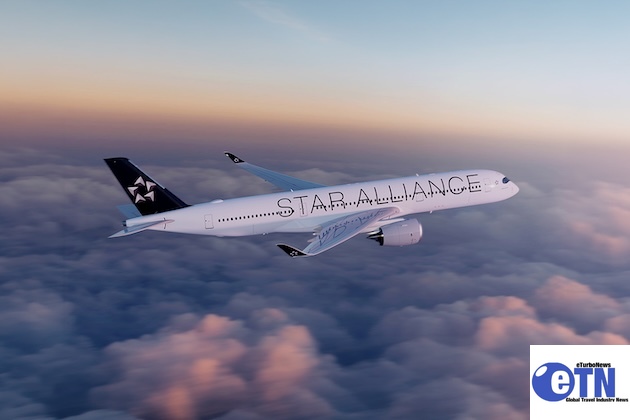
FRANKFURT / SEOUL — When Star Alliance announced today that Asiana Airlines will formally leave the world’s largest airline alliance at 23:59 Korea Standard Time on December 16, 2026, the news was presented as a routine alliance transition. In reality, it marks one of the most consequential shifts in global airline alliances in years.
For Star Alliance, the loss of Asiana follows the departure of Scandinavian Airlines (SAS) to SkyTeam in 2024, representing the second major member exit in less than three years. For SkyTeam, meanwhile, Asiana’s departure—combined with the earlier addition of SAS—signals a remarkable strengthening of its competitive position against its larger rival.
While Star Alliance will continue to comprise 25 member airlines and maintain the world’s most extensive alliance network, the exits of SAS and Asiana raise questions about whether the balance of power among the global alliances is beginning to shift.
The End of a 23-Year Partnership
Asiana joined Star Alliance in 2003 and quickly became one of the alliance’s most strategically important members in Asia. Operating from Seoul Incheon International Airport, the carrier connects North America, Europe, China, Japan, and Southeast Asia through one of Asia’s most efficient hubs.
For more than two decades, Asiana provided Star Alliance with a strong foothold in South Korea, complementing the alliance’s strengths in Japan through ANA, in China through Air China and Shenzhen Airlines, in Taiwan through EVA Air, and in Southeast Asia through Singapore Airlines and Thai Airways.
Its departure, however, is not the result of dissatisfaction with Star Alliance. Instead, it is the inevitable consequence of Korean Air’s acquisition and integration of Asiana.
Following years of regulatory review across multiple jurisdictions, Korean Air completed control of Asiana and is now proceeding with a full merger. When the integration is finalized on December 17, 2026, the Asiana brand will effectively disappear, becoming part of Korean Air—a founding member of SkyTeam.
Asiana therefore is not so much leaving Star Alliance as ceasing to exist as an independent airline.
A Victory Decades in the Making for SkyTeam
For SkyTeam, the implications are enormous.
Since its creation in 2000, SkyTeam has often been viewed as the smallest of the three global alliances, overshadowed by Star Alliance’s vast network and oneworld’s premium carrier roster. Yet in less than three years, SkyTeam has secured two of the most strategically significant alliance gains in recent memory.
The first came in 2024 when SAS, one of Star Alliance’s founding members, left after Air France-KLM became a major shareholder in the Scandinavian carrier. The move handed SkyTeam a stronger presence across Scandinavia and Northern Europe while depriving Star Alliance of one of its historic pillars.
The second—and arguably larger—victory comes with the disappearance of Asiana into Korean Air.
When the merger is completed, SkyTeam will effectively gain exclusive control over South Korea’s long-haul airline market. Instead of two competing Korean network carriers aligned with different alliances, there will be a single dominant Korean airline firmly positioned within SkyTeam.
For the alliance, Seoul Incheon becomes an even more powerful hub connecting Asia with North America and Europe.
The Competitive Impact on Star Alliance
Star Alliance executives have emphasized that the alliance will remain strong in Korea even without Asiana. Fourteen member airlines—including Lufthansa, SWISS, Singapore Airlines, Turkish Airlines, Air Canada, Air India, EVA Air, Thai Airways, Air New Zealand, Ethiopian Airlines, LOT Polish Airlines, Shenzhen Airlines, Air China, and United Airlines—will continue operating more than 1,900 monthly flights to and from Seoul Incheon.
Yet the alliance loses something far more valuable than flight frequencies.
It loses a home-market carrier.
After December 2026, Star Alliance passengers arriving in Seoul will no longer connect onto a member airline with an extensive domestic and regional Korean network. Instead, travelers will increasingly find themselves connecting onto airlines aligned with a competing alliance.
This is particularly significant because South Korea occupies a strategic geographic position between Japan, China, Southeast Asia, and North America. For decades, Seoul has served as one of Asia’s premier connecting hubs.
The disappearance of Asiana creates a gap that no foreign carrier can fully replace.
Why United and Lufthansa Have the Most at Stake
No airlines are more affected than United Airlines and Lufthansa Group.
Both carriers have historically relied on Asiana as a key partner for onward connections beyond Seoul.
For United, the loss comes at a time when trans-Pacific competition is intensifying. The airline continues to maintain strong partnerships with ANA in Japan and Air China in mainland China, but Asiana’s departure removes an important Korean connection point from its network strategy.
Lufthansa Group faces a similar challenge.
Passengers traveling on Lufthansa, SWISS, Austrian Airlines, Brussels Airlines, and other group carriers have long benefited from seamless onward connections throughout Asia via Asiana’s network. Those traffic flows will now increasingly move through competing SkyTeam channels.
The development is particularly notable because Lufthansa Group and United Airlines are widely viewed as the alliance’s most influential members and its primary commercial engines. The loss of both SAS and Asiana therefore lands disproportionately on carriers that have traditionally shaped Star Alliance strategy.
A Changing Alliance Landscape
The departures of SAS and Asiana also highlight a broader transformation occurring within the airline industry.
Historically, airlines chose alliances based on network strategy, customer benefits, and commercial cooperation.
Today, ownership and consolidation increasingly determine alliance membership.
SAS left Star Alliance largely because its future became tied to Air France-KLM and SkyTeam.
Asiana is leaving because its future is tied to Korean Air and SkyTeam.
The decisions were driven less by alliance preference than by corporate structure.
This trend suggests that future alliance changes may increasingly originate in merger negotiations and shareholder agreements rather than alliance boardrooms.
Does Star Alliance Have a Response?
Despite the setbacks, Star Alliance remains the world’s largest airline alliance.
Its membership still includes industry heavyweights such as United Airlines, Lufthansa, Singapore Airlines, ANA, Air Canada, Turkish Airlines, Air China, SWISS, EVA Air, and Air India. Its global network remains broader than either SkyTeam or oneworld.
The alliance also retains formidable strength across Asia through Japan, Singapore, Taiwan, China, Thailand, and India.
However, the loss of South Korea leaves a noticeable geographic hole.
Industry observers have speculated for years about whether Star Alliance might eventually seek another Korean partner, deepen relationships with existing Asian members, or pursue closer cooperation with emerging carriers in the region. None of those options, however, would immediately replicate what Asiana provided.
More Than Just One Airline Leaving
Asiana’s departure is about far more than the loss of a single member airline.