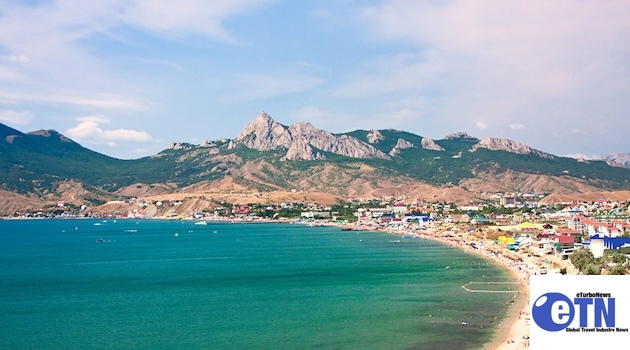
Crimea’s tourism industry is facing a sharp downturn as Russian visitors cancel summer holidays amid fuel shortages, security concerns, and intensified Ukrainian attacks on logistics routes. Once Ukraine’s premier seaside destination and recently experiencing a tourism rebound under Russian control, the peninsula now confronts growing uncertainty across its hospitality sector.
SIMFEROPOL, Crimea — For decades, Crimea was regarded as one of Ukraine’s premier tourism destinations, attracting millions of visitors annually to its Black Sea coastline, historic cities, vineyards, and mountain resorts. Long celebrated as the jewel of Ukrainian tourism, the peninsula’s strategic location and mild climate made it a favorite vacation destination throughout the Soviet era and after Ukraine gained independence.
Before Russia’s annexation of Crimea in 2014, tourism was a vital pillar of the regional economy. Ukrainian, European, and international visitors flocked to destinations such as Yalta, Alushta, Sevastopol, and Bakhchysarai, drawn by the region’s beaches, cultural heritage, and renowned health resorts. The peninsula generated significant revenue for Ukraine’s tourism sector and served as one of the country’s most recognizable travel brands.
The Russian takeover dramatically altered Crimea’s tourism landscape. International sanctions, political uncertainty, and the loss of direct access from mainland Ukraine led to a sharp decline in foreign visitors. In the years that followed, Russian authorities invested heavily in infrastructure, including the Kerch Bridge and new transportation links, while the region increasingly relied on domestic Russian tourism.

Crimea travel portal
Official Crimeatravel portal – News. Trip planning. Interactivemap. Sights. Events. Useful tips
Following Russia’s full-scale invasion of Ukraine in February 2022, tourism in Crimea initially suffered as security concerns mounted and military activity intensified across the Black Sea region. However, by 2024 and early 2025, the peninsula appeared to be experiencing a significant recovery. Russian tourism officials reported growing visitor numbers, while hotels, guesthouses, wineries, and tour operators prepared for another busy summer season.
That recovery is now facing a serious setback.
According to reports by independent Russian media outlet Agentstvo NewsRussian tourists have begun canceling holidays to Crimea in large numbers amid a worsening security situation, fuel shortages, and increasing Ukrainian attacks on military and logistical infrastructure serving the occupied peninsula.
The shift has been visible even in transportation patterns. An RBC correspondent who traveled from Moscow to Simferopol aboard a Tavria train on June 9 reported unusually low passenger numbers, with some compartments occupied by only one or two travelers. Passengers noted that when tickets first went on sale in March, seats had sold out within minutes.
Tour operators report a dramatic collapse in bookings. Elena Shtringel, director of tour operator TourEthno, said approximately 80 percent of June reservations have been canceled, while around half of bookings for July and August have also been withdrawn.
“Although we fulfilled 60 to 70 percent of our planned business during the May holidays, we are now seeing a massive rollback,” Shtringel said, noting that only limited new reservations are arriving for late summer.
Industry representatives say the financial consequences are severe. One tourism executive told Agentstvo that companies are now spending reserves they had intended to rely on during the winter months.
“We have already spent more in six months than we earned,” the representative admitted.
The impact is being felt across the hospitality sector. Dmitry Tkachenko, representing the Rassvety-Zakaty hotel in the Bakhchysarai district, said cancellations during a recent ten-day fuel crisis exceeded the total number recorded during the entire previous year. Occupancy has fallen to around 30 percent, far below the anticipated 65 to 70 percent.
Guesthouse operators near Alushta report similar difficulties. Some estimate that as many as 90 percent of June reservations have been canceled, with only one in ten expected visitors actually arriving.
The cancellations have created cash-flow challenges for many small businesses. Hotels and guesthouses are generally required to refund customers in full, but some owners have already spent advance payments on renovations and seasonal preparations, leaving them without sufficient funds to reimburse guests immediately.
Crimean winemaker Oleg Repin reported that 70 to 80 percent of bookings for tours and tastings at his winery have been canceled during the past week alone.
“The same situation is happening among restaurateurs and hoteliers I know,” Repin said.
The sudden downturn comes after a period of growth. Sergey Romashkin, Vice-President of the Russian Union of Tourism Industry, stated that Crimea had recorded year-on-year tourism growth of 10 to 15 percent during the first months of the year. Despite current cancellations, he believes the peninsula will still maintain a tourism surplus of approximately 11 to 12 percent for the first half of 2025.
Underlying the crisis are growing logistical challenges linked to the ongoing war. According to fuel-market sources cited by Agentstvo, drone strikes targeting transport routes in occupied southern Ukraine have created serious difficulties in recruiting truck drivers to supply Crimea. Trucks using the so-called “land bridge” corridor connecting Russia to Crimea now reportedly travel under military escort, with armed guards accompanying convoys and speed limits increased to reduce exposure to attacks.
Ukraine has intensified strikes on Russian military logistics infrastructure in occupied territories during recent months. Open-source intelligence analysts report hundreds of attacks against trucks and multiple strikes on bridges and transport routes that are critical to supplying Crimea.
These developments highlight how deeply the war continues to shape daily life and economic activity across the occupied peninsula. While Crimea had begun re-establishing itself as a major domestic tourism destination for Russian travelers, growing security concerns are once again undermining confidence among visitors.
For a region whose economy has long depended on tourism, the latest wave of cancellations demonstrates the vulnerability of the sector to the wider conflict. Once Ukraine’s premier seaside destination and more recently a rapidly recovering Russian holiday market, Crimea now faces renewed uncertainty as the consequences of war increasingly reach the tourism industry.