The aviation industry is responding to a rise in runway incursions and serious near misses with a new joint safety initiative by IATA, CANSO, and ACI. While the program strengthens reporting, collaboration, and local runway safety teams, experts say preventing future tragedies will still depend on consistent implementation worldwide.
GENEVA – Following a series of high-profile runway near misses and several fatal runway-related accidents over the past three years, the International Air Transport Association (IATA), the Civil Air Navigation Services Organization (CANSO), and Airports Council International (ACI) have launched a joint global initiative aimed at reducing runway incursions through better collaboration, reporting, and local risk management.
The announcement reflects growing concern across the aviation industry that, although commercial aviation remains extraordinarily safe, the number of serious runway incursions and close calls has exposed vulnerabilities that cannot be solved by technology or regulation alone.
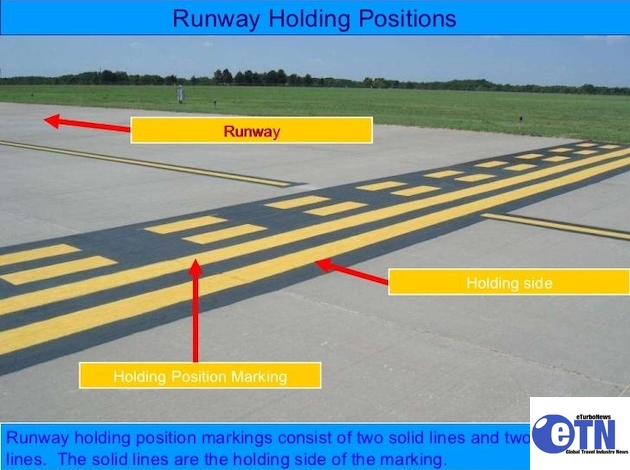
A runway incursion occurs whenever an aircraft, vehicle or person is incorrectly present on an active runway or within its protected area. While many incursions end harmlessly, others have narrowly avoided catastrophic collisions.
A Response to a Troubling Pattern
Although IATA did not tie the initiative to any single accident, it follows several major runway events that shook the aviation community:
- The January 2024 collision between a Japan Airlines Airbus A350 and a Japan Coast Guard Dash 8 at Tokyo Haneda Airport killed five Coast Guard crew members after the smaller aircraft entered an active runway ahead of the landing airliner.
- Numerous serious runway incursions in North America and Europe during 2023-2025—including close calls involving Southwest Airlines in Austin, FedEx and Southwest in Austin, American Airlines and Delta at New York JFK, and other incidents investigated by aviation authorities—demonstrated how quickly communication errors, reduced visibility, and operational complexity can escalate toward disaster.
- IATA’s own Annual Safety Report notes that several recent runway incursions have been fatal and continues to identify high-severity near misses as an area requiring urgent industry attention. (IATA)
Safety experts frequently note that many of these events share common characteristics:
- Misunderstood ATC clearances
- Pilot readback errors
- Vehicle incursions
- Controller workload
- Complex airport layouts
- Reduced visibility
- Human factors rather than technical failures
What the Initiative Will Actually Do
Rather than introducing new regulations, the Joint Runway Safety Initiative focuses on improving how existing organizations work together.
Its three priorities are:
Better reporting and data collection
The partners want airlines, airports, and air navigation service providers to capture not only accidents but also:
- Near misses
- Precursor events
- Frontline observations
- Operational trends
Safety specialists have long argued that thousands of “good catches” never reach global databases despite offering valuable lessons before accidents occur.
Strengthening Local Runway Safety Teams
Perhaps the most practical element is expanding Local Runway Safety Teams (LRSTs). These airport-based groups bring together:
- Airlines
- Airport operators
- Air traffic control
- Ground handling companies
- Regulators
Their objective is identifying airport-specific hazards before they contribute to an accident.
A runway crossing that creates confusion at one airport may be irrelevant elsewhere, making local solutions essential.
Sharing successful practices globally
The organizations also intend to exchange lessons between airports facing similar operational challenges rather than having each airport solve problems independently.
Building on Existing Programs—Not Starting From Scratch
The initiative is not creating an entirely new runway safety system.
Instead, it combines tools already developed under several international programs, including:
- ICAO’s Global Runway Safety Action Plan
- GAPPRI (Global Action Plan for the Prevention of Runway Incursions)
- ACI’s APEX in Safety Runway Safety Team Implementation Package
- The joint ACI-CANSO Runway Safety Checklist
- IATA’s Runway Incursion Safety Risk Assessment
- IOSA airline safety assessments
In other words, the industry has already developed many of the necessary tools. The challenge has been ensuring they are consistently implemented worldwide.
What It Cannot Do

Home – CANSO
Home – CANSO is the voice of the air traffic management (ATM) industry. We work with our members from around the globe to continuously improve ATM performance.
The announcement is significant, but it also has limitations. The initiative cannot:
- Require airports to install expensive runway surveillance technologies.
- Mandate new cockpit alerting systems.
- Replace national aviation regulators.
- Eliminate human error.
- Force airlines or airports to adopt recommendations.
- Solve staffing shortages affecting air traffic control in several countries.
Instead, participation depends largely on industry cooperation and voluntary implementation.
Experts have repeatedly emphasized that runway safety depends on multiple “layers of defense.” Even sophisticated technologies such as runway status lights, advanced surface movement guidance systems, and ground radar are not universally available, particularly at smaller airports, and can be limited if unavailable or under maintenance.
Industry Leaders Stress Collaboration
“Flying is the safest form of long-distance travel,” said Nick Careen, IATA Senior Vice President for Operations, Safety and Security.
“Maintaining that record requires a relentless focus on continuous improvement, supported by global standards, safety data and collaboration.”
Andrea Sack, CANSO’s Senior Vice President for Global Operations, emphasizes that runway safety depends on clear communication and coordinated decisions among controllers, airports, airlines and operational partners.
ACI World|The Voice of the World’s Airports
ACI World contributes to the safety, security, and sustainability of the aviation industry by advancing the global interests of airports and the communities they serve.
ACI World Vice President Darryl Dowd noted that airports sit “at the center of this challenge,” where every part of the aviation system converges, making local collaboration essential for translating guidance into measurable safety improvements.
The Bottom Line
The Joint Runway Safety Initiative is less about inventing new technology than strengthening one of aviation’s oldest safety principles: learning from every incident before it becomes an accident.
Recent investigations have shown that catastrophic runway collisions rarely result from a single mistake. Instead, they emerge from a chain of small breakdowns in communication, procedures, situational awareness, and coordination.
By encouraging better reporting, stronger Local Runway Safety Teams, and wider sharing of operational lessons, IATA, CANSO, and ACI hope to interrupt that chain before another tragedy occurs.
Whether the initiative succeeds will ultimately depend not on new checklists or guidance documents, but on how consistently airports, airlines, air navigation service providers, and regulators put those recommendations into daily operational practice.