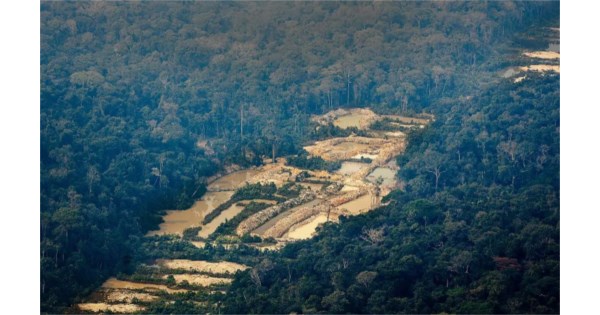
 The term “conflict minerals” has become a common term for raw materials that are essential for IT products and whose deposits are located in areas where civil wars are taking place. The fear is that mines and foundries will be used to finance weapons, mercenaries and militiamen to fight the country’s official government. As part of its reporting obligations as a US company, Apple has now submitted its annual report to the Security & Exchange Commission (SEC) on the possible effects of its purchases. In it, Apple explains its own measures for resource extraction as ethically as possible.
 The report, written by Jennifer Newstead, explains that all suppliers are ensured that they comply with the due diligence guidelines of the Organization for Economic Co-operation and Development (OECD) and the United Nations (UN). The group ensures that its own high standards for labor and human rights as well as environmental friendliness are adhered to throughout the entire production chain.
Four elements of conflict
Apple names four raw materials that are in focus: tungsten, tantalum, tin and gold. The report abbreviates this as 3TG, which only makes sense with the English common names of these elements (Tungsten, Tantalum, Tin, Gold). Apple requires all foundries and refineries that supply these raw materials for Apple products to undergo annual independent audits according to international standards. In 2025, all suppliers have adhered to this. According to this investigation, there is no reason to suspect that any of the foundries or refineries are directly or indirectly financing armed groups in the central Republic of Congo or in a neighboring country.
“Appropriate country of origin investigation”
For 2025, according to the report, the group has investigated “to the appropriate extent” where the supplied materials came from (Reasonable Country of Origin Inquiry) and has not found any irregularities. This only partially answers the accusation that Apple is facing in a lawsuit. This accuses three refineries of having bought ores from conflict mines from smugglers and re-declaring them as legitimate mines.
Annual Sustainability Report
Each year, Apple releases two supply chain reports: an Environmental Progress Report (PDF) and one called People and Environment in Our Supplay Chain Annual Update (PDF). In the latter, Apple emphasizes how important issues such as further training and employee rights are to the company, including among suppliers. Since 2008, over 33 million employees at suppliers have been informed about their rights in the workplace, over 655,000 employees have been asked about their working conditions and 1,856 investigations and audits have been carried out in the supply chain. The group pays particular attention to ensuring that the respective company management cannot intervene in a distorting manner.