
Americans are ditching exhausting “seven countries in nine days” vacations for slower, longer, and more intentional travel experiences. New booking trends reveal travelers increasingly value relaxation, affordability, and authenticity over rushed itineraries, endless flights, and social media checklists — signaling a major cultural shift in how people define the perfect getaway.
There was a time when the ideal American vacation looked like a military operation designed by a caffeine-addicted spreadsheet consultant.
- Wake up in Paris.
- Photograph a croissant.
- Sprint through the Louvre Museum.
- Miss a train to Rome.
- Argue with a carry-on bag.
- Post 37 Instagram stories.
- Return home spiritually exhausted and approximately $11,000 poorer.
But according to new booking trends and travel data, Americans are finally rebelling against the “whirlwind vacation.” The age of the hyper-compressed itinerary may be ending — replaced by something radical: sitting still.
Travel companies are reporting a growing preference for slower, longer, more intentional trips. Fewer people are trying to “do Europe” in six days. More travelers are choosing one destination, staying longer, and occasionally doing something previously unthinkable on vacation: absolutely nothing.
Economists call it a response to inflation and burnout. Therapists call it healthy. Airline executives probably call it “concerning.”
The Death of the Airport Marathon
The old travel model was built around quantity. Americans became experts at collecting destinations like Pokémon cards.
“I did London, Amsterdam, Prague, and Barcelona in one week,” travelers would proudly announce — moments before collapsing into hotel bedding fully clothed.
Now the numbers suggest many travelers are choosing fewer flights, shorter distances, and longer stays. Americans are increasingly prioritizing “value,” flexibility, local experiences, and meaningful downtime over frantic sightseeing.
Translation: people are tired of needing a vacation after the vacation.
The economic background matters. Surveys show rising travel costs are pushing Americans to rethink how they move around the world. Many travelers are shortening trips, driving instead of flying, or staying closer to home. Others are taking fewer vacations but making them more intentional. And honestly, airfare alone has become an emotional experience.
Booking a flight in 2026 now feels like negotiating a hostage release:
- Basic economy includes one sock and emotional damage
- Checked baggage costs more than a small used car
- Seat selection requires a micro-loan
- The phrase “nearby airport” increasingly means another state
Enter the “Slowcation”
The new trend has a name: slow travel. Instead of racing through five cities, travelers are renting one apartment for two weeks. They’re learning neighborhood coffee orders. They’re grocery shopping abroad. They’re pretending, briefly, to be locals instead of exhausted documentary crews.
Researchers studying Airbnb reservations found that average stays have grown noticeably since the pandemic era, with longer-term bookings remaining elevated years later.
This is partly economics and partly psychology. After years of pandemic disruption, political tension, inflation anxiety, and nonstop digital overload, many Americans no longer want vacations that resemble competitive sports.
People want rest. Not “maximize-your-itinerary” rest. Actual rest.
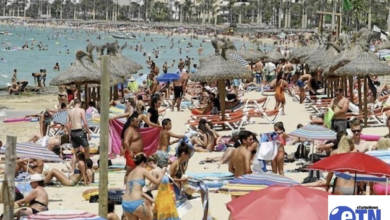
The modern luxury is no longer squeezing into a rooftop nightclub in Mykonos at 2 am while documenting artisanal ice cubes for social media. The modern luxury is reading half a paperback next to a quiet pool and forgetting what day it is.
Instagram May Have Ruined Travel — and Saved It
Ironically, social media helped create the chaos travelers are now rejecting. A recent survey found many younger travelers admit feeling pressure to appear “well-traveled,” while others confessed to visiting destinations largely for bragging rights.
This created the rise of performance tourism:
- Standing in line for 90 minutes for one famous photo
- Visiting cafes solely because strangers online approve them
- Treating vacations like unpaid influencer internships
The backlash has begun.
Travelers increasingly want authenticity over checklist tourism. Instead of “Top 12 Things to Do in 48 Hours,” people are seeking experiences that feel personal, slower, and less algorithmic.
Or, put differently: Americans are discovering Europe contains benches.
The Revenge of the Small Trip
The biggest surprise is that Americans are not giving up travel altogether. They’re redefining it. Data suggests travelers still deeply value vacations — but they now emphasize affordability, relaxation, and emotional payoff over extravagance.
Road trips are rising again. Quiet beach towns are winning. Longer stays in single destinations are replacing continent-hopping adventures. And perhaps most revolutionary of all: people are admitting they don’t actually need to “see everything.”
Because nobody truly enjoys sprinting through the Colosseum while dragging luggage that sounds like a lawn mower on cobblestones.

VisitMalta
Get all the information you need for your trip to Malta! Book tickets, discover new places to visit, find amazing things to do and more!
A More Human Way to Travel
The death of the whirlwind vacation may signal something bigger than a change in tourism habits. Americans appear to be reconsidering the cult of optimization itself.
For years, modern life has demanded maximum efficiency:
- maximize productivity
- maximize experiences
- maximize side hustles
- maximize memories
- maximize steps before noon
Now, travelers are quietly asking a rebellious question: What if the point of vacation is not achievement? What if it’s simply being somewhere long enough to exhale?
That may not look impressive on Instagram. But it sounds suspiciously like happiness.