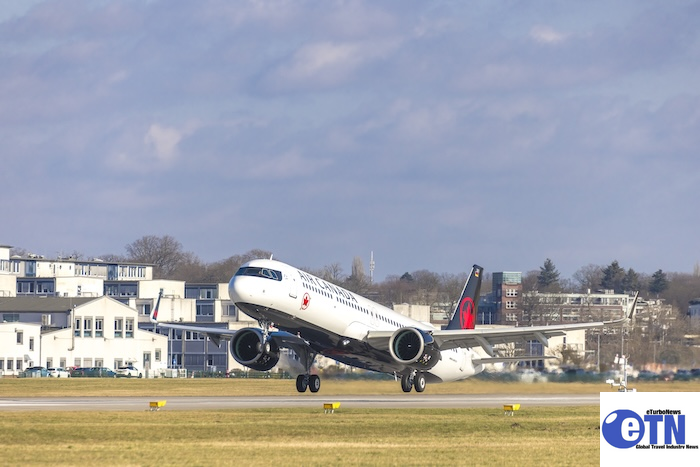
Air Canada’s first Airbus A321XLR delivery marks a turning point in fleet strategy and signals a broader shift among Canadian airlines towards Airbus. Driven by efficiency, geopolitics, and evolving route economics, the move reflects changing industry dynamics as carriers reassess reliance on US manufacturers Boeing.
TORONTO — When Air Canada took delivery of its first Airbus A321XLR this month, the moment was framed publicly as a routine fleet upgrade — another step in modernizing aircraft and improving efficiency.
But within the aviation industry, the delivery is being read as something more: part of a quiet but notable shift among Canadian airlines towards European manufacturer Airbusand away — at least incrementally — from its long-time American rival, Boeing.
The new aircraft, one of 30 A321XLRs Air Canada has on order, is designed to fly farther than traditional narrowbody jets while consuming significantly less fuel. It allows the airline to connect cities like Montreal and Toronto directly to smaller European destinations — Berlin, Toulouse, Edinburgh — without the need for larger, less economical widebody planes.
“This aircraft changes the math,” said one industry analyst, referring to routes that previously could not sustain daily long-haul service. “It opens markets that were invisible before.”
A Strategic Aircraft
Leased from SMBC Aviation Capital and powered by engines from Pratt & Whitney, the A321XLR reflects a broader shift in airline strategy: favoring flexibility over sheer capacity.
Inside, the jet is configured with 14 lie-flat business-class seats and 168 economy seats, offering long-haul comfort in a narrowbody frame. Its range — about 4,700 nautical miles — puts transatlantic travel within reach for routes that once required much larger aircraft.
Air Canada now operates 136 Airbus planes and has 61 more on order, including A350 widebody jets. The scale of that commitment underscores a deepening relationship.
Beyond Economics
While airlines typically emphasize efficiency and passenger experience when announcing fleet decisions, executives and analysts say geopolitics is increasingly part of the equation.
Trade tensions between the United States and Canada over the past decade — including disputes involving aircraft manufacturing — have left a lingering imprint. The high-profile clash between Boeing and Canada’s Bombardier, combined with tariff threats during the administration of Donald Trump, prompted calls within Canada to strengthen domestic and non-US industrial ties.
Air Canada – Official Website
Buy airline tickets, find cheap airfare, last minute deals and seat sales with Air Canada. Book hotels, cars and vacations with Air Canada Vacations.
Airbus, which absorbed Bombardier’s C Series program (now the A220) and maintains a significant industrial presence in Canada, has benefited from that shift.
“There is a political comfort factor,” said a former government official familiar with procurement discussions. “Airbus is no longer just European. It’s partly Canadian.”
Industry-wide momentum
Air Canada is not alone in recalibrating. While WestJet remains heavily invested in Boeing aircraft, other carriers have diversified fleets or leaned toward Airbus models, particularly for fuel-efficient, medium-range operations.
The appeal is not just political. Airbus’s latest aircraft — including the A220 and A321XLR — are widely viewed as well suited to Canada’s geography: vast distances, smaller population centers, and fluctuating demand.
At the same time, environmental considerations are reshaping purchasing decisions. The A321XLR offers approximately 30 percent lower fuel burn per seat than older aircraft and is capable of operating with increasing blends of sustainable aviation fuel, aligning with industry-wide emissions targets.
A Competitive Crossroads
For Boeing, the shift is subtle but significant. The company remains a dominant force in global aviation, and its aircraft continue to fleet anchors around the world. Yet in Canada — a historically important market — Airbus has gained ground.
Whether that trend accelerates may depend less on aircraft performance than on political stability and trade relations.
Airlines, after all, make decisions that last decades.
And in an era where economics, environment and geopolitics increasingly overlap, even a single aircraft delivery can signal something larger taking shape in the skies.