A novel vaccine developed using AI has successfully passed a first-in-human clinical safety trial. The aim is to provide universal protection against current and future variants of the Sarbeco coronavirus. In the future, doctors could use this computer-based process to produce new vaccines proactively instead of just reactively.
Scientists at the University of Cambridge and the biotech company DIOSynVax use artificial intelligence for medical research. Using computer simulations, they designed a so-called super antigen for the human immune system. Previous preparations mostly focus on known virus strains. For this reason, researchers must continually adapt this vaccine to new mutations.
The new approach instead targets common genetic traits shared by all pathogens in the Sarbeco family. This group of pathogens includes the SARS-CoV-2 virus, the SARS virus and other coronaviruses from bats. These viruses pose a risk of future transmission to humans. According to the researchers, the computer-generated vaccines can also protect people in the event of future virus mutations.
AI vaccine against coronaviruses: first study with 39 volunteers
The forward-looking approach is intended to break the previous cycle of constant vaccine adjustments. Research leader Professor Jonathan Heeney explained that vaccine development had been switched from a reactive to a future-proof method.
The new vaccines would still provide protection against viruses even if they mutated into new strains. In the first clinical safety study, 39 healthy volunteers received the new DNA vaccine. The tests took place at the National Institute for Health and Care Research Clinical Research Facilities in Cambridge and Southampton.
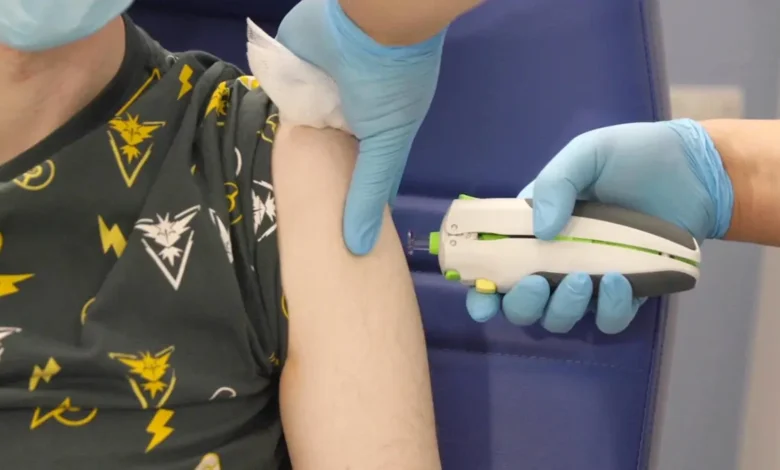
The research team responsible administered the active ingredient via a microfluidic system without needles. The medical evaluations showed no significant side effects in the test subjects following administration. Instead, the researchers documented a broad immune response against SARS-CoV-2, the SARS virus and the coronaviruses from bats.
Phase 2 study is intended to test immune responses on a larger scale
Biotech company DIOSynVax is already developing vaccine candidates against seasonal and pandemic influenza and hemorrhagic fever viruses based on the new technology. In addition, according to the researchers, the principle could also be transferred to other virus groups such as Ebola viruses in the future.
A planned phase 2 study should determine the immune response in a larger group of participants before the drug becomes available to the population. The lead investigator, Professor Saul Faust, classified the results. He emphasized that this new class of universal vaccines is future-proof.
The vaccines would not only protect against many variants at the same time, but potentially also against related viruses. This also applies to pathogens that have not yet spread to humans. However, further studies are necessary before the new vaccine is widely available to the population. The upcoming test series should provide information about the immune response in a larger group of people.
Also interesting: