 Who would have ever thought how much the world would be changed by the invention of the cell phone? And especially from the smartphone, whose big breakthrough can clearly be attributed to the Apple iPhone. Looking back, our everyday companion is already a piece of science fiction come true. A small, handy box with a high-resolution screen, a computing power that is many times greater than that of the computers on NASA’s first lunar mission and is blessed with a variety of functions that is almost unlimited.
 The undoubtedly negative developments that resulted from this – especially in the area of social media – should not be mentioned here. At first it’s just about the pure use and the technology. One component that has made its way over the years – although not as abruptly as others – is flexible displays. Only these make it possible to think differently about the shape of smartphones. Concept studies, for example, devise devices in the shape of a pen or cylinder that should work with a roll-out screen like a papyrus roll. This has not yet become a reality. Foldable smartphones, on the other hand, have been a reality for other manufacturers for several years now. And now Apple wants a piece of this pie too.

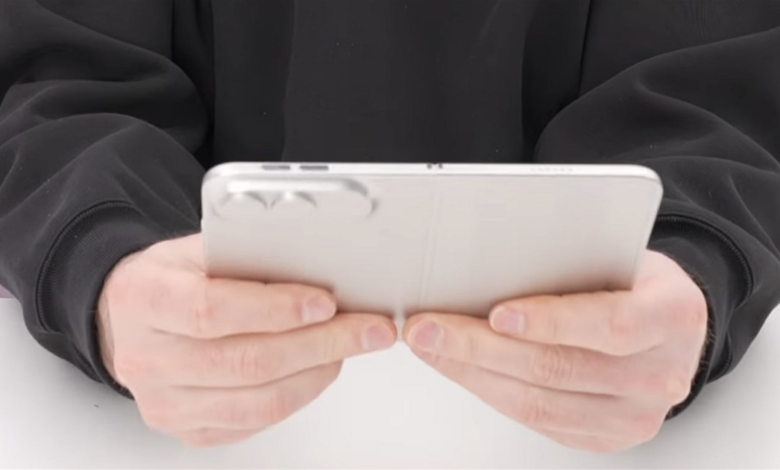
All images in this article are mockup renderings, found via YouTube, ftp
Is Apple bringing a breath of fresh air to the foldable idea?
As has been the case several times in the past, Apple is not the actual inventor of certain successful models, but, as happened particularly with the iPhone, it could once again be the company that does it “right”. Apple likes to take its time. However, following a particular new technology often brings new ideas and different operating concepts into play. I doubt whether this could work as well with a foldable smartphone as it did with the original iPhone. Because it is already clear that the rumored “iPhone Ultra” (the common working name in the media, but not yet finalized) relies on the well-known iOS interface and will hardly offer any major innovations in terms of hardware compared to comparable products from Samsung, for example. – Except perhaps improvements in details. For example, there are rumors in the rumor mill that Apple may have managed to completely avoid the annoying display kink in its concept. Wait.

If the rumors are true, the Ultra will have a basic book-style shape, with two rectangular housing parts that, when folded, will take up less space in your pocket than most existing iPhones (one assumes around 5.5″ for the outer display), but when opened it will have almost the screen area of an iPad mini. But no matter how precise the shape is in the end (there is not much room for maneuver), it is likely to be a product with the usual compromises. When folded, it is small in area, but relatively thick and heavy. When opened, it is true larger than an iPhone Max, but smaller than any iPad. And mechanically, it remains to be seen whether and how well Apple can get the well-known neuralgic points such as hinges and display kinks under control.
A hit or a non-starter?
If you look at the sales figures for “foldable” smartphones that are already available, their share is negligibly small, making up only a few percent of the total sales figures in the (Android) smartphone market. I determined the numbers using AI research. Accordingly, their global market share in the third quarter of 2025 was around 2.5%. However, if you just look at the foldables one by one, a clear trend emerges:
- The book style (book format, like probably the iPhone Ultra): will have the majority with 52% in 2025. Models like the Samsung Galaxy Z Fold or the Huawei Mate Series are gaining ground because their larger screens make them better for productivity.
- Clamshell (shell format): Comes to 48%. Devices like the Samsung Galaxy Z Flip or the Motorola Razr are losing ground as book-style models are increasingly preferred.
For 2026, market researchers (including Counterpoint Research) predict that the share of book-style devices will increase to around 65% (of all foldables).
The numbers may vary depending on other research methods and calculation methods, but the overall proportion of foldables is likely to remain “vanishingly small” in any case. It is unlikely that anything will change significantly with Apple’s entry into the market.

Weigh up the meaning and benefits
In my opinion, two main points stand in the way of real mass success for foldables: Firstly, because it is a compromise product that, as described above, combines to a certain extent the advantages of compact smartphones with the large displays of tablets, but is neither fish nor meat. So a little bit of both, but neither is optimal.
Second, the price. It seems to be a foregone conclusion that the iPhone Ultra will set new high price records for smart devices. Not least because of Apple’s current general price increases. Price tags in the full-size MacBook Pro range are likely.
In the end, these two points alone mean that the iPhone Ultra is unlikely to achieve a substantial market share compared to conventional iPhones. Even if there are certainly enough people with enough money for it, many of them will still think about the question of benefits very carefully. Because such a modern “folding phone” basically only makes sense for users who want to rely almost exclusively on a smart device for their online activities. In other words, those who do not (want to) buy different devices for different purposes.

I have a division of labor when it comes to Apple devices. A Mac Studio runs stationary on the desktop for daily writing work. A MacBook Pro is my “backup Mac” when the studio has already finished work or is not within reach. I also use an iPad Pro for “spontaneous work” and “sofa research”, i.e. when the MacBook would be less comfortable for this purpose. My daily companion is of course an iPhone, and I only prefer to take my MacBook with me when I travel. The iPad tends to stay at home because iOS is simply not as suitable as macOS for many of my workflows. Small things can always be done with the iPhone from time to time.
Of course, the cost of purchasing all of these devices exceeds that of an iPhone Ultra, even if it turns out to be even more expensive than feared. But it certainly cannot replace the versatility of separate components for different tasks. Not even close. Only iOS stands in the way. Therefore, a folding iPhone would not be an option for me. Given the current state of possibilities for foldables, I will prefer to use the conventional normal-sized iPhone Pro for the foreseeable future.
… And I think a lot of other users will feel the same way.
In the end, it remains to be seen whether Apple will land a long-term hit by developing a foldable or whether it will become more of a “hobby” like the Apple TV once did.