Mackinac Island remains one of America’s most iconic tourism destinations, blending Indigenous heritage, military history, Victorian elegance, and sustainable, car-free travel. This feature explores the island’s past, booming tourism economy, geopolitical significance, social media appeal, and future challenges as it continues attracting visitors from around the world.
How a Car-Free Island Became One of North America’s Most Enduring Tourism Success Stories
Every destination has a story. Few have a mythology.
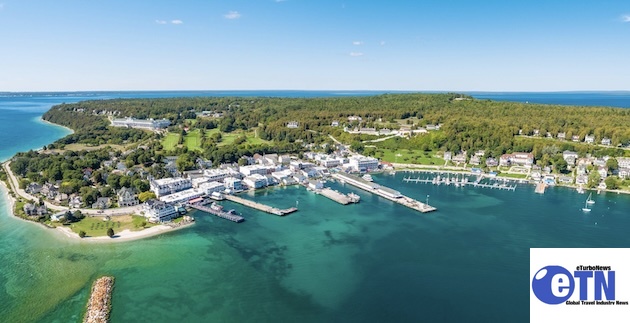
For more than three centuries, Mackinac Island—located between Michigan’s Upper and Lower Peninsulas where Lakes Michigan and Huron meet—has evolved from an Indigenous spiritual center into a French trading post, British military outpost, American frontier fortress, Victorian resort, and today one of North America’s most recognizable heritage tourism destinations.
In an age defined by artificial intelligence, overtourism, geopolitical uncertainty, climate concerns and digital overload, Mackinac Island offers something increasingly rare: the luxury of slowing down.
Visitors still arrive by ferry. Cars remain largely prohibited. Horse-drawn carriages outnumber bicycles only during certain hours, and the scent of fresh fudge continues to drift down Main Street just as it has for generations.
That combination of authenticity and nostalgia has transformed the island from a regional summer retreat into an international tourism icon.
A Sacred Island Long Before Tourism
Long before European explorers arrived, Mackinac Island was sacred to the Anishinaabe peoples, who regarded it as the home of the Great Spirit, Gitche Manitou.
Its strategic location at the Straits of Mackinac also made it one of North America’s most important crossroads.
French missionaries established a mission nearby in the late 1600s.
Fur traders followed.
Then came the British.
Fort Mackinac, constructed during the American Revolutionary period, became one of the most strategically valuable military positions in the Great Lakes and witnessed fighting during the War of 1812 before eventually becoming part of the United States.
This layered history gives Mackinac Island something few resort destinations possess: tourism built upon centuries of cultural, military and Indigenous heritage rather than manufactured attractions.
The Victorian Resort That Refused Modernization
Following the American Civil War, wealthy Midwestern families discovered Mackinac Island as a summer escape.
Hotels appeared. Elegant cottages lined the bluffs.
The famous Grand Hotel opened in 1887 with what remains one of the world’s longest hotel porches. Perhaps the island’s most consequential decision came around the turn of the twentieth century. Residents resisted the use of automobiles after horses were frightened by early motor vehicles.
The ban remained.

Mackinac Island Tourism Bureau – Unique Mackinac Island, MI Vacation
Mackinac Island, MI is a unique vacation spot boasting fine dining, historic sites, and exciting attractions. Learn more from Mackinac Island Tourism Bureau!
Today, nearly every visitor experiences Mackinac Island by bicycle, carriage, or on foot—a remarkable tourism differentiator in the automobile age. More than 80% of the island is preserved as state parkland, further protecting its historic landscape.
Why Travelers Continue to Come
Tourism experts often describe Mackinac Island as an “experience economy” destination.
Visitors are not purchasing transportation or accommodations. They are purchasing a feeling.
Among the strongest draws are:
- A completely car-free environment
- Victorian architecture
- Historic Fort Mackinac
- The iconic Grand Hotel
- Horse-drawn transportation
- Bicycle-friendly roads
- Lake Huron scenery
- Famous handmade fudge
- Lilac Festival
- Fall colors
- Historic inns and luxury resorts
- Outdoor recreation including kayaking, hiking and sailing
Unlike many resort communities, Mackinac Island offers a coherent identity that has changed surprisingly little over generations.
Tourism by the Numbers
Although only around 600 residents live on the island year-round, the population swells dramatically each tourism season.
The operating season generally stretches from May through October. Thousands of seasonal workers arrive each spring, supporting hotels, restaurants, carriage companies, retail stores and ferry operations.
Industry officials estimate approximately 5,000 seasonal employees are required annually to support peak visitation.
The 2026 Season: Optimism and Celebration
Recent tourism reporting indicates another strong season for Mackinac Island.
Opening Day in early May marked the beginning of what tourism leaders expect will be another busy summer, with businesses, hotels and attractions reopening for visitors.
This year’s highlights include:
- America250 commemorative programming
- The famous Lilac Festival
- Historic Fort Mackinac programming
- Expanded family activities
- Continued promotion through Michigan’s Pure Michigan campaign
- Seasonal culinary and heritage events
Recent national recognition also boosted visibility after Mackinac Island was named America’s Best Summer Travel Destination in a national readers’ poll.
Social Media: A New Generation Discovers an Old Island
Unlike many destinations that rely heavily on influencers to create appeal, Mackinac Island has become one of the Midwest’s most organically shared travel destinations.
Across Instagram, TikTok, Facebook and YouTube, several themes consistently dominate user-generated content:
- Horse carriage rides
- Bicycle trips around M-185
- Sunrise photography
- Grand hotel architecture
- Fudge making demonstrations
- Lilac blooms
- Drone footage over Lake Huron
- Historic reenactments
- Wedding photography
- Autumn foliage
The island’s tourism bureau actively promotes seasonal visitor guides and travel planning through its social media channels, while local broadcasters frequently showcase opening-day celebrations and seasonal events.
One reason Mackinac performs well online is visual consistency. Unlike the imagery of destinations undergoing rapid urban change, Mackinac’s imagery remains timeless.
Economic Importance
Tourism is effectively the island’s economy. Hospitality supports hotels, restaurants, transportation companies, retail stores, museums, carriage operators, and preservation efforts.
The seasonal workforce remains essential.
Labor shortages affecting tourism across North America continue to challenge employers, making recruitment of temporary workers one of the industry’s biggest operational issues.
The Geopolitical Dimension
At first glance, Mackinac Island appears isolated from global affairs. In reality, it sits at the intersection of several geopolitical trends.
1. US-Canada Tourism
The island benefits from cross-border travel between Michigan and Ontario.
Exchange rates, border policies and bilateral relations directly affect visitation patterns.