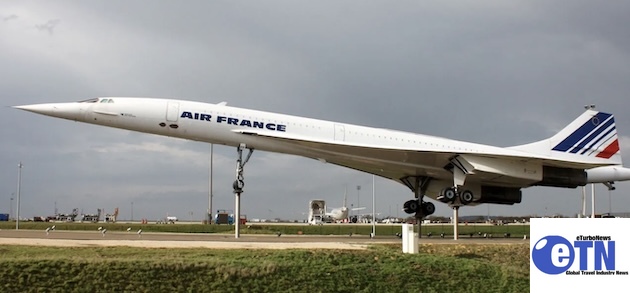
The race to bring back supersonic passenger travel is gathering pace as regulators reconsider decades-old restrictions and aerospace companies develop quieter, more efficient aircraft. With the FAA proposing to lift its long-standing overland flight ban, the dream of crossing oceans in half the time could soon become reality.
For more than two decades, the age of supersonic passenger travel has been little more than a nostalgic memory.
When the legendary Aérospatiale/BAC Concorde made its final commercial flight in 2003, many believed commercial aircraft flying faster than the speed of sound had become a fascinating—but ultimately impractical—chapter in aviation history.
Now, that may be about to change.
The US Federal Aviation Administration (FAA) has proposed replacing its 53-year-old ban on civilian supersonic flight over land with new regulations based on noise limits rather than outright speed restrictions. If approved, it would mark one of the biggest shifts in aviation policy since the Concorde era and could unlock a new generation of quieter, faster aircraft.
Why Was Supersonic Flight Banned?
The FAA prohibited civilian aircraft from exceeding the speed of sound over US land in 1973.
The problem wasn’t speed itself—it was the sonic boom.

Trump’s Transportation Secretary Sean P. Duffy Announces Supersonic Flight Is Coming to the US
WASHINGTON, DC – US Transportation Secretary Sean P. Duffy today announced the Federal Aviation Administration (FAA) is taking a pivotal step toward enabling civil supersonic flights over the continental United States. Thanks to massive innovations in supersonic technology, it will be possible to safely operate these innovative aircraft without a sonic boom.
As aircraft travel beyond Mach 1, they generate shock waves that reach the ground as an explosive boom capable of rattling windows, disturbing communities and, in some cases, causing minor property damage. The environmental and public backlash meant supersonic passenger aircraft were largely restricted to flying over oceans.
That limitation severely reduced the number of profitable routes available to the Concorde.
Today’s aviation engineers believe they finally have a solution.
A New Generation of Quiet Supersonic Aircraft
Unlike Concorde, next-generation aircraft are being designed to make the sonic boom almost disappear.
Two aircraft are leading that effort.
The first is NASA X-59, an experimental aircraft developed by NASA and Lockheed Martin. Rather than creating a loud boom, its unusual elongated nose reshapes shock waves into what engineers describe as a gentle “thump.”
The second is Boom Overture, being developed by Boom Supersonic. While not relying solely on aircraft shape, Boom uses sophisticated flight management and atmospheric conditions—known as Do cutoff—to prevent the sonic boom from reaching the ground on certain routes.
These technological breakthroughs are a major reason regulators are reconsidering rules that have remained largely unchanged for half a century.
Is Today’s Technology More Affordable?
Compared with Concorde, absolutely—but “affordable” is relative.
Concorde was an engineering marvel built using 1960s technology.
Today’s aircraft benefits from:
- lightweight carbon fiber composite materials
- computer-designed aerodynamics
- digital flight controls
- far more efficient turbofan engines
- advanced manufacturing techniques such as additive manufacturing (3D printing)
- artificial intelligence-assisted flight optimization
These improvements significantly reduce maintenance costs and improve fuel efficiency compared with Concorde.
However, physics still presents a challenge.
Flying at Mach 1.7 consumes considerably more fuel than cruising at conventional airline speeds around Mach 0.85. Even with modern engines, supersonic aircraft will almost certainly remain more expensive to operate than today’s long-haul airliners.
Rather than replacing aircraft like the Airbus A350 or Boeing 787 Dreamliner, they are expected to occupy a premium niche similar to business-class or first-class travel.
The Biggest Advantages
The appeal is obvious: time.
A flight from:
- New York to London could fall to around 3½ hours
- San Francisco to Tokyo could be cut by several hours
- Sydney to Los Angeles could become dramatically faster, depending on routing and regulations
For business travelers, government officials, and premium leisure passengers, saving four or five hours on a long-haul journey could justify a significantly higher fare.
Airlines also see opportunities in increasing aircraft utilization—faster flights mean aircraft can complete more journeys over time.
The Challenges Remain
Despite the excitement, several major hurdles remain.
Environmental concerns
Supersonic aircraft burn more fuel than conventional jets.
Manufacturers argue that sustainable aviation fuel (SAF) can reduce emissions, but large-scale SAF production remains limited and expensive.
Economics
Building and certifying an entirely new class of aircraft requires billions of dollars in investment.
Only airlines willing to target premium travelers are likely to see a viable business case.
regulation
While the FAA is proposing new rules, other aviation regulators around the world would also need to approve similar standards before widespread global operations become possible.
Public acceptance
NASA’s X-59 is expected to conduct community overflights to determine whether people actually tolerate the much quieter “thump” compared with the traditional sonic boom.
Those findings will heavily influence future international regulations.
Which Airlines Are Betting on Supersonic?
Several airlines have already placed commitments or options for future supersonic aircraft.
Among the most notable are:
- United Airlines
- American Airlines
- Japan Airlines
Most of these agreements are conditional upon the aircraft meeting certification, performance, and safety milestones.
Boom Supersonic says its Overture aircraft could enter commercial service near the end of the decade, although aviation development programs are historically prone to delays.
Could Australia Benefit?
For Australians, supersonic travel could be particularly attractive.