World Tourism Network Says Tourism Promotes Peace Amid Sweden’s Call for Stricter Russian Tourist Visas


Sweden is urging the European Union to tighten tourist visa restrictions for Russian citizens. The World Tourism Network supports sanctions against those involved in Russia’s war against Ukraine but warns that broad restrictions on ordinary travelers undermine tourism’s role in fostering peace, dialogue, mutual understanding, and economic cooperation worldwide.
Sweden has intensified calls for the European Union to tighten restrictions on tourist visas issued to Russian citizens, arguing that leisure travel to Europe should not continue while Russia’s war against Ukraine enters its fifth year. The proposal, backed by a coalition of eleven European countries, has sparked a wider debate about security, collective responsibility, human rights, and the role of tourism as a force for peace.
Swedish Migration Minister Johan Forssell told EU counterparts in Luxembourg that it was “insane” that Russians could enjoy vacations and shopping trips in Europe while Ukrainians continue to suffer from Russia’s military aggression. Sweden joined Poland, the Baltic states, the Netherlands, the Czech Republic, Denmark, Finland, Norway, Iceland and others in urging Brussels to further restrict access to Schengen tourist visas for Russian nationals.
According to the coalition’s letter to the European Commission, nearly half a million Schengen visas were issued to Russian citizens in 2025 despite existing restrictions, prompting concerns that the current system is inconsistent and undermines sanctions policy.

Netherlands joins call to curb Russian tourist travel to Europe
The Dutch government has backed a Swedish proposal to restrict Russian tourists from traveling to the European Union. Speaking in Luxembourg on Thursday, Migration Minister Bart van den Brink said the request put forward by Sweden was “justified.”
Existing Restrictions Already in Place
The European Union suspended its Visa Facilitation Agreement with Russia shortly after Moscow’s 2022 invasion of Ukraine. Since then, Russian applicants have faced longer processing times, higher fees, and stricter scrutiny. More recently, the EU limited the issuance of multiple-entry visas for Russian nationals, requiring many travelers to apply for single-entry visas instead.
Supporters of tighter controls argue that visa policy is a legitimate tool of foreign policy and security. Several governments point to alleged Russian espionage, sabotage activities, and hybrid threats across Europe as reasons for reducing travel opportunities.
Critics: Don’t Punish Ordinary Russians

World Tourism Network (WTN)
WTN is the Voice for Small and Medium Size Businesses (SMEs) for the Global Travel and Tourism Industry in more than 130 countries.
The proposal has also generated criticism from human rights advocates, Russian dissidents, and parts of the tourism sector.
Several prominent Russian opposition figures previously warned that broad visa restrictions punish ordinary citizens rather than those responsible for the war. They argue that limiting travel isolates Russians from democratic societies and weakens connections with Europeans who oppose the Kremlin’s policies.
The debate reflects a larger question: Should an entire population face travel restrictions because of its government’s actions?
The World Tourism Network (WTN) takes a nuanced position.
WTN Chairman Juergen Steinmetz stated that the organization unequivocally condemns Russia’s unprovoked invasion of Ukraine and supports sanctions against individuals directly responsible for the war. However, he argues that blanket tourism restrictions against ordinary Russian travelers risk conflicting with internationally recognized principles of freedom of movement and tourism.
“Targeting those directly involved in the war is one thing,” Steinmetz said. “Depriving ordinary Russian citizens of opportunities to travel for tourism purposes is another matter entirely. Tourism has long been recognized as a bridge between people and cultures.”
Tourism as a Tool for Peace
The debate highlights one of tourism’s oldest principles: contact between people can reduce hostility and increase understanding.
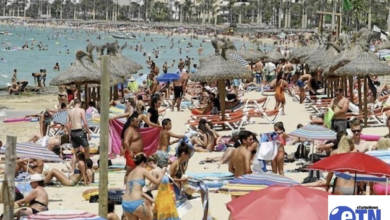
Examples can be found across the globe. In destinations such as Thailand, the Seychelles, South Africa, Türkiye, the United Arab Emirates, and other international tourism hubs, Russian and Ukrainian tourists continue to vacation side by side. Hotel operators, tour guides, and tourism officials frequently report that ordinary travelers from both countries often interact peacefully despite the war raging at home.
Tourism professionals note that many Russian tourists are not government officials, military personnel, or supporters of the invasion. Many simply seek leisure travel, family visits, or cultural experiences abroad.
Industry leaders also emphasize the economic dimension. Before the war, Russian outbound tourism represented billions of dollars in global spending and supported hundreds of thousands of jobs worldwide. Although travel volumes have fallen significantly since 2022, Russian visitors remain important source markets for destinations in Asia, Africa, and the Middle East.
Human Rights Considerations
The United Nations recognizes freedom of movement as a fundamental human right under Article 13 of the Universal Declaration of Human Rights. While governments retain the authority to regulate entry into their territories, critics of blanket visa restrictions argue that tourism should not become a casualty of geopolitical conflict.
Supporters of restrictions counter that access to foreign travel is a privilege rather than an absolute right, particularly when national security concerns are involved. European officials, including Kaja Kallas, have previously defended stricter visa policies on those grounds.
A Divided Europe
The EU itself remains divided.
Countries bordering Russia, including Estonia, Finland, Latvia, Lithuania, and Poland, have generally supported stronger restrictions. Other member states have historically favored a more individualized approach, arguing that each visa application should be assessed on its own merits rather than through blanket nationality-based bans.
As the European Commission reviews the latest proposal, the debate is likely to continue balancing security concerns, sanctions policy, human rights principles, and tourism’s unique ability to bring people together.
For many in the travel industry, the central question remains whether limiting tourism advances peace—or whether maintaining people-to-people connections offers a better path toward understanding during times of conflict.
The answer may ultimately shape not only Europe’s visa policy, but also the future role of tourism in a world increasingly divided by geopolitical tensions.
Key sources: Reuters report on Sweden’s proposal, EU visa policy documents, European Commission sanctions information, and statements from EU member states.