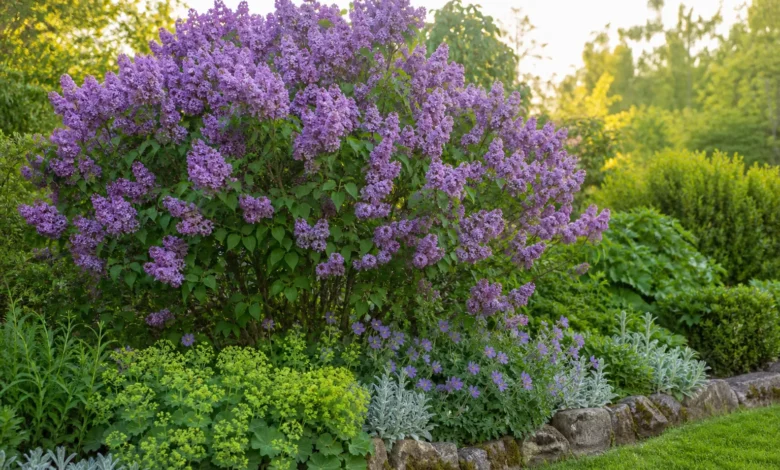
In May the lilacs are in full bloom and smell over half the garden – six weeks later the magic is over. What remains is a wide, often bare strip under the bush: dry earth, a few tired blades of grass, weeds here and there. If you want to underplant your lilac, you have to fight against a dense network of roots that draws water from the soil and against the partial shade of older bushes. The area can still be greened – you just need the right plants in the right place. And whether the popular hydrangea is one of them is a question in itself.
Why is the area under the lilac so difficult?
The common lilac (Syringa vulgaris) belongs to the olive tree family and grows four to six meters high and almost as wide. A taproot plant works underground, which also forms wide-reaching secondary roots and runners. These flat roots run through the very layer of soil in which small perennials also have their roots – and pull water and nutrients away from under their noses.
Then there is the light. A young lilac still lets in a lot of sun, but over the years the crown becomes denser and casts noticeable partial shade in summer. The soil underneath is usually permeable, rich in humus and calcareous, i.e. rather alkaline – the lilac is a real lover of lime. As the Botanical Garden of the TH Ostwestfalen-Lippe notes, thanks to its taproot it can tolerate longer summer droughts and has a strong tendency to form runners, which makes any underplanting even more difficult.
Anyone who has ever wanted to plant an ornamental cherry knows the initial situation: little water, little light, a lot of root pressure. One more detail about care – the lilac blooms on two-year-old wood. So only cut and thin out immediately after flowering, otherwise you will cut off the buds for next year.

These ground covers and perennials tolerate root shade
Plants that naturally grow in the light shade of trees and require little water work most reliably. They cover the ground extensively, keep weeds down and conceal the bare spot:
- Fairy flower (Epimedium): Leathery, semi-evergreen leaves and delicate flowers in April – one of the best ground covers for dry root shade.
- Cranesbill (Geranium): undemanding permanent bloomers that form dense cushions; The Balkan cranesbill (Geranium macrorrhizum) in particular tolerates drought well.
- Lady’s Mantle (Alchemilla mollis): soft, hairy leaves that hold drops of dew, plus a green-yellow veil of flowers from June.
- Waldsteinia: evergreen, carpet-forming ground cover with yellow flowers, extremely robust and easy to spread.
- Periwinkle (Vinca minor): Shiny foliage all year round, blue flowers in spring, grows even under dense trees.
- Hostas (Hosta): Large decorative leafy perennials for slightly damper areas – they like it shady, but need more water than the rest and are therefore better placed on the cooler edge.
Feel free to combine two to three of these types: different leaf shapes appear more lively than a monoculture and close the area more quickly.

Professional tips for the dry root area
- Mulch layer: A 3-5 cm thick layer of bark mulch or leaf compost keeps moisture in the soil and slows down weeds.
- Distance to trunk: Plant new perennials at a distance of 40–60 cm from the trunk, where root competition is somewhat lower.
- Growth aid: Water regularly in the first year until the underplanting is rooted; After that she usually manages on her own.
- Compost: Well-seasoned compost, incorporated during planting, noticeably improves soil structure and water-holding capacity.
Spring bloomers that bloom together with lilacs
Spring onions are the smartest solution to root shade because they complete their program before the summer drought sets in. They use the light while the lilac has barely any leaves, bloom and move in again before the ground dries out in July.
- Crocus and squill (Scilla): the earliest, from February and March, a blue-violet carpet even before the lilac.
- Daffodils: thrive in the same place for years and are avoided by voles.
- Tulips and hyacinths: the later varieties overlap with the lilac blossom in May and add strong splashes of color.
Plant the bulbs in loose groups in autumn, around September to November – this way the effect looks more natural than in straight rows. Rule of thumb for depth: plant two to three times as deep as the bulb is tall.

Lavender, catnip and sage: only on the sunny edge of the bed
Lavender, catnip and sage appear as lilac companions in many plant lists – and that’s only true with one important caveat. These subshrubs are sun worshipers. In the dense root shade directly under the crown, they take care of themselves, become bare from below and hardly bloom.
Their place is the outer, sunny edge of the bed, where the lilac crown no longer casts any shadow. After all, they share a preference with lilacs: permeable, rather calcareous soil. When it comes to flowering times, they only slightly overlap – the lilacs are usually through at the end of June, when lavender and catnip are just getting started. If you want to think further about the planting partners for lavender, you will find even more combinations for the sunny edge.

Do lilacs and hydrangeas go together? The honest answer
The short answer: usually not in the same root area. As beautifully as they both bloom, their location requirements diverge in almost every respect.
| Claim | Lilac (Syringa) | Hydrangea (classic) |
|---|---|---|
| Light | sunny, blooms sparsely in the shade | partially shaded, no blazing midday sun |
| Water | drought tolerant | evenly moist, high demand |
| Floor | permeable, calcareous, alkaline | humus, rather sour |
The lilac wants sun, dryness and lime; The classic farmer’s hydrangea wants partial shade, even moisture and rather acidic, humus-rich soil. Many hydrangea leaves turn yellow on calcareous soil, and both compete for the scarce root moisture anyway. If they are too close, the hydrangea will almost always lose its shape.
Two varieties are the exception: the snowball hydrangea “Annabelle” (Hydrangea arborescens) and the panicle hydrangea “Limelight” (Hydrangea paniculata). Both tolerate more sun and drought than the farmer’s hydrangea and react more calmly to the pH value. Place them well away from the lilacs so that the roots don’t get in the way – one to two meters between the bushes is a good guideline. If you want to go deeper, you will find further material for the moister, partially shaded corner under our ideas for ground cover under hydrangeas and the suitable companion plants for hydrangeas.

What’s Hot

Garden and plants
These plant partners feel really at home next to lavender
Buddleia is not a real lilac – briefly explained
It’s worth taking a look at the names here, as they constantly cause confusion. The buddleia or butterfly lilac (Buddleja davidii) is not at all related to the true lilac. Syringa is part of the olive tree family, Buddleja is botanically part of the figwort family – two completely different plant families that only share the common German name.
In practical terms, this means: Buddleia grows looser and airier, blooms from July to September in long, tapering panicles and wants full sun. Because its growth remains light, more light reaches the bottom and it tolerates other neighbors – ornamental grasses, lavender, catnip and steppe sage fit perfectly here. So first clarify which “lilac” you actually have in your garden. Only then will it be clear which companions are suitable for the floor below.

Frequently asked questions
Which plants don’t get along with lilacs?
Especially lime-avoiding, moisture-loving species. Rhododendrons, azaleas and blueberries need acidic, humus-moist soil and suffer visibly in the dry, alkaline root area of the lilac. Most ferns also find too little moisture there and remain puny.
How often should I remove lilac root suckers?
It is best to do this regularly during the growing season, approximately every three to four weeks from April to August. Use the spade to cut off the runners as close to the origin as possible, otherwise they will sprout again even more vigorously. This means your underplanting retains space, water and nutrients.