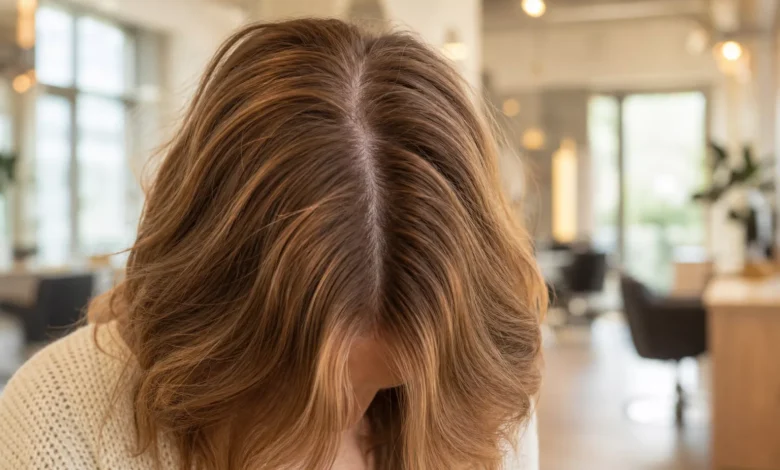
You push your hair over your forehead in front of the mirror, hold it briefly and turn your head to the side. This is how almost every pony decision begins. Shoulder-length hairstyles with bangs are at the top of the salon’s wish list because the bangs frame the face without having to part with the familiar length. It’s just that full, blunt bangs flatter a different face than airy curtain bangs. If you know this in advance, you go into the salon with a clear picture and save yourself long transition phases.
In short
- Round face – Side or bluntly straight bangs visually elongate the surface.
- Oval or elongated face – Curtain bangs at eye level create a soft frame and shorten a high forehead.
- Heart-shaped face – A fringed, thinned fringe balances out the wider forehead area, especially with fine hair.
- Hair structure counts – Fine hair benefits from texture, thick hair also supports a full, straight edge.
Which bangs suit which face shape with shoulder-length hair?
The honest answer to the question “Which pony is right for me?” depends less on the trend than on the proportions of your face. The following overview assigns the common bangs types to the four most common face shapes.
| Face shape | Recommended bangs type | Why |
|---|---|---|
| Around | Side or blunt straight bangs | Visually stretches the round surface and breaks up the width. |
| Oval | Almost any bangs, especially curtain bangs | Balanced proportions leave the most room for maneuver. |
| Elongated | Curtain bangs or full straight bangs | Visually shortens the forehead and adds width to the face. |
| Heart-shaped | Fringed, thinned bangs | Balances a wide forehead and narrow chin. |
The side-swept, asymmetrical bangs play a special role. It is considered the most versatile option and suits almost every face shape because the slanted line gently breaks up the symmetry – one reason why slanted bangs are so popular as a trend cut. Your hair structure is just as important as the shape of your face. Fine hair appears fuller with fringed, textured bangs, while thick hair also carries a heavy, straight edge effortlessly.
Six shoulder-length hairstyles with bangs that are convincing
From sharp edge to soft curtain, these six bob and lob combinations cover the gamut. Each works on shoulder-length or mid-length hair, but sets its own focal point.
Blunt bob with blunt bangs
The blunt bob is the classic among blunt-cut bobs – a clear, straight edge without steps, combined with an equally straight, full fringe. This combination works best on straight to slightly wavy hair and visibly stretches a round face. Using a round brush, blow-dry the edge of the fringe slightly inwards so that it lies smoothly.

Clavi cut with soft, frayed bangs
The Clavi Cut ends exactly at collarbone height and is therefore between a bob and a lob. This goes with soft, slightly frayed bangs that gently cover the forehead without cutting it off harshly. Heart-shaped faces in particular benefit from this, and for fine hair, the fringes create a fuller impression. After blow-drying, comb the bangs with your fingers to maintain the airy structure.

Lob Cut with Wispy Bangs
The lob cut – short for long bob – is a little longer than the classic bob and therefore leaves more room for styling. The fine, thinned wispy bangs rest loosely on the forehead and never appear severe. This combination suits women who want to try out bangs without immediately deciding on a heavy full bangs option. A touch of texturizing spray in the bangs keeps the strands moving all day.

Layered cut with curtain bangs
A layered cut brings movement to shoulder-length hair, and curtain bangs take up this principle on the face. The curtain bangs are parted in the middle and end at about eye level, so that they flow softly on both sides. It is considered particularly versatile and particularly frames oval and elongated faces. If you like layered lengths, you can find more ideas under our shoulder-length, layered haircuts.

Shag cut with blunt bangs
The shag cut relies on many layers and a deliberately tousled finish – lots of volume on the top of the head, fringed tips. Bluntly cut bangs ground this fluffiness and give the face a clear frame. Because the cut is so versatile, it is considered age-independent and works just as well on silver gray as it does on brown. A little dry shampoo at the roots refreshes the volume on the second day.

What’s Hot
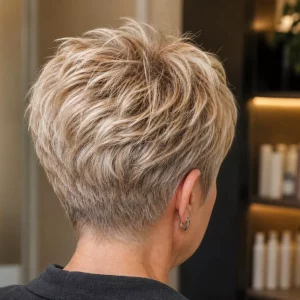
Short hairstyles for women
When it comes to short haircuts over 50, styling time is a deciding factor
Feathered cut with structured bangs
With the feathered cut, the strands are finely combed out so that the bangs flow seamlessly into the side contours. The result looks soft and flowing, ideal for anyone who wants bangs without wearing a harsh cut on their face. The effect unfolds its full effect on slightly wavy hair. If you like it fringier, it’s best to take a closer look at layered, fringed bob hairstyles with bangs.

Style curtain bangs & Co. in everyday life
As different as the six cuts are, the same question always arises in everyday life: How do I get my bangs into shape quickly in the morning? A few simple steps are enough to keep the strands in place all day long.

What’s Hot

Hairstyles
5 styling tricks make hairstyles over 60 livelier without a cut
Pro tips
- Round brush: Blow-dry the bangs while they are still slightly damp using a medium-sized round brush, once inwards and once outwards so that they fall softly and get movement.
- Texture spray: A short spray into the length of the bangs keeps the movement without sticking the strands together.
- Dry shampoo: The roots of the bangs get greasy faster than the rest – a touch of dry shampoo in the morning saves the second day.
- Cold air instead of straighteners: For quick styling, the round brush with the cold air button on the hairdryer is enough; the straightener quickly flattens the bangs.
Regrowth and care – this is what you should pay attention to before the appointment
A pony requires more care discipline than the length because even a few millimeters change the fall. Hair grows on average around 1 to 1.5 centimeters per month – so a straight fringe hangs noticeably lower after four to six weeks. To keep the shape clean, a short trim every three to four weeks is recommended; many salons offer it for free or for a small fee.
At the first appointment, it helps to tell the hairdresser three things: your face shape, your hair structure and your styling habits. If you don’t have time to blow-dry in the morning, you’re better off with easy-care curtain bangs than with straight, full bangs that need to be shaped every day. Similar considerations are also worthwhile for pony variants for medium-length hairstyles over 50, where structure and fall are particularly important.
Frequently asked questions
Does a pony grow out quickly if you don’t like it?
Not that quickly, but the matter is manageable. With around one centimeter of growth per month, it usually takes two to three months until the bangs are long enough to be parted at the side and worked into the lengths. During this transitional period it is easy to put away.
Do bangs also suit fine, thin hair?
Yes, particularly good with the right cutting technique. A frayed, thinned out or slightly textured fringe creates the illusion of more fullness than a heavy, straight edge, which quickly appears transparent on fine hair. A little volumizing powder directly at the roots gives additional hold and stability.
How do I conceal my fringe growing back in everyday life?
It’s easiest with little helpers: a narrow hair clip holds the strands that have become too long at the side, and a headband pushes the entire fringe out of the face. If you blow-dry, use the round brush to deliberately direct the strands to the side instead of forward – this way the growing bangs merge with the top hair.