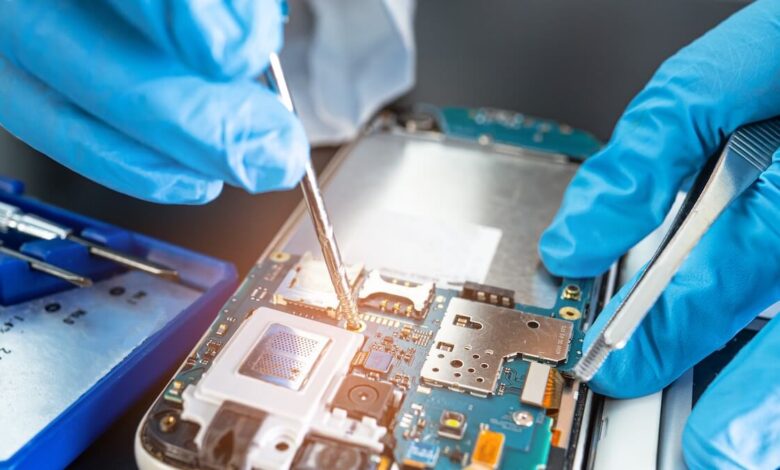
In the future, defective devices will no longer automatically mean that you have to buy a new one. In the future, there will be a new right to repair for numerous electrical devices, which will give consumers more opportunities to use products for longer. We’ll show you which devices are affected and what new obligations the manufacturers now face.
Due to increased consumption and shorter product life cycles, electronic waste is one of the fastest growing types of waste worldwide. The extent has increased significantly in recent years. According to estimates, the amount of electronic waste worldwide could rise to around 75 million tonnes annually by 2030.
The European Union wants to counteract this development and promote a longer service life for products. To this end, it has introduced an EU directive that is intended to strengthen the right to repair and make manufacturers more responsible.
The aim is to keep devices in use longer and thus waste fewer resources. The growing amounts of electronic waste should also be contained in the future. This right to repair is now being introduced in Germany; the Bundestag has already decided to implement the EU directive.
Right to repair: These 16 electrical devices must be repaired in the future
The new regulation stipulates that manufacturers will have to repair electrical devices at a reasonable price in the future, even after the warranty period has expired. This should have the advantage for consumers that they do not necessarily have to buy a new device if there is a defect.
In addition, the implementation of the EU directive requires manufacturers to design their devices in such a way that they can actually be repaired. In the future, this will also mean that smartphone batteries, for example, will have to be installed in such a way that they can be replaced.
There should be another incentive for consumers. Not only can you forgo buying a new one, but after repairing a broken electrical appliance you will also receive an extension of the current warranty period by twelve months.
The EU directive stipulates that the right to repair should apply to the following devices:
- Washing machines
- dryer
- washer dryer
- Household dishwasher
- Refrigeration devices
- Mobile phones
- Printer
- Tablets
- Computers without a keyboard (so-called slate tablets)
- cordless telephones
- E-scooter
- E-bikes
- Welding equipment
- Vacuum cleaner
- server
- Data storage products
What does the new regulation mean for manufacturers?
The new regulation should come into force by July 31st at the latest. From then on, consumers can request a repair from the manufacturer. In addition, once the law is passed, manufacturers will also be required to produce repairable devices.
The right to repair could result in significant additional costs for companies that produce electrical devices. In the future, they will not only have to repair devices, but also have spare parts available for their products.
This also applies to products that have not been sold for years. The period of time for this depends on the expected lifespan of a device.
For smartphones, this means that manufacturers must have all parts available for at least seven years even after production has stopped. For washing machines and dryers, this period is ten years.
The manufacturer must carry out the repair either free of charge or at a reasonable price. If the consumer decides to have a repair done by another service – not the manufacturer itself – the latter must also provide the spare parts at a reasonable price.
Also interesting: