WTTC’s Gloria Guevara Joins 2,500 Leaders as Hospitality Investment Surges Despite Global Crisis

Global investors gathered in Berlin for IHIF EMEA 2026 as WTTC CEO Gloria Guevara highlighted hospitality’s resilience amid the Iran crisis. With 2,500 delegates and major industry leaders, the forum explored AI, investment trends, and the future of hotel-driven asset strategies.
Berlin, Germany — Against the backdrop of escalating geopolitical tensions linked to the ongoing Iran conflict, global investors, fund managers, and hospitality leaders gathered in the German capital for one of the industry’s most influential—and controversial—events: the International Hospitality Investment Forum (IHIF) EMEA 2026.
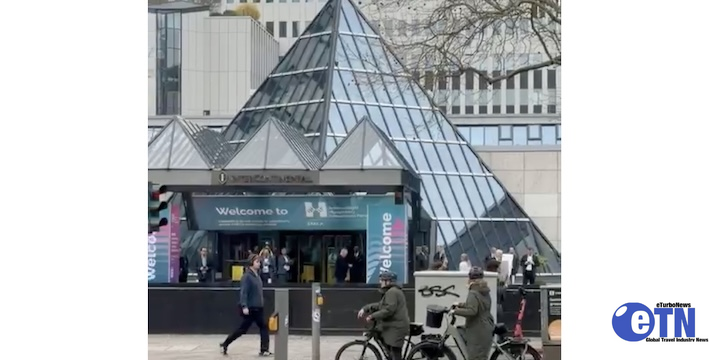
Held at Berlin’s InterContinental Hotel, which was fully reserved for the occasion, the high-profile summit drew approximately 2,500 delegates, including more than 700 global investors, 500 VIPs, and over 200 expert speakers. Attendance came at a premium, with tickets reaching up to €4,500, underscoring the exclusivity and institutional weight of the gathering.
Hospitality in a Time of Global Uncertainty
The timing of IHIF EMEA 2026 could not have been more significant. As global markets grapple with uncertainty driven by geopolitical instability, including the Iran war, the hospitality sector is increasingly being positioned as a resilient and evolving asset class.
Under the theme “Returns Redefined. Value Reimagined.”this year’s forum emphasized how hospitality is no longer just a traditional real estate play, but an institutional-grade investment category influencing—and “hotelizing”—adjacent sectors.
Industry leaders discussed how hospitality assets are now seen as vehicles for diversification, performance optimization, and sustainable growth, even amid macroeconomic volatility.
High-Level Voices Shape the Debate
The event featured an impressive lineup of global leaders shaping the future of hospitality and investment. Among them:
- Sébastien Bazin, Chairman & CEO of Accor
- Elie Maalouf, CEO of IHG Hotels & Resorts
- Neal Jones of Marriott International
- Barbara Muckermann of Kempinski Hotels
- Jesse Stein of Airbnb
- Peter Werhahn of Blackstone
- Lauren Okada Young of Brookfield Asset Management
- Janan Ganesh of Financial Times
A particularly notable presence was Gloria Guevara, President and CEO of the World Travel & Tourism Council (WTTC), who addressed delegates on the role of travel and tourism as a stabilizing force in uncertain times.
Her participation highlighted the increasing convergence between global policy, tourism economics, and private investment strategies.
Key Themes: Strategy, AI, and Resilience
IHIF EMEA 2026 focused on a broad spectrum of topics reflecting rapid transformation across the industry:
- Macroeconomics & Geopolitics: Sessions look like “The World in 2026 – Redefining Strategies” explored risk landscapes and future-proof investment approaches.
- Experiential Hospitality: Growth in luxury, lifestyle, wellness, and outdoor-focused travel segments.
- Asset management: Emphasis on “alpha generation” through operational excellence and smart technologies.
- AI Transformation: Discussions on how artificial intelligence is reshaping distribution, pricing, and customer engagement.
- Investment structures: Evolving deal models, debt markets, and capital flows into EMEA.
- Development trends: Adaptive reuse, conversions, and sustainable construction practices.
The concept of “AI disintermediation dividend”—where technology reduces reliance on traditional intermediaries—emerged as a key talking point, signaling a structural shift in how hospitality businesses operate and generate returns.
A Marketplace for Capital and Ideas
IHIF has long been considered a cornerstone event for deal-making in the hospitality sector. This year was no exception.
The forum positioned itself as a platform not only for investors and developers but also for:
- Limited partners seeking capital deployment strategies
- Advisors and lenders navigating complex financing environments
- Emerging leaders under 30 entering the industry
Testimonials from participants reinforced its importance:
“It’s really very important, if not the most important, conference of the year,” said Adela Cristea of Radisson Hotel Group.
“It’s connecting with investors, operators, all our colleagues across the industry,” added Carine Bonnejean of Christie & Co.
“A great event where the whole industry comes together,” noted David Kellett of Invesco Real Estate.
Protests Highlight Growing Tensions
Despite the high-level discussions inside, the event did not unfold without controversy.
Outside the InterContinental, protesters gathered to voice opposition to what they described as the increasing financialization of housing and urban spaces. Demonstrators criticized the scale of capital represented at the summit—estimated in the trillions of euros—and raised concerns about affordability and social impact.
According to reports from the Berlin newspaperactivists targeted the investor-heavy nature of the conference, arguing that large-scale real estate investments contribute to rising rents and displacement in cities like Berlin.
The protests underscored a growing divide between global capital flows and local community concerns—an issue that increasingly intersects with hospitality development.
Redefining the Future of Hospitality Investment
As IHIF EMEA 2026 concluded, one message stood out clearly: hospitality is no longer a peripheral asset class—it is central to the future of global investment strategies.
In a world shaped by uncertainty, technological disruption, and shifting consumer expectations, the industry is being redefined not just by returns, but by how value itself is created.
The question posed throughout the forum—how far can we redefine returns and reimagine value together?—remains open. But if Berlin’s gathering is any indication, the answer will be shaped by a powerful mix of capital, innovation, and resilience.
And perhaps increasingly, by the voices outside the conference halls as much as those within.