WTTC Puts Africa at the Center as Gloria Guevara and Najib Balala Lead Historic Kenya Mission

The World Travel & Tourism Council (WTTC) is putting Africa at the center of global tourism growth. During a high-profile mission to Kenya, WTTC CEO Gloria Guevara and Executive Vice President Najib Balala advanced sustainability partnerships, celebrated conservation successes, and strengthened public-private collaboration, positioning Kenya as a model for tourism-led development.
NAIROBI, Kenya — The World Travel & Tourism Council (WTTC) is making it clear that Africa is no longer on the sidelines of global tourism. Under the leadership of President and CEO Gloria Guevara, the organization is accelerating a vision that places the continent at the heart of tourism’s future, bringing together governments and the private sector in ways few global organizations can.
The momentum has been building rapidly.
Just weeks after WTTC hosted its historic Recovery and Leadership Cruise along Egypt’s Suez Canal, gathering more than 300 public and private sector leaders to discuss the future of travel and tourism, Guevara reinforced her commitment to Africa by appointing former Kenyan Tourism Minister Najib Balala as WTTC Executive Vice President.
The appointment was far more than symbolic. Across Kenya and throughout Africa, it was seen as a powerful signal that the continent would play a central role in WTTC’s agenda.
This week, Guevara and Balala traveled to Kenya and Angola in what many described as a homecoming mission. In Kenya, the delegation met with tourism leaders, government officials, and private-sector executives, including Kenya Airways CEO Capt. George Kamal, while placing sustainability, conservation, and tourism growth at the center of discussions.
A Strategic Mission with Lasting Impact


According to WTTC’s executive summary, the organization’s mission to Kenya focused on strengthening sustainable tourism, conservation, and green growth across Africa.
One of the most significant outcomes was progress towards a landmark Memorandum of Understanding between WTTC and the United Nations Environment Program (UNEP), headquartered in Nairobi.
The proposed partnership aims to:
- Promote sustainability across the tourism sector
- Combat illegal wildlife trade
- Strengthen conservation and biodiversity protection
- Support green energy initiatives throughout tourism value chains
The initiative demonstrates WTTC’s growing role as a bridge between global institutions, governments, and the private sector.
Strengthening public-private cooperation
WTTC also held high-level discussions with Kenya’s Cabinet Secretary for Tourism and convened a stakeholder forum, during which the organization’s Economic Impact Research (EIR) data received strong support.
Kenyan officials acknowledged the importance of data-driven policy development and sector planning. In a significant development, the government expressed strong support for the Kenya Tourism Board (KTB) joining the WTTC, a move that would deepen collaboration between the government and industry stakeholders.
This type of public-private partnership has long been one of WTTC’s greatest strengths.
As tourism emerges as a key driver of economic growth worldwide, WTTC’s ability to align governments with the world’s most influential tourism companies is viewed as a unique advantage that can accelerate recovery and development at record speed.
Applauding Kenya’s Infrastructure Vision
The WTTC delegation also praised Kenya’s ambitious infrastructure investments, recognizing them as essential building blocks for future tourism growth.
Among the projects highlighted were:
- The redevelopment of the Bomas International Convention Complex
- The construction of Talanta Sports City Stadium
- Extension of the Standard Gauge Railway (SGR) to Malaba
- Ongoing road expansion and national connectivity improvements
WTTC leaders noted that these investments are enhancing Kenya’s competitiveness as both a tourism destination and an investment hub.
Conservation at the Heart of Tourism
The most emotional moments of the visit came during tours of some of Kenya’s leading conservation institutions, including the Kenya Wildlife Service (KWS) Nairobi Orphanage and the renowned Sheldrick Wildlife Trust.
In a gesture that captured the spirit of the mission, Gloria Guevara adopted a baby giraffe named Wajirwhile members of the delegation spent time with rescued baby elephants.
The images quickly spread across social media and local news outlets, becoming powerful symbols of WTTC’s commitment to conservation-led tourism.
“We launched our Africa numbers from Nairobi and adopted a baby giraffe and baby elephants,” Guevara told eTurboNews.
“The Kenya conservation efforts are impressive, and the results are felt in tourism. Kenya has become an African model for public-private partnership.”
Global Recognition for Kenya’s Conservation Leadership
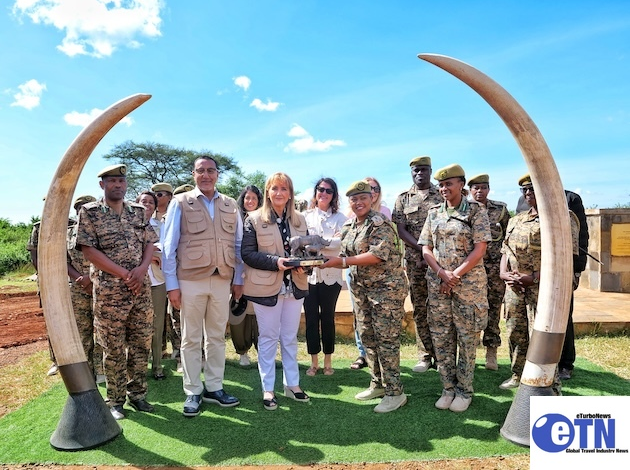
During visits to Nairobi National Park and the historic Ivory Burning Site, Guevara praised Kenya’s decades-long commitment to wildlife protection.
“Kenya’s conservation history is remarkable,” she said. “The country has demonstrated to the world that conservation and tourism can thrive together. Kenya remains a global leader in conservation, and its achievements continue to inspire the international community.”
Balala echoed those sentiments while paying tribute to the Kenya Wildlife Service.
“I commend the Government of Kenya and the Kenya Wildlife Service for their unwavering commitment to protecting our wildlife heritage,” he said. “KWS carries a critical mandate on behalf of the nation, and its work continues to safeguard wildlife for future generations.”
In a personal show of support, Balala announced a contribution of KSh100,000 towards wildlife conservation initiatives.
Africa’s Moment Has Arrived
The WTTC delegation’s visit comes at a time when destinations around the world are searching for sustainable tourism models that balance economic growth with environmental protection.
Kenya’s success story demonstrates that conservation, community development, and tourism growth can reinforce one another rather than compete.
For many observers, WTTC’s growing engagement in Africa represents more than a series of visits or partnerships. It reflects a strategic shift in global tourism leadership.
By bringing together governments, international organizations, and the private sector, WTTC is positioning itself as a catalyst for a new era of African tourism development.
The message from Nairobi was unmistakable: Africa is no longer waiting for a seat at the table. It is helping lead the conversation.