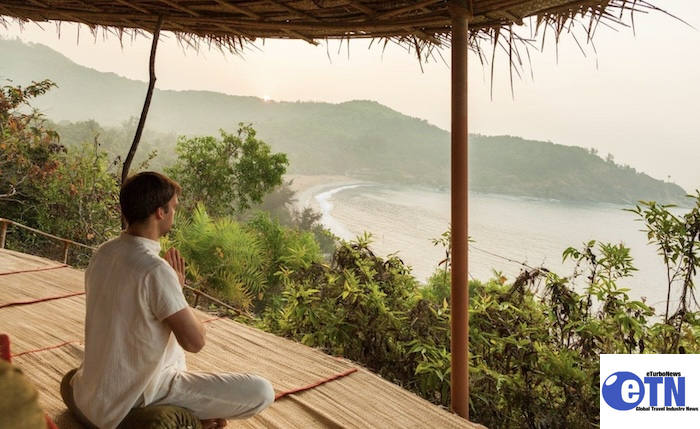
At 6:12 am, before the cicadas yield to the heat and before the first motorbike cuts through the jungle road, 18 strangers sit in stillness on a wooden platform overlooking a river valley. No one speaks. No one checks a phone.
A bell rings once. – The day begins not with movement, but with breath.
This is not a vacation in the traditional sense. There are no packed itineraries, no frantic photo stops, no checklist of landmarks. Instead, there is yoga—slow, deliberate, sometimes uncomfortable—and an emerging global industry built around the idea that the most meaningful journey might be the one that goes inward.
A Different Kind of Escape
Yoga vacations, once the domain of spiritual seekers and backpackers drifting through India, have become a defining feature of the modern travel economy. Today, they span continents and price points: from austere ashrams along the Ganges to five-star resorts in Greece where guests sip herbal tonics between sessions.
What they offer is deceptively simple: structure in a chaotic world.
A typical day might include sunrise meditation, two yoga classes, plant-based meals, journaling sessions, and an afternoon left deliberately unplanned. The absence of choice, many travelers say, is the point.
“It’s the only time I don’t have to decide anything,” said Lena Hoffmann, a 38-year-old marketing executive from Berlin attending her third retreat. “Everything is taken care of—except your thoughts.”
Why Now?
The rise of yoga vacations is inseparable from the pressures of modern life. Burnout, once a corporate buzzword, has become a shared cultural condition. The boundary between work and rest has blurred, especially in an era of remote work and constant connectivity.
Travel has changed in response.
Where previous generations sought escape through indulgence—more food, more activity, more stimulation—today’s travelers are increasingly seeking subtraction.
- Less noise.
- Less speed.
- Less distraction.
Yoga, with its emphasis on presence and breath, offers a framework for that reduction.
Who Shows Up?
Contrary to stereotype, the yoga retreat crowd is not exclusively lit, flexible, or experienced.
- They are beginners and experts.
- They are young professionals and retirees.
- They are solo travelers, couples, and increasingly, groups of friends.
The largest demographic falls between 25 and 55, but the edges are expanding. In recent years, retreats have begun catering to older travelers with gentler practices, as well as to younger audiences drawn by hybrid experiences—yoga paired with surfing, hiking, or even co-working.
Women still make up the majority, but men are arriving in growing numbers, often drawn by the promise of stress reduction rather than spirituality.
The Science of Stillness
Yoga’s appeal is not purely philosophical. Its benefits are increasingly measurable.
Regular practice has been associated with:
- Reduced cortisol levels (the body’s primary stress hormone)
- Improved flexibility and muscular strength
- Better sleep and emotional regulation
But practitioners often describe something harder to quantify: a recalibration.
“You start to notice how loud your mind is,” said Daniel Reed, a 44-year-old architect attending a retreat in Costa Rica. “And then, slowly, it gets quieter.”
Places That Shape the Practice
India: Where It Began
In the northern Indian town of Rishikesh, yoga is not a trend but a tradition. Here, retreats often take place in ashrams, where days are structured around discipline and simplicity.
There are no infinity pools. There is no curated aesthetic. There is, instead, a return to origins.
Indonesia: The Polished Retreat
In Ubud, yoga has been reimagined for a global audience. Open-air studios overlook lush forests. Schedules include sound healing and massage. The experience is immersive, but also undeniably comfortable.
Costa Rica: Movement Meets Adventure
Along the Pacific coast near Nosara, yoga shares space with surfing and wildlife. Mornings begin on the mat; afternoons are spent in the ocean.
Here, wellness is kinetic.
Greece: Stillness, with a View
On the cliffs of Santorini, yoga unfolds against one of the world’s most photographed backdrops. The practice is the same, but the setting transforms it—turning each session into something cinematic.
Germany: A Wellness Tradition Reimagined
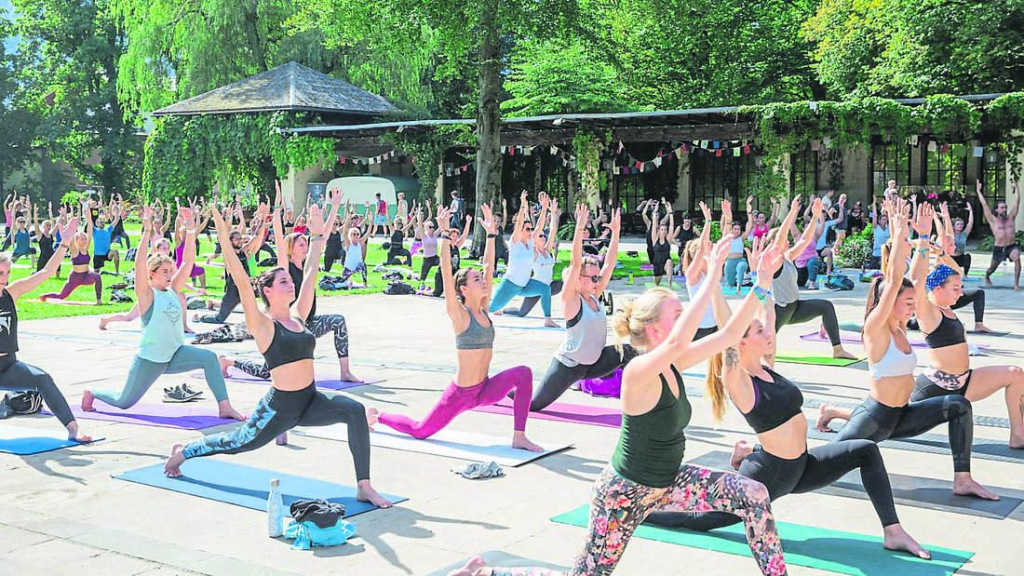
Deep in southern Germany’s spa country, a different kind of yoga destination is taking shape—one rooted not in tropical escapism, but in centuries-old health traditions.
From June 19 to 21, the town of Bad Mergentheim will host the Mind flow days Taubertala three-day festival of yoga, mindfulness and sound.
What began as a single-day event has expanded into a full weekend, reflecting the growing appetite for wellness experiences closer to home. Held in the town’s historic Kurhaus and surrounding Kurpark, the program blends traditional yoga sessions with workshops, meditation, sound experiences and live music.
“Yoga connects movement, mindfulness and inner balance—exactly what Bad Mergentheim represents as a health destination,” said Julia Krupka of the town’s spa administration.
The setting is part of the appeal. Unlike remote retreats that require long-haul travel, Bad Mergentheim offers accessibility: tree-lined paths, open-air practice spaces and light-filled halls designed for rest and recovery.

Discover the best yoga travel destinations to boost your mental health and well-being — WTTC Travel Hub
Lean into the stretch, breathing in through your nose and out through your mouth. Deep breath in…and out. These familiar words can be heard in most yoga classes, worldwide.
Germany, long known for its spa culture, is experiencing a yoga boom of its own. An estimated five million people now practice yoga regularly in the country, a number that has risen sharply since the pandemic as more people seek mental resilience and physical well-being.
The Mind Flowdays reflect that shift. The schedule accommodates both beginners and experienced practitioners, with offerings that range from dynamic yoga styles to quiet meditation sessions. Food plays a central role as well: vegan dishes, herbal teas and light, health-focused meals are integrated into the experience.
Eating as practice
Food, on a yoga retreat, is rarely incidental.
Meals are often designed to support the body’s rhythms:
- Ayurvedic dishes in India emphasize balance through spices and digestion-friendly combinations
- Plant-based menus dominate in many retreats, offering lighter, nutrient-dense meals
- Mediterranean diets in Europe incorporate fresh vegetables, grains, and healthy fats
Caffeine and alcohol are often limited or eliminated. Meals are eaten slowly, sometimes in silence.
For some, this is the hardest part.
The Paradox of the Yoga Vacation
For all its serenity, a yoga retreat can be surprisingly demanding.
- There are early mornings.
- There is physical discomfort.
- There is, perhaps most challenging of all, time—unstructured and unavoidable.
“You can’t outrun yourself here,” Ms. Hoffmann said. “That’s the whole point.”
And yet, that confrontation is precisely what draws people back.