When the World Health Organization officially declared the Ebola outbreak in the Democratic Republic of Congo and Uganda a “public health emergency of international concern” earlier this month, memories of past travel collapses came rushing back across Africa’s tourism sector.
This time, however, the reaction from the global tourism industry is more measured — shaped by lessons learned from COVID-19, stronger regional health coordination, and a determination to avoid blanket shutdowns that devastated economies in previous crises.
The current outbreak involves the rare Bundibugyo strain of Ebola, for which no approved vaccine or targeted treatment yet exists. WHO officials say the outbreak has caused dozens of deaths and hundreds of suspected cases centered mainly in eastern Congo, with confirmed cases also reported in Uganda.
Yet unlike the panic-driven responses seen during the West African Ebola crisis a decade ago, tourism boards, airlines, safari operators, and international travel organizations are largely resisting calls for widespread travel bans.
CDC Measures Are Reshaping Travel Policies
The strongest shift affecting international tourism has come from the United States.
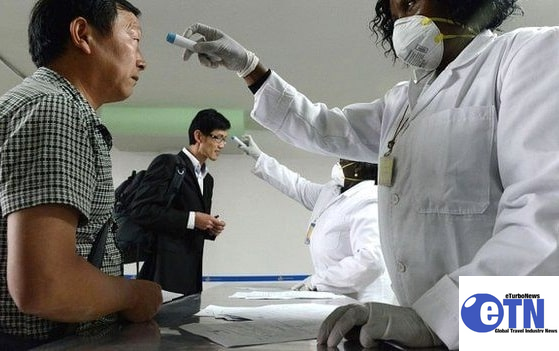
The US Centers for Disease Control and Prevention announced enhanced screening procedures, monitoring protocols, and temporary entry restrictions tied to travelers arriving from the Democratic Republic of Congo, Uganda, and South Sudan.
According to the CDC, travelers who have recently visited outbreak-affected countries may face health screening at designated US entry points, while some non-US citizens could be temporarily restricted from entering the country under emergency public health authority measures.
The agency also issued updated travel health notices for Uganda and the Democratic Republic of Congo, warning travelers to exercise heightened precautions depending on destination and exposure risk.
These measures are already impacting tourism operations and international travel logistics.
An Air France flight from Paris to Detroit was diverted to Canada after a passenger from Congo was denied US entry under the new Ebola-related restrictions.
Meanwhile, the Democratic Republic of Congo’s national football team changed its World Cup preparation plans to avoid travel complications linked to the CDC measures.
What Travelers Need to Know About Returning to the United States from DRC, Uganda, and South Sudan
What Travelers Need to Know About Returning to the United States from DRC, Uganda, and South Sudan
Africa’s Tourism Leaders Push Back Against Panic
The strongest response has come from African tourism and health leaders themselves.
Africa CDC publicly criticized the United States’ sweeping travel restrictions, arguing that border closures and blanket advisories harm economies while doing little to contain outbreaks.
“Travel bans don’t stop viruses, they stop solidarity,” Amref Health Africa CEO Dr. Githinji Gitahi said in reaction to the US measures.
Tourism-dependent countries across East Africa fear the economic consequences of broad fear-based messaging more than immediate collapse in visitor numbers. Safari operators in Uganda and Rwanda have already begun issuing reassurances to clients, emphasizing that most tourism circuits remain far from outbreak zones and continue operating normally.
Regional tourism authorities are especially sensitive to the reputational damage that can occur when international audiences view Africa as a single undifferentiated destination.
During the 2014–2016 West African Ebola epidemic, several African countries with no cases at all suffered dramatic tourism losses simply because travelers associated the entire continent with the disease. Industry analysts say the sector is determined not to repeat that scenario.
Airlines Tighten Screening but Avoid Suspensions
Airlines serving East and Central Africa have largely avoided mass cancellations so far. Instead, the industry response has focused on enhanced airport screening, passenger health declarations, and contingency planning. Kenya, Rwanda, and Tanzania have all increased surveillance at airports and border crossings as a precaution
WHO continues to advise that the risk of Ebola transmission during air travel remains low because the disease spreads through direct contact with bodily fluids rather than through the air.
Still, governments are moving cautiously.
The US Centers for Disease Control and Prevention introduced enhanced screening measures and entry restrictions for travelers arriving from Congo, Uganda, and South Sudan.
European authorities are also debating airport screening protocols. Public health officials across the EU say widespread flight suspensions are not currently justified, although some countries are reviewing emergency preparedness measures.
Safari Tourism Faces Its First Major Test
Perhaps nowhere is anxiety more visible than in East Africa’s safari and gorilla trekking industry.
Uganda’s gorilla tourism sector — one of the country’s most lucrative tourism products — has spent recent days responding to nervous travelers asking whether they should cancel trips.
Luxury safari operators report a sharp increase in client inquiries rather than outright cancellations, at least for now.
Travel advisors say many high-end travelers have become more accustomed to evaluating health risks pragmatically after the pandemic years. Instead of immediately abandoning plans, clients are requesting detailed information about outbreak geography, evacuation procedures, insurance coverage, and airport health controls.
International travel media have also adopted a notably calmer tone compared with past outbreaks. Publications such as Condé Nast Traveler and regional travel outlets have stressed that East Africa is not under blanket travel warnings and that most tourist itineraries remain unaffected.
Sports and Events Already Feeling the Impact
Even before major tourism disruptions emerge, international events are beginning to feel operational consequences.
The Democratic Republic of Congo’s national football team was forced to alter its World Cup preparations due to new US travel restrictions linked to the outbreak. Planned public celebrations in Kinshasa were canceled, and the team relocated preparations to Europe.
Industry observers say conferences, sporting events, and group tours could become early indicators of broader hesitation in tourism if the outbreak expands geographically.
Cruise operators and large-group travel organizers are also monitoring developments closely, aware that post-pandemic travelers are particularly sensitive to infectious-disease headlines.
A Tourism Industry Trying Not to Repeat COVID-Era Mistakes
The deeper story emerging from this outbreak is how profoundly the tourism industry has changed since COVID-19.
In previous decades, Ebola headlines often triggered immediate cancellations, route suspensions, and dramatic declines in African travel demand. Today, many tourism stakeholders are actively trying to separate scientific risk from public fear.
That shift is visible in WHO messaging as well. The organization has repeatedly discouraged unnecessary travel restrictions while emphasizing targeted screening, surveillance, and international coordination.
The balancing act remains delicate.
If case numbers rise sharply or spread into major transportation hubs, tourism reactions could intensify rapidly. But for now, the global travel industry appears determined to avoid the sweeping shutdown mentality that once defined outbreak response.
For African tourism economies still rebuilding after COVID-19, that distinction may prove critical.