

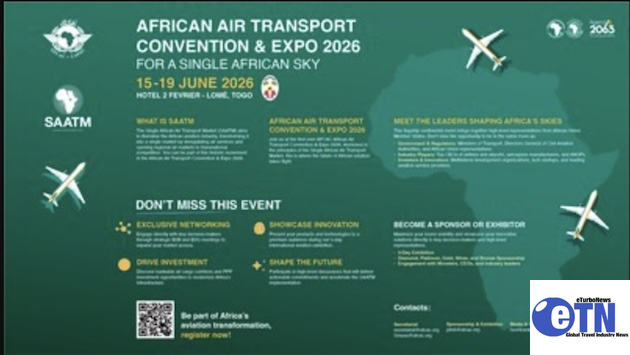
Togo is stepping into the spotlight as the future hub for African aviation. The African Air Transport Convention & Expo 2026 in Lomé will bring together more than 500 aviation leaders, policymakers, investors, and industry stakeholders to accelerate air transport liberalization, connectivity, infrastructure investment, and sustainable aviation development across Africa.
Lome, Togo – Long overlooked on the global aviation map, Togo is positioning itself as a strategic center for African aviation. Next week, the West African nation will take a major step towards that ambition by hosting the African Air Transport Convention & Expo 2026bringing together some of the continent’s most influential aviation, trade, and government leaders.
Although Togo has traditionally played a modest role in global aviation, the West African nation has steadily expanded its influence through strategic investments in air transport infrastructure and its position as a gateway between West and Central Africa. Lomé’s Gnassingbé Eyadema International Airport has become an important regional hub, supported by the growth of ASKY Airlineswhich connects dozens of African destinations.
For Togo, aviation is closely linked to tourism, trade, and economic development, helping improve access to the country’s beaches, cultural heritage sites, and business opportunities.
However, challenges remain, including limited intra-African connectivity, high operating costs, infrastructure financing needs, and competition from larger regional hubs. Events such as the African Air Transport Convention & Expo 2026 present an opportunity for Togo to showcase its aviation ambitions, attract investment, strengthen tourism development, and position itself as a key player in Africa’s drive towards a more integrated and competitive air transport market.
The African Civil Aviation Commission (AFCAC) has announced the program structure, confirmed high-level speakers, and outlined strategic priorities for the landmark event, which will take place from 15 to 19 June 2026 in Lomé, Togo.
Organized in collaboration with the African Union Commission and under the High Patronage of HE Faure Essozimna GnassingbéPresident of the Council of the Togolese Republic, the convention is expected to serve as a catalyst for accelerating the implementation of the Single African Air Transport Market (SAATM) and advancing Africa’s broader aviation integration agenda.
The event is expected to attract more than 500 participants and feature five days of discussionscovering seven major aviation themes and twelve strategic objectives. Government officials, aviation regulators, airlines, airport operators, investors, development institutions, and international aviation partners from across Africa will gather in Lomé to discuss the future of air transport on the continent.
Among the confirmed high-level participants are HE Ms. Lerato Dorothy MatabogeCommissioner for Infrastructure and Energy at the African Union Commission; HE Mr Wamkele MeneSecretary General of the African Continental Free Trade Area (AfCFTA); and HE Ms. Nardos Bekele-ThomasChief Executive Officer of the African Union Development Agency–NEPAD (AUDA-NEPAD).
Representatives from AFCAC, the Government of Togo, the International Civil Aviation Organization (ICAO), Airports Council International Africa (ACI Africa), and the International Air Transport Association (IATA) will also participate.
Five Days Focused on Africa’s Aviation Future
Each day of the convention will address a key pillar of aviation development:
- Day 1: High-level opening session, SAATM implementation, and air transport affordability.
- Day 2: Air cargo development, corridor-based route expansion, seamless mobility, facilitation, and infrastructure investment.
- Day 3: Aviation investment, infrastructure modernization, and sustainability.
- Day 4: Innovation, technology, and human capital development.
- Day 5: Validation of outcomes, partnership consolidation, and closing sessions.
The program includes ministerial roundtables, executive dialogues, technical workshops, bilateral negotiations, project clinics, business-to-business and business-to-government meetings, as well as dedicated investment sessions.
Driving Connectivity and Economic Growth
A central focus of the convention will be identifying practical solutions to reduce taxes, fees, and charges that continue to limit the affordability of air travel in Africa. Discussions will also address improving intra-African connectivity, expanding aviation infrastructure financing, accelerating digital transformation, and advancing Sustainable Aviation Fuels (SAF) and Low Carbon Aviation Fuels (LCAF).
These priorities align closely with the objectives of the African Continental Free Trade Area (AfCFTA) and the African Union’s long-term development blueprint, Agenda 2063both of which recognize air connectivity as a critical enabler of trade, tourism, investment, and regional integration.
“This event is more than a gathering – it is a defining moment for African aviation. It is where ambition meets action: strengthening connectivity, accelerating investment, and building a truly integrated African air transport market that drives trade, opportunity and shared prosperity across the continent.”
— Ms. Adefunke Adeyemi, Secretary General, AFCAC
Expected Continental Outcomes
According to AFCAC, the convention is expected to produce several significant outcomes, including the adoption of a Lomé Ministerial Declarationthe launch of the African Route Development Platform (ARDP)the establishment of new aviation investment pipelines, and strengthened cooperation mechanisms aimed at creating a more competitive and integrated African aviation market.
For Togo, hosting the event represents more than a diplomatic achievement. It signals the country’s growing ambition to become a key gateway for African air transport and logistics. As aviation leaders gather in Lomé, the city is poised to become the focal point for discussions that could shape the future of African connectivity for years to come.
AFCAC serves as the African Union’s specialized agency responsible for civil aviation policy coordination and development across the continent. As the Executing Agency of SAATM, AFCAC leads efforts to liberalize Africa’s air transport market and advance sustainable aviation growth in support of Africa’s integration objectives.
About the author

Juergen T Steinmetz
Juergen Thomas Steinmetz has worked continuously in the travel and tourism industry since he was a teenager in Germany (1977).
He founded eTurboNews in 1999 as the first online newsletter for the global travel tourism industry.