There are moments in global tourism that become symbolic beyond the event itself.
The first-ever WTTC Leadership Cruise through the Suez Canal aboard Crystal Serenity was one of those moments.
Organized by the World Travel & Tourism Council in cooperation with Egypt, the gathering brought together ministers, former heads of state, tourism executives, diplomats, and global tourism visionaries aboard one of the world’s most iconic maritime routes.
Yet among all those attending, one presence stood out above the rest.
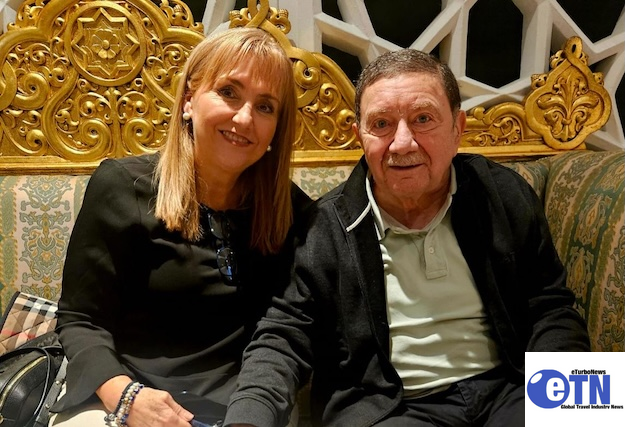
Dr. Taleb Rifai.
For many participants, seeing the former Secretary-General of the United Nations World Tourism Organization once again surrounded by tourism leaders from across the world felt deeply emotional.
It reminded many of a time when UNWTO was still broadly respected and viewed as an influential moral voice for global tourism.
It was a period when governments, destinations, and the private sector worked more closely together — and when Taleb Rifai often described UNWTO and WTTC as “Siamese twins,” inseparable partners jointly guiding the future of world tourism.
Aboard Crystal Serenity, Taleb Rifai appeared exactly where he was happiest:
- Among tourism people.
- Among destinations.
Among dreamers and leaders committed to using travel as a force for peace, economic opportunity, and cultural understanding.
Gloria Guevara, former WTTC President & CEO and one of the most influential leaders in modern tourism, captured the mood perfectly:
“We were privileged to be joined by Dr. Taleb Rifai, respected tourism statesman, aboard Crystal Serenity for the first-ever WTTC Leadership Cruise through the Suez Canal.
As former Secretary-General of UN Tourism, Taleb spent 8 years at the forefront of the global tourism agenda — championing the sector as a driver of sustainable development, economic growth, and people-to-people connection.
We are grateful for his contribution, his presence, and the conversations he brought to life on board.” The symbolism of the journey itself carried enormous meaning.
The Suez Canal — connecting continents, civilizations, cultures, and commerce — reflected the very principles Taleb Rifai spent his life advocating.
Travel connects humanity. Tourism builds understanding. And people are always at the center of the journey.
The event also brought together an influential group of ministers and international leaders, including:
- Sherif Fathi Attia
- Nick Adams
- Ahmed Youssef
- Nikolina Brnjac
- Felipe Calderón Hinojosa
- Dov Lynch
- Matteo Renzi
- Mauricio Macri
- Harris Whitbeck
Their participation underscored the continued importance of tourism diplomacy at the highest levels.
But many aboard recognized that Taleb Rifai’s presence gave the gathering something even more important:
- Perspective.
- Warmth.
- Credibility.
- And humanity.
Those who watched him interact during the cruise saw a man who never stopped loving tourism. Not because of institutions or titles. But because of what tourism does for people.
A Legacy Built on Respect, Humanity, and the Power of Travel
There was a time when the United Nations World Tourism Organization, now known as UN Tourism, was viewed with admiration and relevance across the global travel industry. Governments listened carefully. Tourism ministers felt represented. The private sector believed it had a partner at the table. Destinations from Africa to Latin America saw tourism not merely as business, but as a bridge between people and cultures.
At the center of that era stood Dr. Taleb Rifai.
For eight transformative years as Secretary-General of the UN World Tourism Organization (UNWTO), Dr. Rifai became one of the most respected voices in global tourism. Calm, intellectual, diplomatic, and deeply human, he elevated tourism from a leisure activity into a global force for peace, sustainable development, economic opportunity, and cultural understanding.
Unlike many bureaucrats, Taleb Rifai never spoke about tourism in abstract institutional language. He spoke about people.
He often reminded audiences that tourism was fundamentally about human connection — about understanding one another, respecting cultures, and recognizing our shared humanity.
That philosophy defined his leadership.
Early Life and Academic Foundation
Dr. Taleb Rifai was born in 1949 in Jordan, with deep roots and strong connections to the broader Arab world, including Egypt, where part of his education took place. He earned a Bachelor of Science degree in Architectural Engineering from the University of Cairo before continuing his academic journey in the United States.
He later obtained a Master’s degree in Engineering and Architecture from the Illinois Institute of Technology in Chicago and earned a Ph.D. in Urban Design and Regional Planning from the University of Pennsylvania.
His academic background shaped the way he viewed tourism.
To Rifai, destinations were not simply products to market. Cities, heritage sites, and communities were living ecosystems. Tourism needed to protect identity, culture, architecture, and local dignity.
Long before “sustainable tourism” became fashionable global terminology, Taleb Rifai already understood that tourism without humanity could never succeed.
From Jordanian Leadership to Global Influence
Before joining the United Nations system, Dr. Rifai served in several senior ministerial positions in Jordan.
He became Minister of Planning and International Cooperation, Minister of Information, and later Minister of Tourism and Antiquities.
During his tenure, Jordan advanced ambitious heritage and tourism preservation initiatives. He helped establish Jordan’s first Archaeological Park in Petra and promoted projects in Jerash, Wadi Rum, and the Dead Sea.
His ability to connect economic development with heritage preservation made him stand out internationally.
From there, he joined the International Labour Organization before eventually becoming Deputy Secretary-General of UNWTO in 2006. In 2010, he officially became Secretary-General.
What followed was widely considered a golden era for international tourism cooperation.
The UNWTO Years: When Global Tourism Had Moral Leadership
Under Taleb Rifai’s leadership, UNWTO became more than a diplomatic institution.
It became a moral voice for tourism.
He tirelessly advocated for tourism as a driver of:
- Sustainable development
- Poverty reduction
- Cultural preservation
- Job creation
- Gender empowerment
- Peace through human interaction
He elevated tourism onto the agenda of world leaders and helped position the sector within the framework of the United Nations Sustainable Development Goals.
At international conferences, ministers, CEOs, journalists, academics, and tourism workers alike respected him because he listened before he spoke.
His leadership style was inclusive rather than political.
One of his most memorable and symbolic positions was his insistence that the public and private sectors needed one another.
He famously referred to UNWTO and WTTC — the World Travel & Tourism Council — as “Siamese twins.” The statement reflected his conviction that governments and industry could not succeed separately.
At a time when institutional rivalries often dominated international organizations, Rifai instead championed partnership. WTTC, representing the largest private travel and tourism companies in the world, found in Taleb Rifai a genuine ally. The respect was mutual.
Tourism as a Human Story
Taleb Rifai consistently rejected fear-driven narratives.
Even during periods marked by terrorism, political instability, economic crises, and global uncertainty, he defended tourism as one of humanity’s most powerful tools for peace.
He repeatedly reminded the world that when people travel, they become less afraid of one a nother.He believed tourism broke down prejudice. He believed travel created empathy He believed destinations thrived not only economically, but also emotionally and culturally, when tourism was developed responsibly.
Many tourism leaders still remember his speeches not because they were political, but because they were deeply personal.
He spoke about mothers welcoming visitors.
- About young people finding jobs.
- About communities protecting traditions.
- About the dignity of cultural exchange.
His words carried warmth rather than bureaucracy.
“We All Came from Africa”
One of Taleb Rifai’s most heartfelt moments came during his support for the African Tourism Board, launched with the support of the World Tourism Network.
African Tourism Board Global – Trustded Provider Program
The African Tourism Board Trusted Travel Provider Program connects verified African tourism businesses with global markets through credibility, safety, and marketing support.
Serving as patron and global advocate, Rifai emphasized Africa’s foundational role in humanity and civilization.
He stated: “We all came from Africa.” The quote reflected more than anthropology. It reflected his worldview.
For Taleb Rifai, Africa was not a peripheral tourism market. Africa represented humanity’s origin, resilience, culture, and future.
He believed tourism could transform African economies while preserving identity and empowering local communities.
Throughout his career, he encouraged the world to look at Africa with respect rather than stereotypes.
His support gave credibility and encouragement to many emerging tourism initiatives across the continent.
The WTTC Leadership Cruise Through the Suez Canal

One of the most symbolic recent moments celebrating Dr. Rifai’s enduring influence came during the first-ever WTTC Leadership Cruise through the Suez Canal aboard Crystal Serenity.
Organized by WTTC in cooperation with Egypt, the gathering brought together some of the world’s most influential tourism leaders, ministers, and former heads of state.
For many participants, the presence of Taleb Rifai transformed the cruise from an industry event into a historic reunion of tourism leadership.
Gloria Guevara, former WTTC President & CEO and one of the most influential figures in global tourism, captured the sentiment perfectly when she said:
“We were privileged to be joined by Dr. Taleb Rifai, respected tourism statesman, aboard Crystal Serenity for the first-ever WTTC Leadership Cruise through the Suez Canal.
As former Secretary-General of UN Tourism, Taleb spent 8 years at the forefront of the global tourism agenda — championing the sector as a driver of sustainable development, economic growth, and people-to-people connection.
We are grateful for his contribution, his presence, and the conversations he brought to life on board.”
The cruise itself symbolized the very principles Taleb Rifai had championed for decades. Egypt — a civilization shaped by tourism, culture, and history — became the backdrop for a renewed conversation about the future of global travel.
And Taleb Rifai was at the center of it. Not as a politician. Not as a retired official. But as a respected elder statesman of tourism.
The Leaders Who Joined the Historic Gathering
The event brought together ministers and senior international figures whose participation reflected the importance of tourism diplomacy.
Sherif Fathi Attia
Egypt’s Minister of Tourism and Antiquities, Sherif Fathi Attia has played a key role in promoting Egypt’s tourism recovery, modernization, and global positioning. His leadership seeks to balance heritage protection with tourism growth in one of the world’s most iconic destinations.
Nick Adams
Nick Adams, businessman and public diplomat, has long advocated international cooperation and economic engagement. His participation reflected the intersection between tourism, diplomacy, and international business.
Ahmed Youssef
Ahmed Youssef has been deeply involved in Egypt’s tourism promotion and destination branding efforts, helping position Egypt as a leading global tourism destination during challenging recovery periods.
Nikolina Brnjac
Former Minister of Tourism and Sports of Croatia and later a prominent European tourism policymaker, Nikolina Brnjac became known for her work on sustainability, resilience, and tourism policy coordination within Europe.
Felipe Calderón Hinojosa
Former President of Mexico, Felipe Calderón remains an influential global figure on sustainability, economics, and international cooperation. Under his administration, tourism became a significant component of Mexico’s international engagement strategy.
Dov Lynch
Dov Lynch is recognized internationally for his expertise in diplomacy, governance, and international relations, particularly regarding Europe and strategic global affairs.
Matteo Renzi
Former Prime Minister of Italy, Matteo Renzi represented the continuing importance of tourism to Mediterranean economies and European cultural diplomacy.
Mauricio Macri
Former President of Argentina, Mauricio Macri has long supported tourism and international investment as drivers of economic growth and global connectivity.
Harris Whitbeck
Harris Whitbeck, a respected journalist and communications leader who later became Guatemala’s Minister of Tourism, brought a strong media and storytelling perspective to the global tourism dialogue.
Together, these leaders joined ministers, tourism executives, and destination representatives in conversations focused on the future of travel and tourism.
Yet many attendees noted that Taleb Rifai’s presence brought something deeper to the event:
- Perspective.
- Wisdom.
- And humanity.
Why Taleb Rifai Still Matters
The global tourism sector has changed dramatically since Dr. Rifai left office.
The industry endured the COVID-19 pandemic, geopolitical crises, climate challenges, and institutional fragmentation.
Many tourism professionals quietly reflect on his leadership years as a period when global tourism governance felt more united, respected, and values-driven.
Taleb Rifai represented a rare combination:
- Diplomat
- Academic
- Humanist
- Minister
- International statesman
- Tourism believer
Even after leaving office, he remained active in tourism initiatives, resilience projects, African tourism development, and international cooperation efforts. He never stopped advocating for tourism as a force for good.
World Travel & Tourism Council
The World Travel & Tourism Council (WTTC) represents the Travel & Tourism sector globally.
Those who know him personally often describe the same qualities:
- Humility.
- Grace.
- Accessibility.
- And genuine affection for people.
A Man Who Loved Tourism — and the People Behind It

Perhaps the most touching aspect of Dr. Taleb Rifai’s legacy is that he never appeared interested in power for its own sake.
- He loves tourism because he loves what tourism does for people.
- He loves the destinations.
- He loves the workers.
- He loves the cultural exchange.
He loved the ministers and young professionals trying to make the industry better.
And that is why his appearance aboard the WTTC Leadership Cruise through the Suez Canal mattered so much to those attending. People saw a man who was genuinely happy to be among friends, colleagues, destinations, and dreamers once again.
A man who had dedicated much of his life to proving that tourism was more than economics. That tourism was about humanity itself.
In many ways, Taleb Rifai’s greatest achievement was not simply leading UNWTO. It was reminding the world why travel matters.
And for many across global tourism, that legacy remains unforgettable.
Research Notes and Historical Background
- Dr. Taleb Rifai served as Secretary-General of the UN World Tourism Organization from 2010 to 2017.
- Prior to that role, he served as Deputy Secretary-General and also held ministerial positions in Jordan.
- He studied at the University of Cairo, Illinois Institute of Technology, and the University of Pennsylvania.
- Rifai consistently promoted tourism as a driver of peace, sustainable development, and cultural understanding.
- He advocated strong cooperation between UNWTO and WTTC, famously describing the two organizations as “Siamese twins.”
- He later served as Patron of the African Tourism Board and supported tourism development initiatives connected to the World Tourism Network.
- Gloria Guevara publicly honored Taleb Rifai during the WTTC Leadership Cruise through the Suez Canal aboard Crystal Serenity.
Sources consulted include biographical records, public speeches, interviews, WTTC statements, and historical reporting on global tourism leadership