
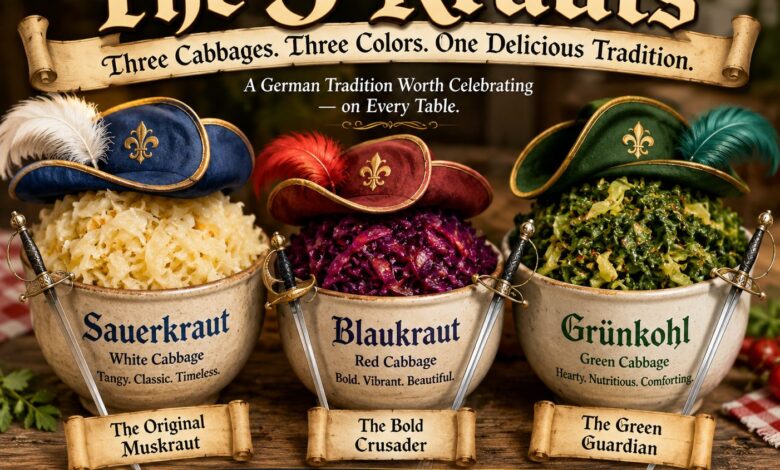


There are few foods more proudly German than kraut. The word itself simply means “cabbage” or “herb,” but in German cooking, it opens the door to a whole world of comfort: tangy sauerkraut, sweet and sour blaukraut, and hearty grünkohl.
And now, sauerkraut is having a very modern moment.
Thanks to renewed American interest in fermented foods, gut health, and “real food” eating, German sauerkraut has found itself back in the spotlight. Health Secretary Robert F. Kennedy Jr. has publicly spoken about eating a diet centered around meat and fermented foods, and sauerkraut has become one of the most talked-about foods in that conversation. Recent coverage has even described Kennedy bringing sauerkraut with him to restaurants and eating it with steak in the morning.
But long before sauerkraut became a social media talking point, it was already one of Germany’s great everyday foods. Practical, flavorful, economical, and deeply traditional, kraut has been keeping German tables lively for centuries.
So let us raise a fork to the three krauts: Sauerkraut, Blaukraut, and Grünkohl. Three cabbages. Three colors. One very delicious tradition.
What Does “Kraut” Mean?
In German, Kraut can refer to cabbage, greens, herbs, or leafy plants, depending on context. In the kitchen, it often points to some of Germany’s most beloved vegetable dishes.
The three most famous forms are:
Each one has its own personality. Sauerkraut is sharp and tangy. Blaukraut is rich, sweet, and gently spiced. Grünkohl is earthy, hearty, and built for cold weather.
Together, they are the German vegetable trio that deserves its own little parade.
Sauerkraut: The Tangy Classic
Sauerkraut is made from finely shredded white cabbage that has been fermented with salt. During fermentation, naturally occurring lactic acid bacteria transform the cabbage’s sugars into lactic acid, giving sauerkraut its signature sour flavor and helping preserve it. Lactic acid fermentation is a traditional preservation method used for cabbage, cucumbers, dairy, sourdough, miso, and many other foods around the world.
Traditional sauerkraut is simple, but never boring. In Germany, it is often gently simmered with ingredients such as onion, apple, juniper berries, caraway, white wine, broth, or bacon. The result is softer, more aromatic, and more rounded than the aggressively salty sauerkraut many Americans may know from hot dog stands.
That is one reason German sauerkraut often wins over skeptics. It is not just sour cabbage. It is a side dish with balance.
Serve it with:
Sauerkraut is especially beloved in southern Germany, but it appears across the country in many forms. It can be rustic, festive, humble, or hearty. It belongs equally at an Oktoberfest table and beside a simple weeknight sausage dinner.
The Sauerkraut Craze: Why Fermented Cabbage Is Suddenly Trending
Fermented foods have been rising in popularity for years, thanks to growing interest in gut health, traditional preservation, and less processed foods. Foods like sauerkraut, kimchi, kefir, yogurt, miso, and kombucha have all benefited from this trend.
That interest became even louder after the release of the 2025 to 2030 Dietary Guidelines for Americans, which emphasized whole foods, vegetables, fruits, protein, healthy fats, whole grains, and reducing highly processed foods. The guidelines also brought more attention to fermented foods and microbiome health.
RFK Jr.’s personal enthusiasm for fermented foods, including sauerkraut, added another spark. Media coverage has noted that Kennedy eats fermented vegetables as part of his personal diet, though experts also caution that fermented foods should not be treated as a replacement for a balanced diet rich in fruits, vegetables, whole grains, fiber, and other nutrients.
In other words, sauerkraut is wonderful. But it is not magic.
It is best enjoyed the German way: as one flavorful part of a complete meal.
Raw Sauerkraut vs. Jarred Sauerkraut: What Is the Difference?
One important distinction is the difference between raw fermented sauerkraut and shelf-stable jarred or canned sauerkraut.
Raw, refrigerated sauerkraut may contain live cultures if it has not been pasteurized. These live bacteria are what many people mean when they talk about probiotic foods.
Shelf-stable jarred or canned sauerkraut is usually pasteurized, which means it has been heat-treated for food safety and longer shelf life. Pasteurization kills most or all live probiotic bacteria, so jarred sauerkraut usually does not provide the same live culture benefit as raw sauerkraut unless the label specifically says “raw,” “unpasteurized,” or “contains live cultures.”
However, that does not mean pasteurized sauerkraut has no nutritional value.
Pasteurized sauerkraut can still contain dietary fiber, organic acids, flavor compounds, minerals such as potassium, calcium, magnesium, iron, manganese, and copper, and some vitamins, including vitamin C, vitamin K, folate, and vitamin B6. Minerals are heat-stable, and sauerkraut’s acidic environment helps preserve some vitamin C even after pasteurization.
USDA-based nutrition data for canned sauerkraut also shows that it can provide vitamin C and iron, though sodium levels can be high depending on the product.
So, if you want live probiotics, choose raw refrigerated sauerkraut. If you want classic flavor, convenience, fiber, minerals, and a delicious German side dish, jarred sauerkraut still has a worthy place at the table.
Blaukraut: The Sweet and Sour Red Cabbage
If sauerkraut is the tangy classic, Blaukraut is the jewel-toned charmer.
Blaukraut is made from red cabbage, slowly cooked with ingredients such as apple, onion, vinegar, sugar, cloves, bay leaf, red wine, or currant jelly. The result is soft, glossy, sweet, tart, and deeply comforting.
Depending on the region, this dish may be called Blaukraut or Rotkohl. Both refer to red cabbage, but the name can shift depending on local tradition. There is also a little kitchen chemistry involved: red cabbage changes color based on acidity. Add vinegar or apple, and it becomes more reddish. Cook it in a less acidic environment, and it can look more blue or purple.
This is why some Germans say Blaukraut and others say Rotkohl.
Either way, it is delicious.
Blaukraut is especially popular with:
- Sauerbraten
- Roast goose
- Roast duck
- Pork roast
- Beef rouladen
- Potato dumplings
- Spätzle
- Holiday dinners
It brings brightness to rich dishes and adds a beautiful splash of color to the plate. A spoonful of Blaukraut beside roast duck and dumplings is the kind of thing that makes a winter meal feel properly dressed.
Grünkohl: The Hearty Northern Favorite
Then there is Grünkohl.
The name literally translates to “green cabbage,” but in German cuisine, Grünkohl usually means kale. It is especially beloved in northern Germany, where it is often cooked slowly with onions, smoked pork, sausages, or bacon.
This is not delicate salad kale. This is cold-weather kale with boots on.
In northern regions, Grünkohl is often served with hearty sausages such as Pinkelwurst, smoked pork, Kassler, or potatoes. It is a dish built for frosty air, long walks, and strong appetites.
Grünkohl is traditionally associated with winter because kale becomes sweeter after frost. The cold helps mellow its bitterness, making it perfect for slow cooking. In some parts of northern Germany, people even celebrate Grünkohlfahrten, cheerful winter outings where groups walk, play games, drink, and finish with a hearty kale meal.
It is comfort food with a social calendar.
Serve Grünkohl with:
- Smoked sausage
- Kassler pork
- Bacon or smoked pork belly
- Boiled potatoes
- Mustard
- Dark bread
- Beer
Where sauerkraut is tangy and Blaukraut is elegant, Grünkohl is sturdy, earthy, and wonderfully satisfying.
Are the Three Krauts Healthy?
Each of the three krauts brings something valuable to the table.
Sauerkraut offers fiber, tangy organic acids, minerals, and, when raw and unpasteurized, live cultures. Pasteurized sauerkraut does not usually contain live probiotics, but it can still provide meaningful nutrition.
Blaukraut is made from red cabbage, which naturally contains colorful plant compounds. It is often cooked with apples and vinegar, making it both flavorful and vegetable-forward.
Grünkohl is kale, one of the most nutrient-dense leafy greens. It is rich in fiber and naturally contains vitamins and minerals, though traditional German preparations may also include rich meats and sausages.
The key is balance.
A plate of sausage, potatoes, mustard, and sauerkraut can be deeply satisfying. A holiday meal with roast duck, dumplings, and Blaukraut can be festive and nourishing. A bowl of Grünkohl with smoked sausage can warm the bones in January.
German food has always understood something modern eaters are rediscovering: vegetables do not have to be boring to be good for you.
How to Enjoy German Kraut at Home
The easiest way to bring the three krauts into your kitchen is to pair each one with the right meal.
Serve Sauerkraut With Sausages
Warm German sauerkraut gently with a little apple, onion, caraway, or white wine. Serve it with bratwurst, knackwurst, or smoked pork.
Serve Blaukraut With Roasts
Heat red cabbage with a touch of apple or red currant jelly. Serve it with beef rouladen, roast duck, Sauerbraten, or pork roast.
Serve Grünkohl With Smoked Meats
Cook kale slowly with onions, broth, and smoked sausage or Kassler. Serve with boiled potatoes and mustard.
Add Kraut to Modern Meals
Kraut also works beautifully beyond the traditional plate. Try it in:
- Grain bowls
- Sandwiches
- Bratwurst sliders
- Potato hash
- Savory breakfast plates
- Charcuterie boards
- Warm salads
- Oktoberfest-style platters
A little kraut can wake up an entire meal.
German Sauerkraut vs. American Sauerkraut
Many Americans first meet sauerkraut as a salty topping on a hot dog. That version has its place, but German sauerkraut often has more depth.
German-style sauerkraut is frequently prepared with aromatics such as apple, onion, juniper, caraway, wine, broth, or vinegar. It tends to taste rounder, softer, and more balanced. Instead of being only sharp and salty, it can be gently sour, lightly sweet, savory, and aromatic.
That balance is what makes it so versatile.
It is not just a condiment. It is a proper side dish.
The Three Krauts, The German Way
Sauerkraut, Blaukraut, and Grünkohl each tell a different story about German cooking.
Sauerkraut tells the story of fermentation, preservation, and tangy comfort.
Blaukraut tells the story of Sunday roasts, holiday tables, and sweet-sour elegance.
Grünkohl tells the story of northern winters, smoky sausage, and hearty meals shared after a cold walk.
Together, they prove that cabbage is not a background vegetable. In German cooking, cabbage is the main character.
So whether you are curious because of the current sauerkraut craze, looking for traditional German side dishes, or simply trying to add more flavorful vegetables to your meals, the three krauts are a delicious place to begin.
One for tang.
One for color.
One for comfort.
The Three Krauts have arrived.
FAQ Section
What is the difference between Sauerkraut and Blaukraut?
Sauerkraut is made from fermented white cabbage and has a tangy, sour flavor. Blaukraut, also called Rotkohl, is made from red cabbage that is usually braised with apple, vinegar, spices, and sometimes wine or jelly for a sweet and sour flavor.
Is Grünkohl the same as green cabbage?
Not exactly. Grünkohl literally means “green cabbage,” but in German cooking it usually refers to kale. It is especially popular in northern Germany and is often cooked with smoked sausage or pork.
Is jarred sauerkraut probiotic?
Most shelf-stable jarred or canned sauerkraut is pasteurized, which kills most or all live probiotic bacteria. Raw refrigerated sauerkraut may contain live cultures if labeled raw, unpasteurized, or containing live cultures.
Does pasteurized sauerkraut still have nutrients?
Yes. Pasteurized sauerkraut can still contain fiber, minerals, organic acids, and some vitamins, including vitamin C and vitamin K. It usually does not contain live probiotics, but it can still be a nutritious and flavorful food.
Why is sauerkraut trending again?
Sauerkraut is trending because of renewed interest in fermented foods, gut health, and whole-food eating. RFK Jr.’s public enthusiasm for fermented foods has also brought sauerkraut into the spotlight.
What do Germans eat sauerkraut with?
Germans often serve sauerkraut with bratwurst, smoked pork, pork roast, schnitzel, potato dumplings, mashed potatoes, mustard, and rye bread.