

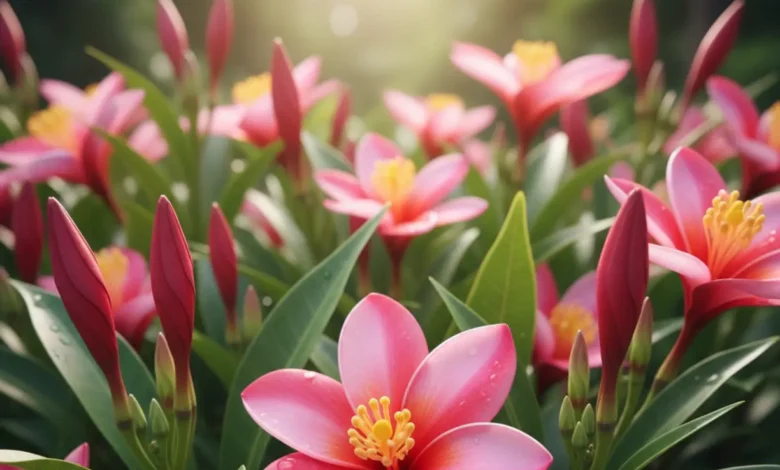

Has your Dipladenia, also called Mandevilla, been the star on your balcony or terrace all summer? With its bright, trumpet-shaped flowers, it is a real eye-catcher. But this beauty comes from the tropics of South America and is not used to our cold winters. Even the first frost can mean the end. But don’t worry: with the right preparation, you can successfully overwinter your Dipladenia and enjoy its blooms again next year. The most important step for this is correct pruning in autumn.
The right time: When does the Dipladenia have to go in?
First things first: don’t wait too long! The most common mistake is bringing the plant into winter quarters too late. The Dipladenia is very sensitive to cold.
- Temperature check: Watch nighttime temperatures. As soon as this permanently below 8-10 °C fall, it’s time to act. Under no circumstances should you wait for the first frost.
- Regional schedule: In most regions of Germany this is usually the case End of September to beginning of October the case. In cooler locations such as the foothills of the Alps or in low mountain ranges, this can happen earlier.
- Pest control: Before you bring the plant indoors, inspect it thoroughly for pests. Spider mites or aphids can multiply rapidly in warm winter quarters. A short, gentle shower jet can remove the first unwanted guests.
The decisive pruning: explained step by step

Why is pruning so important? An uncut plant is bulky, evaporates too much water through its many leaves and tends to produce weak, long shoots (so-called horny shoots) in the winter quarters. A targeted cut makes them compact, robust and prepares them optimally for the rest phase.
How to proceed:
- The right tool: Use a clean and sharp secateurs. This prevents bruises and illnesses at the interfaces.
- Shorten long shoots: Cut all long, trailing shoots by about that half its length back. Be brave! The plant will sprout again vigorously in the spring.
- Remove weak and old things: Remove all thin, weak shoots as well as old inflorescences and yellowed leaves. This directs the plant’s energy to the healthy parts.
- Give form: The aim is to have a compact basic shape that is easy to handle and requires little space in the winter quarters. Cut just above a pair of leaves or a bud.
Pro tip: Wear gloves when working. The milky sap of Dipladenia can cause skin irritation.
The perfect winter quarters: location, water & care

After cutting, the right location is crucial for overwintering success. The Dipladenia goes into a resting phase and now has completely different needs than in summer.
- The ideal place: A bright and cool room is perfect. The temperature should ideally between 5 and 12 °C lay. An unheated winter garden, a bright staircase or a cellar with a window are well suited. The darker the location, the more likely the plant is to lose its leaves – but that’s usually not a problem, it will sprout again in spring.
- Water correctly: Less is now more. Only water enough to prevent the root ball from drying out completely. A rule of thumb: A small amount of water every 3-4 weeks is usually enough. Do the finger test – the top 5cm of soil should feel dry before watering again. Waterlogging quickly leads to root rot in winter.
- No fertilizer: The Dipladenia needs from October to around March/April absolutely no fertilizer. It rests and cannot utilize the nutrients.
- Pest control in winter: Dry heating air indoors promotes pests such as scale insects or spider mites. Check your plant every few weeks, especially on the undersides of the leaves.
By following these simple steps, you will save yourself having to buy a new plant next spring (often costing €15-30) and can be proud of having successfully brought your tropical favorite through the German winter.