

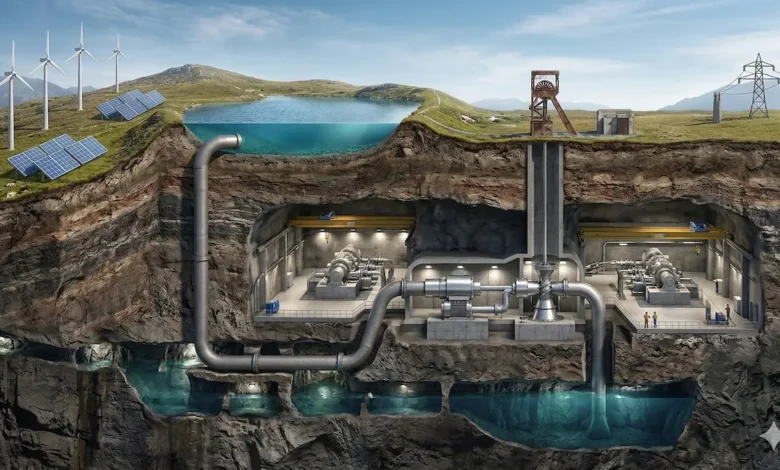
Researchers have conducted hydrodynamic modeling and developed chemical models to assess the feasibility of converting abandoned coal mines into underground pumped storage power plants. Energy storage could increase grid reliability and security.
Researchers at Oak Ridge National Laboratory (ORNL) are currently assessing the feasibility of converting abandoned coal mines into underground pumped storage power plants. They use advanced hydrodynamic and chemical models to comprehensively examine various locations. The storage solutions could increase the reliability and security of power grids in the future.
Pumped hydro storage (PSH) already provides over 90 percent of domestic utility-scale energy storage in the United States. The technology usually requires mountains or hills to create a natural height difference between two water basins.
Experts at ORNL are now artificially replicating this height difference using existing mine infrastructure. Instead of building new basins in mountainous landscapes, researchers rely on deep shafts from former coal mines. This process significantly expands the geographical reach of the technology.
Underground pumped storage power plant: Existing infrastructure reduces costs
Existing shafts reduce the construction costs for new power plants. The existing substance of the mines forms the foundation for the technical systems. In the future, areas without natural elevations could also benefit from this.
The researchers are investigating how suitable the underground structures are for long-term operation. In flat regions there have so far been hardly any opportunities to build large-scale water storage facilities for grid reliability. The repurposing of the mines now extends the geographical reach of the PSH technology.
Despite the potential, experts face technical challenges in implementation. Thien Nguyen, senior researcher at ORNL, cites chemical erosion and structural stability as key hurdles. The water in the deep shafts is in constant contact with the rock and remaining minerals.
Digital models for industry
These chemical processes attack the mine material over long periods of time. At the same time, the structure must permanently withstand the pressure of the water masses. The safety of the systems is therefore the focus of scientific investigations.
To manage these risks, the team uses advanced hydrodynamic and chemical models. The hydrodynamic simulations depict the water movements in the branched shafts in great detail. The chemical analyzes evaluate the reactions between the water and the environment.
These tools provide industry partners with a basis for evaluating specific locations. The data helps companies make informed decisions about the design and construction of facilities. Subsequent operation and maintenance should also benefit from these digital analyses.
Safe reuse for the power grid
The analyzes show whether underground hydropower works at a given location. Experts use the models to comprehensively assess the suitability of locations of interest. This is intended to support future investors and operators in assessing risk.
Ultimately, this research could give closed mines an important function for a more stable power grid. The transformation of old industrial wastelands into modern power plants could make a decisive contribution to network security. The project at Oak Ridge National Laboratory thus forms a basis for future utility-scale applications.
Also interesting:

Interest rate hit at NIBC!
Open yours now free NIBC daily money and receive up to 2.75 percent interest for your money – with daily availability!
Secure interest now
Requirements apply, advertisement