Researchers have developed a water-based battery with a pH-neutral electrolyte that is non-flammable and extremely long-lasting. In laboratory tests, the energy storage device withstood hundreds of thousands of charging cycles, which mathematically corresponds to a lifespan of several centuries. Could the “Tofu battery” be a step towards safe and sustainable large-scale storage?
The energy transition cannot succeed without battery storage. Without them, electricity from wind and solar systems cannot be reliably stored or accessed as needed.
Since renewable energies are dependent on weather conditions and times of day, powerful, safe and long-lasting storage is required. This is the only way to ensure security of supply and network stability and to achieve climate goals.
It is estimated that the market for battery energy storage systems (BESS) will grow to a value of up to 150 billion US dollars by 2030. In 2023 the number worldwide was still between 44 and 55 billion US dollars.
But currently dominant battery systems, such as lithium-ion batteries, are increasingly reaching their limits. However, it is not only their expensive and resource-intensive production that is disadvantageous; the high combustibility of the materials used is also problematic.
In addition, they lose significant capacity over time, which makes their use in large stationary storage systems impractical. Scientists around the world are therefore researching alternative energy storage devices.
Researchers from the City University of Hong Kong and the Southern University of Science and Technology have now presented a system that specifically circumvents the well-known safety and durability problems of conventional batteries. The water-based battery works with a pH-neutral electrolyte, is non-flammable and shows hardly any signs of aging even after an extremely high number of charging cycles.
“Tofu battery” lasts 120,000 charging cycles
The so-called “Tofu battery” could represent a new generation of energy storage. By using a water-based and pH-neutral electrolyte, it is not only sustainable but also safe.
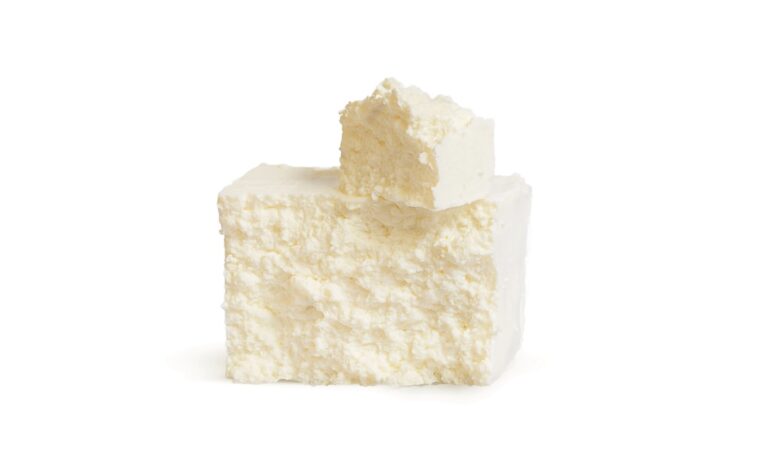
Because no flammable or toxic chemicals are used in production. Instead of conventional acids and alkalis, the researchers used neutral magnesium and calcium salts as electrolytes. These are also used in a similar way in the production of tofu.
The researchers are also looking for an alternative for the negative electrode. While metal-based materials are normally used here, the researchers are using a specially developed material made from covalent organic polymers.
“Compared to conventional aqueous battery systems, the new system offers exceptional long-term stability and is more environmentally friendly under neutral conditions,” explain the researchers in their study, which appears in the specialist magazine Nature Communications was published. “The electrolytes of aqueous batteries are usually acidic or alkaline, which leads to unavoidable side reactions.”
By using an electrolyte with a pH value of 7, the researchers can avoid such side reactions. The cells should also be “environmentally friendly and non-toxic” and “disposed of directly into the environment.”
“Tofu battery” can reach service life of more than 300 years
In the researchers’ laboratory tests, the “Tofu battery” remained stable for over 120,000 charging cycles. Extrapolated to a lifespan of more than 300 years. For comparison: a conventional smartphone battery only lasts a few hundred charging cycles before its capacity noticeably drops.
However, the researchers’ novel battery system is hardly intended for mobile devices such as smartphones or smartwatches. Because of its size, it is more suitable for large storage.
At a voltage interval of 2.2 volts, the “Tofu battery” has a specific energy of up to 48.3 watt hours per kilogram. This means that it is below the energy density of a conventional smartphone battery, but it is a high value for aqueous organic batteries.
Also interesting: