Qantas’ Project Sunrise promises non-stop 20-hour flights from Australia to London and New York, challenging the dominance of global airline hubs. While engineers celebrate a remarkable aviation milestone, questions remain about passenger health, commercial viability, carbon emissions, and whether ultra-long-haul travel represents aviation’s future or an expensive experiment.
Ultra-long-haul aviation promises to shrink the world once again. Whether passengers—and the planet—benefit is less certain.
For much of aviation history, Australia’s remoteness has been measured in refueling stops. Flying from Sydney to London once required multiple landings spread over several days. Modern aircraft have steadily erased those interruptions, but geography has remained stubborn. Even today’s longest commercial routes generally depend on hubs in Asia or the Gulf.
That may change soon. Qantas plans to launch non-stop flights from Sydney to London and New York using specially modified Airbus A350-1000 aircraft capable of remaining airborne for roughly 20 hours. The airline’s long-delayed “Project Sunrise” is intended to eliminate the final layover separating Australia from Europe and North America.
From an engineering perspective, the achievement is impressive rather than revolutionary. Aircraft have not become dramatically faster; instead, they have become more efficient. Advances in composite materials, high-bypass turbofan engines, aerodynamics, and sophisticated flight-management systems have gradually expanded the commercial envelope. The Airbus A350 represents the culmination of decades of incremental gains rather than a single technological leap.
Yet engineering answers only one question: whether such flights are possible. The more interesting questions concern economics, human physiology, and environmental costs.
For airlines, ultra-long-haul services challenge the hub-and-spoke model that has dominated international aviation since deregulation. Airports such as Singapore, Dubai and Doha owe much of their success to geography, sitting conveniently between Europe and Australasia. Non-stop services threaten to bypass those intermediaries altogether. Every passenger who flies directly from Sydney to London is one fewer changing aircraft at Changi or Dubai International.
That possibility has strategic implications extending well beyond convenience. Airlines built around connecting traffic could face pressure on some of their most lucrative long-haul markets. Equally, carriers operating from geographically isolated countries may find themselves less dependent on foreign hubs and the political uncertainties that occasionally disrupt them. The closure of Russian airspace following the invasion of Ukraine demonstrated how quickly carefully optimized international networks can unravel.
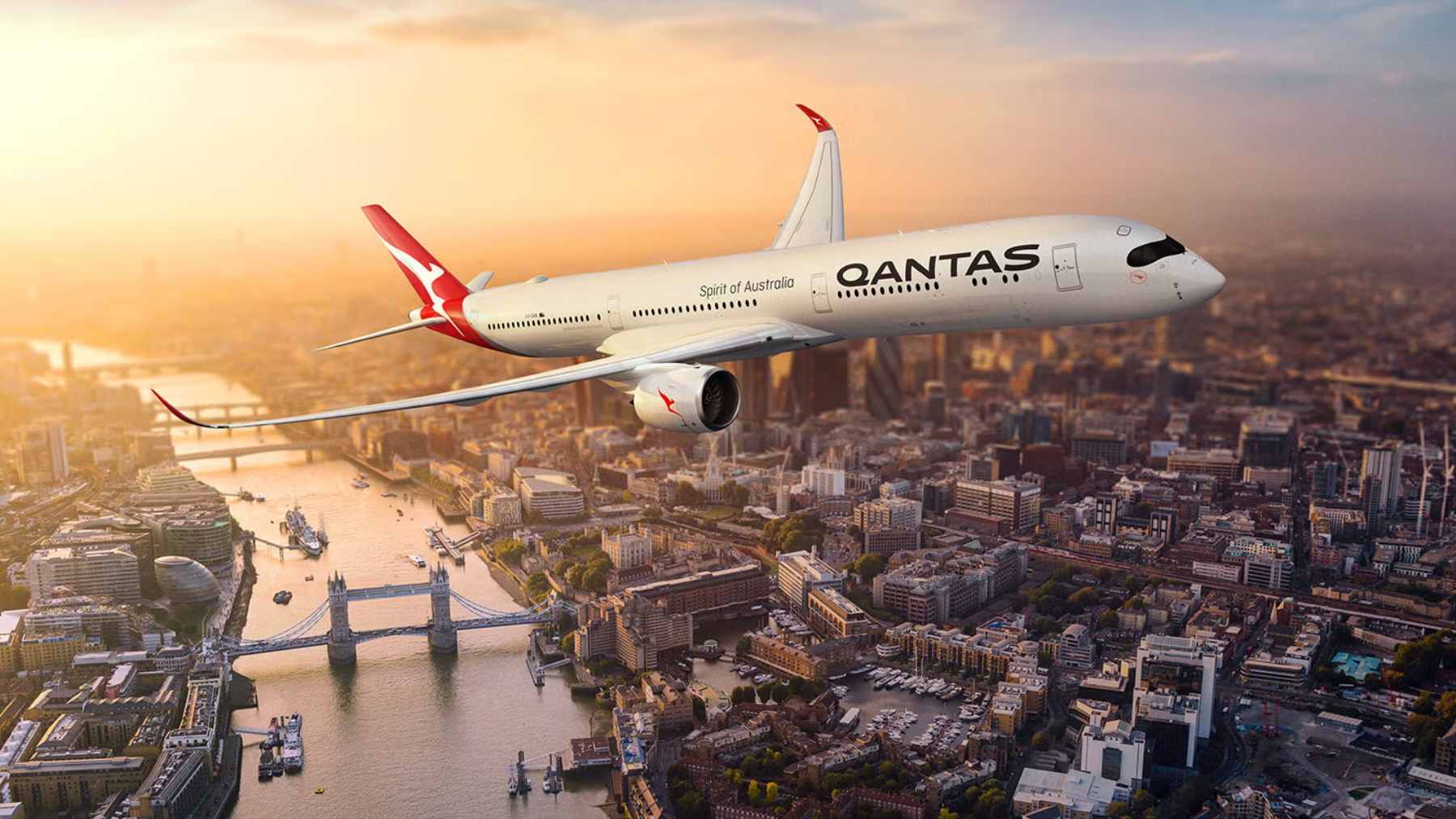
Qantas built a custom A350 for the world’s longest flight: a 22-hour nonstop Sydney-to-London haul few jets could survive
Qantas is set to launch 22-hour nonstop Sydney-to-London flights in 2027. Discover the custom jet behind the world’s longest haul.
The commercial arithmetic, however, remains delicate. Carrying sufficient fuel for a 20-hour flight leaves less room for passengers or cargo. Additional flight crews are required, and cabin layouts increasingly favor premium seating over dense economy configurations. Qantas has openly positioned Project Sunrise as a premium product rather than a mass-market service. That reflects a simple reality: the economics depend heavily on travelers willing to pay a substantial premium for avoiding a connection.
Passengers themselves present another constraint. Aircraft can remain airborne longer than most people comfortably tolerate remaining seated. Qantas has invested heavily in sleep research, cabin lighting, meal scheduling, and movement programs intended to reduce fatigue and jet lag. Such measures may improve the experience at the margin, but they cannot repeal biology. Twenty hours in a pressurized cabin places unavoidable strain on sleep patterns, circulation, and hydration, particularly among older travelers or those with pre-existing health conditions.
Environmental considerations are equally contested. Airlines argue that eliminating an intermediate landing reduces fuel consumed during take-off, climb, and descent while shortening overall journey times. Critics counter that carrying enormous fuel reserves over intercontinental distances inevitably imposes its own efficiency penalty. The comparison is less straightforward than either side suggests. Whether a direct flight emits less carbon than a one-stop itinerary depends on aircraft type, passenger load, routing, prevailing winds, and operational decisions. There is no universally correct answer.
This ambiguity reflects a broader tension within commercial aviation. Manufacturers have become remarkably successful at reducing emissions per passenger-kilometer through more efficient aircraft. Yet those gains are increasingly offset by growing demand for air travel itself. Ultra-long-haul routes represent both trends simultaneously: technological efficiency enabling journeys that would previously have been uneconomic.
History suggests that aviation repeatedly expands its own boundaries. Flights once considered impractically long become routine within a generation. The Boeing 747 transformed global tourism. Twin-engine aircraft opened direct routes once reserved for four-engine jets. The Airbus A350 extends that progression rather than overturning it.
Project Sunrise is, therefore, less a technological revolution than a commercial experiment. If enough passengers value time more highly than price, and if airlines can reconcile operational complexity with environmental scrutiny, non-stop flights between the world’s most distant cities may become commonplace. If not, the hub airport—an institution many adopted technology would eventually render obsolete—may prove more resilient than its critics anticipated.
The tyranny of distance has shaped Australia for centuries. Aviation has gradually diminished it. Whether the last remaining barriers should disappear altogether is a question that technology alone cannot answer.