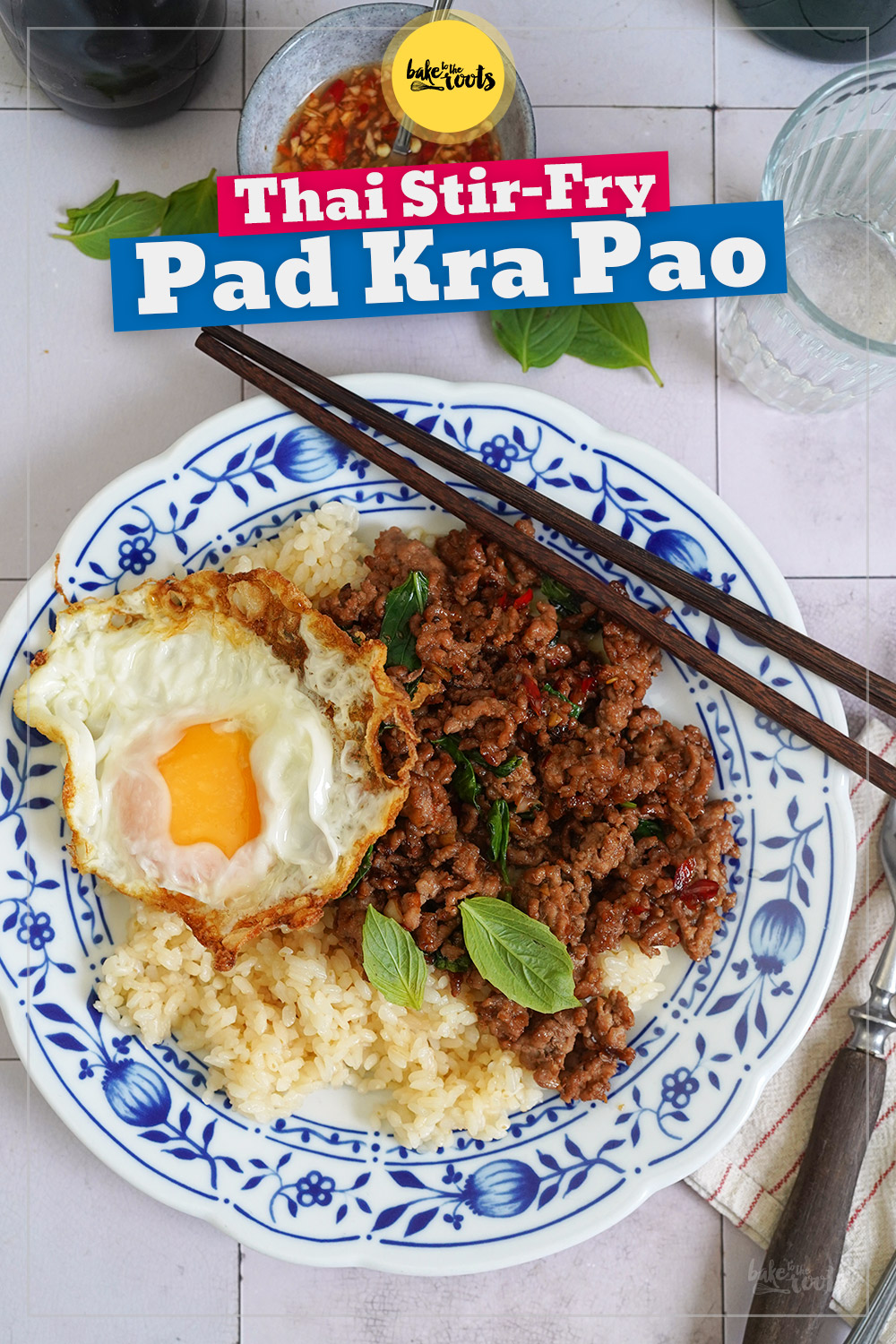
We love traveling to Asia whenever we’re able to afford a trip further away from home. The nature, the culture, the food… there’s always so much to discover! Thailand has a special place in our hearts. Whether it’s a beach vacation or a city trip to Bangkok – we’ve already done and seen quite a bit of the country. As food bloggers, food is naturally always an important part of any trip. We like to bring recipes for delicious dishes home from our travels – something like this simple Pad Kra Pao (Thai stir-fry), for example. An incredibly tasty dish from Thailand that’s popular not just with tourists.

Thailand has countless delicious dishes that we love to prepare over and over again here at home. Once you’ve stocked up on a few basic ingredients and spices, these dishes are absolutely easy to prepare – even in a non-thai kitchen. While a wok is helpful for many of these dishes, you can also easily use a larger frying pan instead. A regular saucepan will do just fine as well when nothing else is available. Just a quick side note…
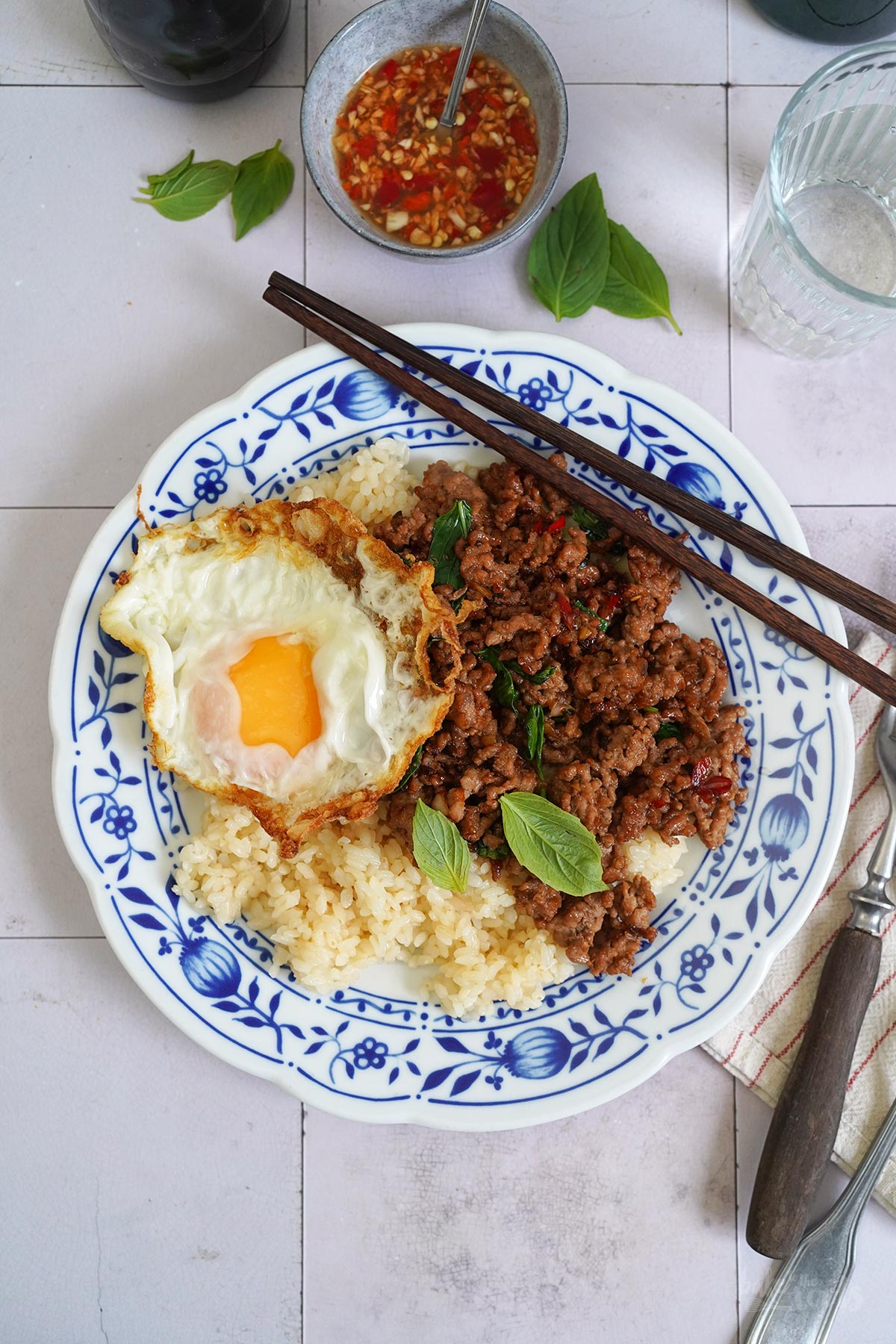
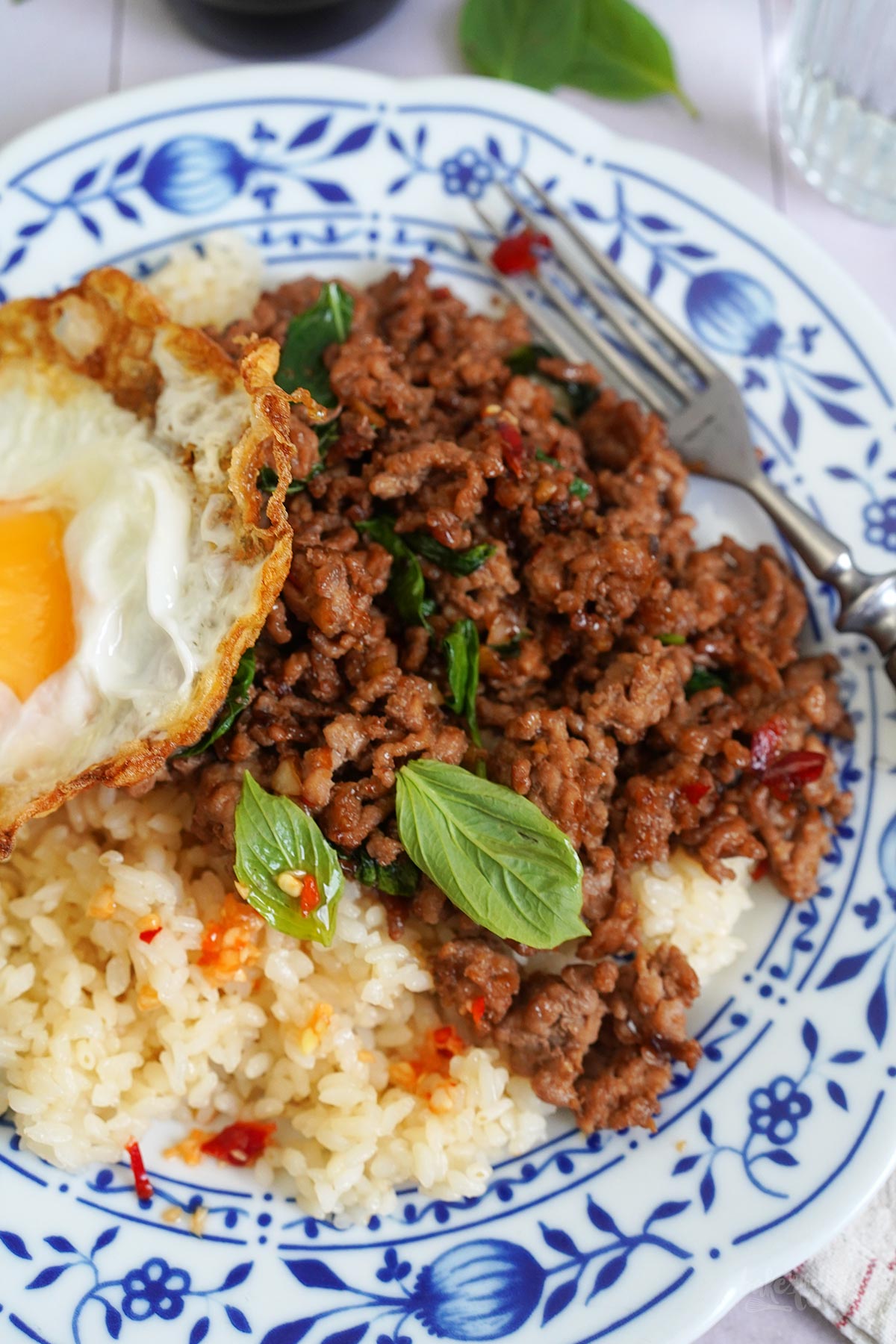
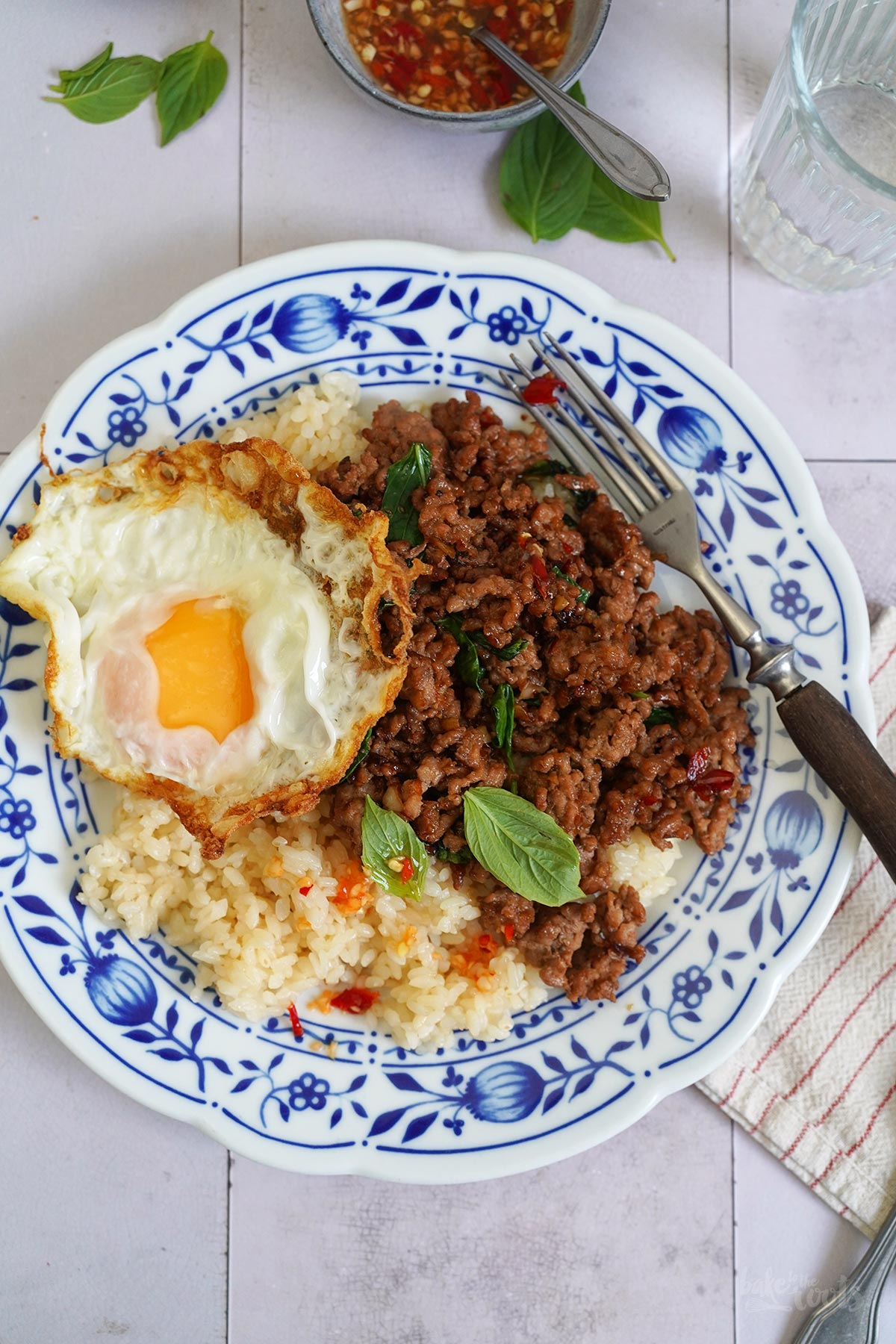
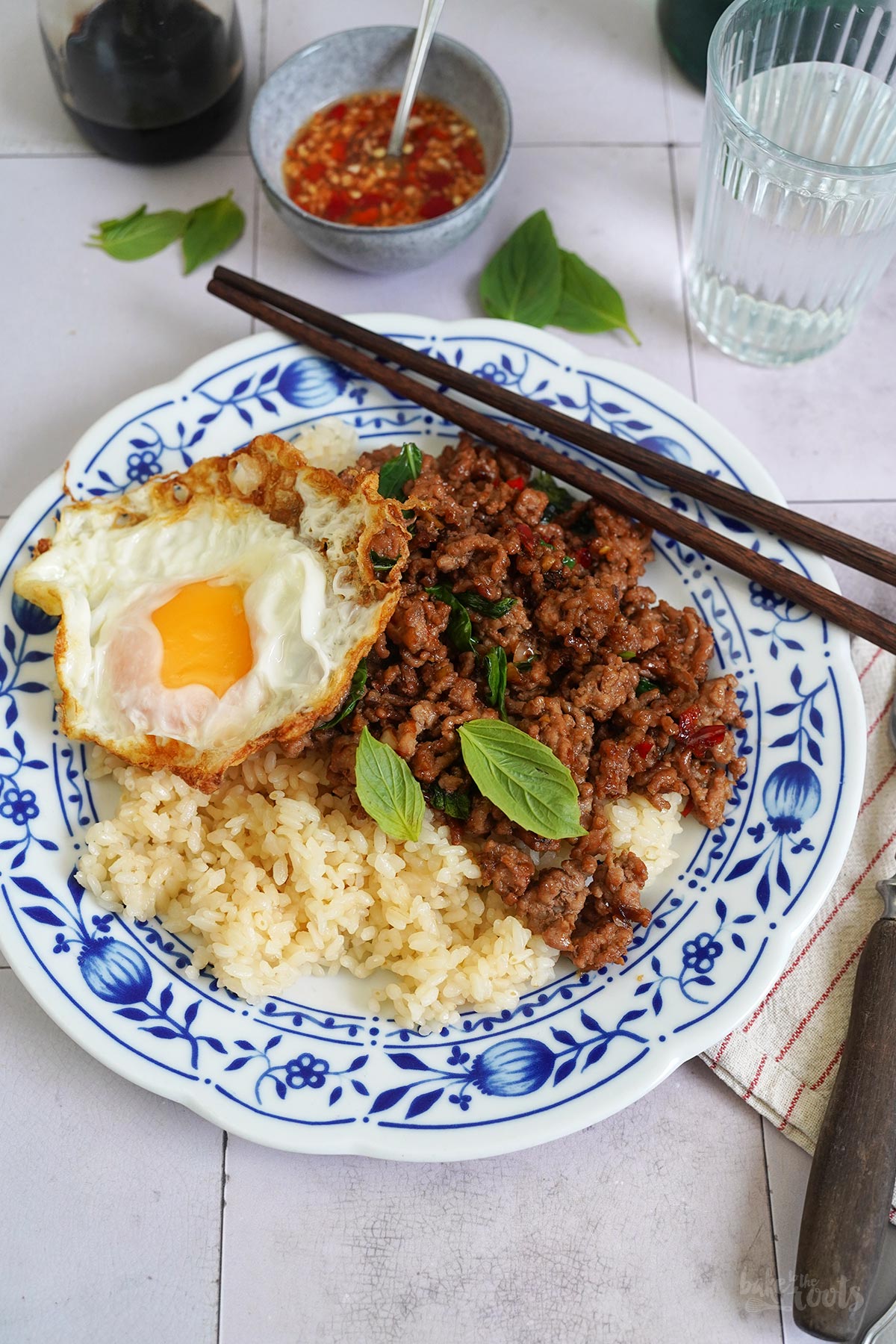
Pad Kra Pao isn’t just popular with tourists visiting Thailand – Thais themselves love this dish too I’ve heard. Many would even argue that Pad Kra Pao is one of Thailand’s national dishes. The dish consists of crispy-fried ground meat (often pork or chicken) with plenty of garlic, Thai chili, and basil. It’s served with rice and often topped with a fried egg. Sounds pretty simple, doesn’t it?
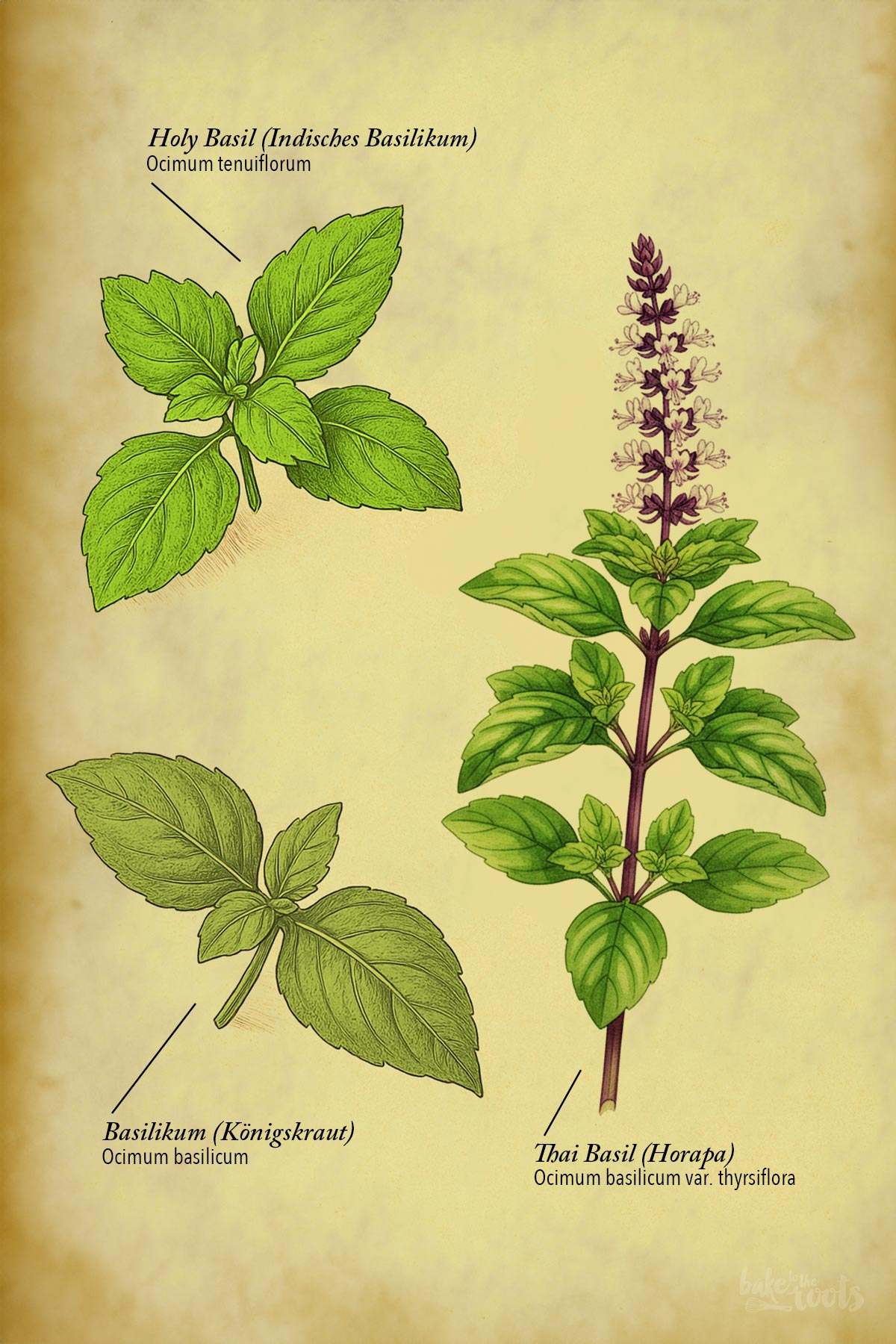
The key or rather a crucial ingredient for an authentic Pad Kra Pao is the basil used to season the meat. In Thailand, holy basil is used to give the meat its distinctive flavors. This variety of basil differs slightly from the (Mediterranean) basil you can find in supermarkets here in Germany, for example. Holy basil has a sharp, peppery flavor and is slightly more intense than our »local« basil. In many Asian supermarkets, you can find Thai basil, which is, however, yet another variety of the basil plant group. Thai basil is sweeter and has purple stems. This herb is perfect for curries and other stews, for example.
Finding holy basil here in Germany is quite difficult, if not impossible. Regular supermarkets don’t carry it because supply and demand simply aren’t matching up. You’ll also practically never find the herb in Asian supermarkets because transporting the delicate plants would be far too costly. Growing it in Germany isn’t profitable either, because demand (as already mentioned) isn’t particularly high, and the plants also prefer a warm and sunny location all year round – conditions that aren’t necessarily standard in Germany.
We’ve tried several times to grow plants from holy basil seeds Unfortunately, so far with little success. We’ve never managed to get more than a few stems for a single serving of Pad Kra Pao. Unlike other basil varieties, Holy Basil takes quite a long time to germinate and, as mentioned, prefers a cozy, warm, and sunny environment. You can simulate the sun relatively well with a plant lamp, but placing the plants on a heater as well just to keep them warm enough might be taking things a bit too far…
Anyway. Without holy basil, you might not get a 100% authentic Pad Kra Pao, but with regular (or Thai) basil, you can still prepare a very delicious Thai dish. We definitely love our version and cook it over and over again.
The recipe also includes classic Prik Nam Pla – a spicy seasoning sauce that can be found in Thailand (like the one we do or in a similar form) on almost every restaurant table. Serving this alongside the Pad Kra Pao brings you a little closer to the original… even if holy basil isn’t part of the mix.

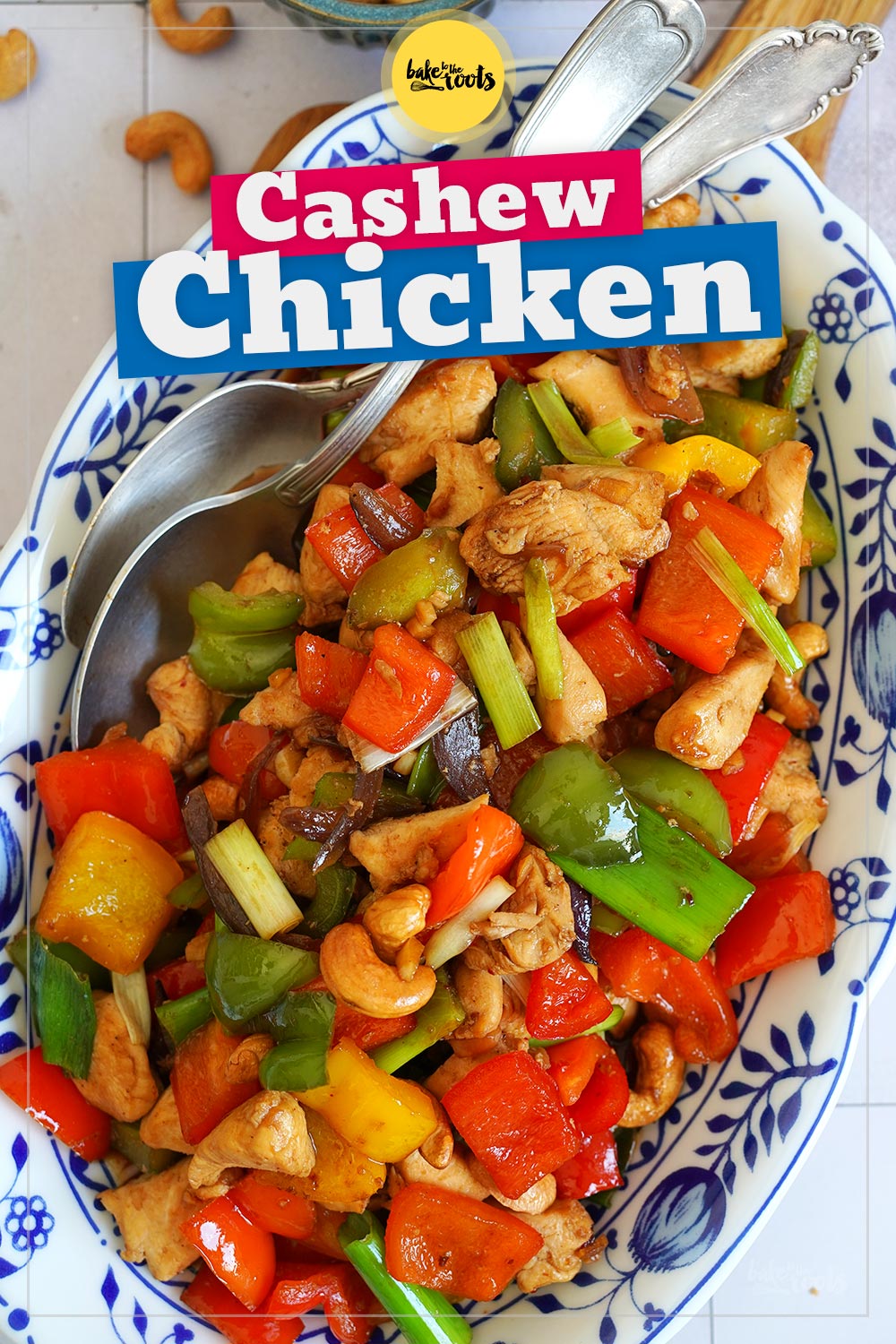

As mentioned before, we really love Thai cuisine. That’s why there are already a few recipes from that corner of the world here on the blog. Our Thai version of Cashew Chicken with Rice is an absolute favorite of ours. Juicy chicken in a flavorful, not-too-spicy sauce… simply delicious!
Or how about some simple Pad Thai with Chicken? Does that sound good? Another dish we brought home from Thailand and toss into the wok occasionally. It’s a dish that’s very easy to prepare and on the table in no time…
INGREDIENTS / ZUTATEN
(2 servings)
For the Prik Nam Pla:
1-2 Thai chilies, finely chopped
1 garlic clove, finely chopped
2 tbsp. fish sauce*
2 tsp. lime juice (freshly squeezed)
For the seasoning sauce:
1 tbsp. soy sauce*
1 tbsp. fish sauce*
1 tbsp. oyster sauce*
1 tbsp. dark soy sauce*
1 tsp. palm sugar* or brown sugar
For the Pad Kra Pao:
some neutral oil for frying
1 shallot or red onion, finely diced
3-5 garlic cloves, chopped
3 Thai chilies, chopped
10.5 oz. (300g) ground pork
3-4 stalks holy basil (alternatively regular or Thai basil), leaves only
about 10.5-14. oz. (300-400g) cooked jasmine rice (for serving)
2 large eggs, fried (sunny-side up)
(2 Personen)
Für das Prik Nam Pla:
1-2 Thai-Chilischoten, fein gehackt
1 Knoblauchzehe, fein gehackt
2 EL Fischsauce*
2 TL Limettensaft (frisch gepresst)
Für die Würzsauce:
1 EL Sojasauce*
1 EL Fischsauce*
1 EL Austernsauce*
1 EL dunkle Sojasauce*
1 TL Palmzucker* oder brauner Zucker
Für das Pad Kra Pao:
etwas neutrales Öl zum Anbraten
1 Schalotte oder rote Zwiebel, fein würfeln
3-5 Knoblauchzehen, gehackt
3 Thai-Chilischoten, gehackt
300g Hackfleisch (Schwein)
3-4 Stängel Holy Basil (alternativ normales oder Thai-Basilikum), nur die Blätter
etwa 300-400g gekochter Jasminreis (zum Servieren)
2 Eier (L), angebraten
DIRECTIONS / ZUBEREITUNG
1. Start with the Prik Nam Pla. Finely chop the chili peppers – if you prefer it less spicy, you may want to remove (some of) the seeds. Peel the garlic and finely chop it as well. You can also add everything to a mixer. Mix with the fish sauce and lime juice and set aside.
2. For the seasoning sauce, combine soy sauce, fish sauce, oyster sauce, dark soy sauce, and sugar. Set aside.
3. For the Pad Kra Pao, peel and roughly chop the shallot (or red onion) and garlic. Roughly chop the chili peppers (remove the seeds if you prefer it less spicy). Grind everything in a mortar and pestle until a paste forms. Alternatively, you can also add everything to a blender. Wash the basil, dry it, and pick off the leaves. Set everything aside. Before you start cooking the meat, you should also cook the rice so everything is ready at the same time.
4. Heat some neutral oil in a wok* or a large frying pan – the wok/frying pan should be quite hot. Add the paste made with onion, garlic, and chili and fry it in the hot oil for about 2-3 minutes (be careful, the oil can splash a bit at the beginning). Next, add the ground meat and spread it evenly in the wok/frying pan. Let the meat sizzle for a moment so it can brown nicely, then break it apart and continue to stir-fry the meat until it is nicely browned all over – this can take about 3-4 minutes. Add the seasoning sauce and mix everything well. Finally, add the basil leaves and fry briefly with the meat. Reduce the heat and keep the meat warm.
5. Heat oil in a second (smaller) frying pan – you can be a bit more generous here with the oil. Fry the eggs sunny-side up. The egg whites should have completely set, with some browning around the edges. Ideally, the egg yolk is still runny.
6. Arrange the cooked rice and meat on two plates and add a fried egg on top. Serve with the Prik Nam Pla as a condiment – everyone can add the sauce to their liking. Or not.
1. Für das Prik Nam Pla die Chilischoten fein hacken – wer es weniger scharf mag, sollte die Samen vielleicht entfernen. Den Knoblauch schälen und ebenfalls fein hacken (man kann auch alles in einen Mixer schmeißen). Mit Fischsauce und Limettensaft vermischen und zur Seite stellen.
2. Für die Würzsauce die Sojasauce, Fischsauce, Austernsauce, dunkle Sojasauce und Zucker verrühren. Zur Seite stellen.
3. Für das Pad Kra Pao die Schalotte bzw. rote Zwiebel und den Knoblauch schälen und grob hacken. Die Chilischoten ebenfalls grob hacken (auch hier Samen entfernen, wenn es nicht so scharf sein soll). Alles in einem Mörser zu einer Art Paste verreiben – alternativ kann man hier auch alles in einen Mixer schmeißen. Das Basilikum waschen, trocknen und die Blätter abzupfen. Alles zur Seite stellen. Bevor es mit dem Anbraten des Fleisches losgeht, sollte man auch schon den Reis kochen.
4. Etwas neutrales Öl in einem Wok* oder einer großen Pfanne erhitzen – der Wok bzw. die Pfanne sollte recht heiß werden. Die Zwiebel-Knoblauch-Chili-Paste dazugeben und etwa 2-3 Minuten im heißen Fett anrösten (Vorsicht, das Öl spritzt zu Anfang oft etwas stärker). Als Nächstes das Hackfleisch dazugeben und gleichmäßig im Wok/in der Pfanne verteilen. Das Fleisch einige Zeit ungestört brutzeln lassen, damit es schön bräunen kann, dann alles vermischen und weiter anbraten, bis das Fleisch rundum schön gebräunt ist – dauert etwa 3-4 Minuten. Die Würzsoße dazugeben und alles gut vermengen. Zum Schluss die Basilikumblätter dazugeben und kurz mit anbraten. Die Hitzezufuhr reduzieren und das Fleisch warmhalten.
5. In einer zweiten (kleineren) Pfanne Öl erhitzen – man darf hier etwas großzügiger sein – und dann die Eier darin anbraten. Das Eiweiß sollte komplett gestockt sein und an Rändern darf das Ei auch etwas gebräunt sein, das Eigelb ist im Idealfall allerdings noch flüssig.
6. Den gekochten Reis und das Fleisch auf zwei Tellern anrichten und jeweils ein Spiegelei dazugeben. Mit dem Prik Nam Pla als zusätzliche Würzsoße servieren, an der sich jeder nach Belieben bedienen kann. Oder auch nicht.
Craving more? Keep in touch on Facebook, Instagram and Pinterest for new post updates and more. You can also contact me with any questions or inquiries!
Here is a version of the recipe you can print easily.
Description
One of our favorite Thai dishes we love to make over and over: Pad Kra Pao is a popular dish made with spicy ground meat, rice and fried egg. Absolutely awesome combination!
For the Prik Nam Pla:
1–2 Thai chilies, finely chopped
1 garlic clove, finely chopped
2 tbsp. fish sauce*
2 tsp. lime juice (freshly squeezed)
For the seasoning sauce:
1 tbsp. soy sauce*
1 tbsp. fish sauce*
1 tbsp. oyster sauce*
1 tbsp. dark soy sauce*
1 tsp. palm sugar* or brown sugar
For the Pad Kra Pao:
some neutral oil for frying
1 shallot or red onion, finely diced
3–5 garlic cloves, chopped
3 Thai chilies, chopped
10.5 oz. (300g) ground pork
3–4 stalks holy basil (alternatively regular or Thai basil), leaves only
about 10.5–14. oz. (300-400g) cooked jasmine rice (for serving)
2 large eggs, fried (sunny-side up)
1. Start with the Prik Nam Pla. Finely chop the chili peppers – if you prefer it less spicy, you may want to remove (some of) the seeds. Peel the garlic and finely chop it as well. You can also add everything to a mixer. Mix with the fish sauce and lime juice and set aside.
2. For the seasoning sauce, combine soy sauce, fish sauce, oyster sauce, dark soy sauce, and sugar. Set aside.
3. For the Pad Kra Pao, peel and roughly chop the shallot (or red onion) and garlic. Roughly chop the chili peppers (remove the seeds if you prefer it less spicy). Grind everything in a mortar and pestle until a paste forms. Alternatively, you can also add everything to a blender. Wash the basil, dry it, and pick off the leaves. Set everything aside. Before you start cooking the meat, you should also cook the rice so everything is ready at the same time.
4. Heat some neutral oil in a wok* or a large frying pan – the wok/frying pan should be quite hot. Add the paste made with onion, garlic, and chili and fry it in the hot oil for about 2-3 minutes (be careful, the oil can splash a bit at the beginning). Next, add the ground meat and spread it evenly in the wok/frying pan. Let the meat sizzle for a moment so it can brown nicely, then break it apart and continue to stir-fry the meat until it is nicely browned all over – this can take about 3-4 minutes. Add the seasoning sauce and mix everything well. Finally, add the basil leaves and fry briefly with the meat. Reduce the heat and keep the meat warm.
5. Heat oil in a second (smaller) frying pan – you can be a bit more generous here with the oil. Fry the eggs sunny-side up. The egg whites should have completely set, with some browning around the edges. Ideally, the egg yolk is still runny.
6. Arrange the cooked rice and meat on two plates and add a fried egg on top. Serve with the Prik Nam Pla as a condiment – everyone can add the sauce to their liking. Or not.
Notes
Let’s cook something amazing!
Links marked with an asterisk (*) are affiliate links (advertising/Werbung) to Amazon Germany. If you click on one of those links and buy something via this link, I will get a commission for that sale. The price of whatever you buy is not affected in any way by this.