Electricity peaks in renewable energies pose challenges for the power grids. A new approach now uses decommissioned oil and gas wells as large-scale thermal storage for excess electricity from photovoltaic systems. The process is intended to convert unused infrastructure into adjustable green power for times of high demand.
An analysis by Phil Cruver, head of the US company Geo2Watts, sheds light on the potential of so-called borehole batteries against the background of the Lazard LCOE+ Report 2026. Large photovoltaic systems are now feeding inexpensive electricity into the grid in the price range between 40 and 61 US dollars per megawatt hour. However, on sunny days with low grid capacity, valuable energy is often lost because systems have to be regulated.
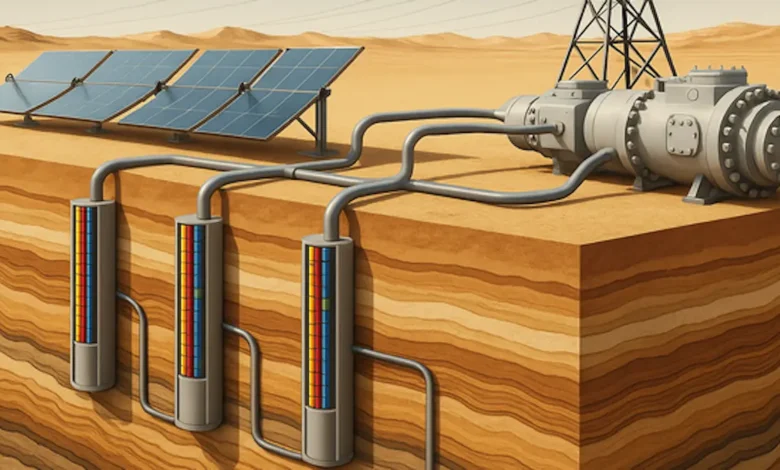
This is where the principle of the borehole battery comes into play. The system basically works like a gigantic underground thermos for electrical energy. When there is an oversupply of solar power, the excess power powers a high-temperature heat pump. A compressor converts the energy into heat. A closed water system then dissipates the heat generated into deep, no longer used boreholes used by the oil and gas industry. The storage temperature in the converted boreholes is limited to around 200 degrees Celsius.
This is how reverse power generation works in the borehole battery
A common misconception concerns the origin of energy. The system does not use natural geothermal heat from deep in the ground, but rather uses the boreholes exclusively as artificial thermal storage containers. If the demand for electricity in the grid increases or solar radiation decreases in the evening, the stored heat drives a generator.
This generates directly available, clean electricity. The process converts the heat back into synchronous alternating current, which can then be fed into the power grid by operators. This transformation is expected to fundamentally change the role of solar energy. Fluctuating surplus electricity becomes a guaranteed and predictable service for the power grid.
The economic value of solar power is no longer measured solely by low production costs, but rather by the timing and flexibility of provision. A concept developed by Geo2Watts called GridValue reflects this economic benefit.
Opportunities and economic hurdles for the new energy storage system
A key advantage of the concept is the reuse of existing infrastructure. The reuse of inactive oil and gas wells enables the use of existing electrical infrastructure. In addition, developers rely on largely tried-and-tested standard components such as AC motors, compressors and heat exchangers.
However, the technology still faces hurdles. The Lazard report does not yet show any definitive evidence that such a thermal storage solution works more cost-effectively than conventional electrochemical battery storage systems.
However, there is some potential for alternative energy storage in these years, as the cost of battery storage has increased again after previous declines. Whether the borehole battery becomes established on the market ultimately depends heavily on local conditions, storage duration and network-related regulations.
Also interesting: