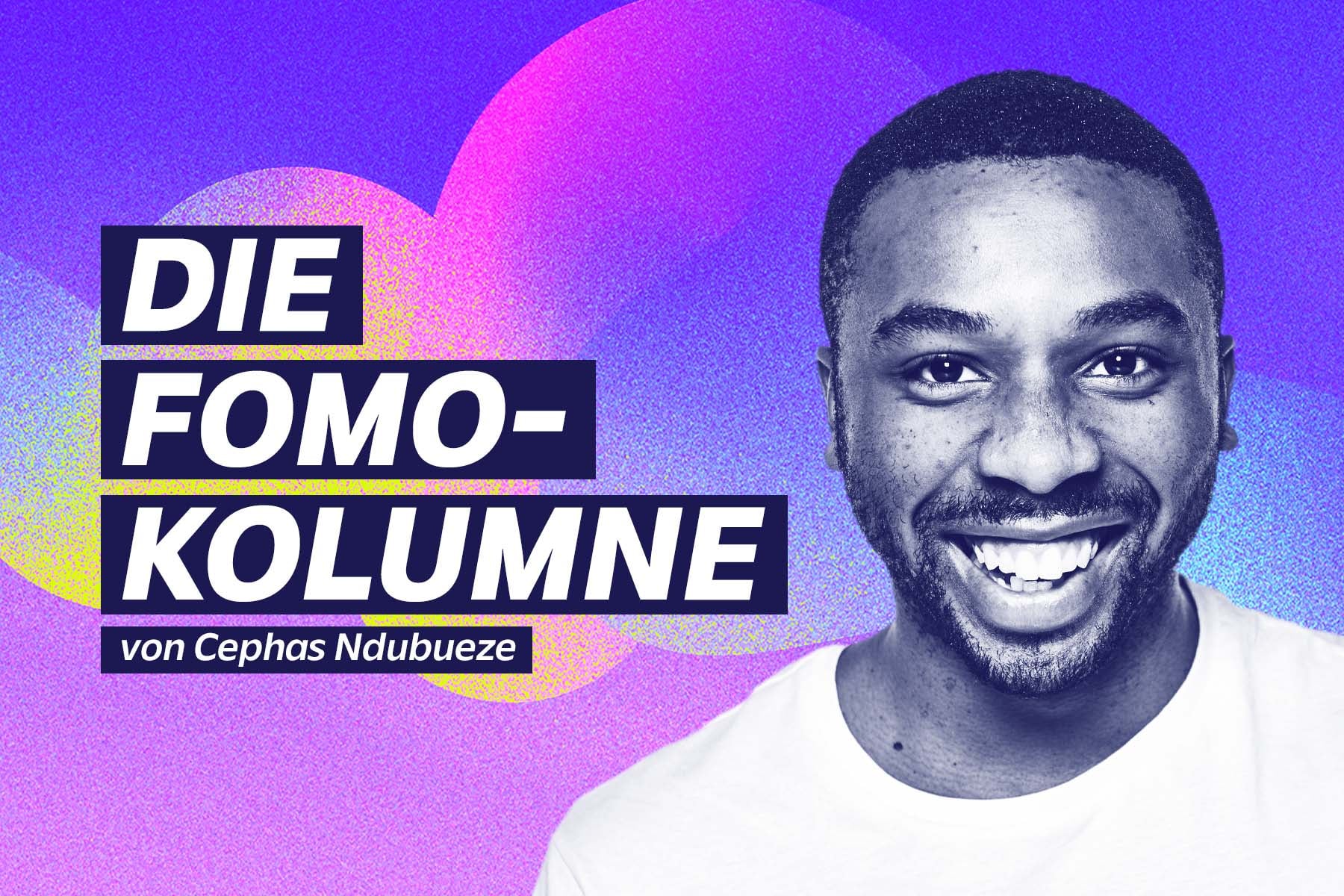
Cephas Ndubueze is the founder of the newsletter and event platform FOMO, which has built a solid community of founders, investors and entrepreneurs in Berlin and Munich. He writes from Cape Town for Gründerszene about life, work and networking between the ocean, open tabs and open minds.
I was lying on the floor. Hidden behind a bush. My hand on my little brother’s mouth so the police wouldn’t hear us. A raid on our village. Nigeria. Nobody knew exactly who they were looking for. But you knew: It’s better not to be seen. Not a founder story. Not a networking anecdote. But reality.
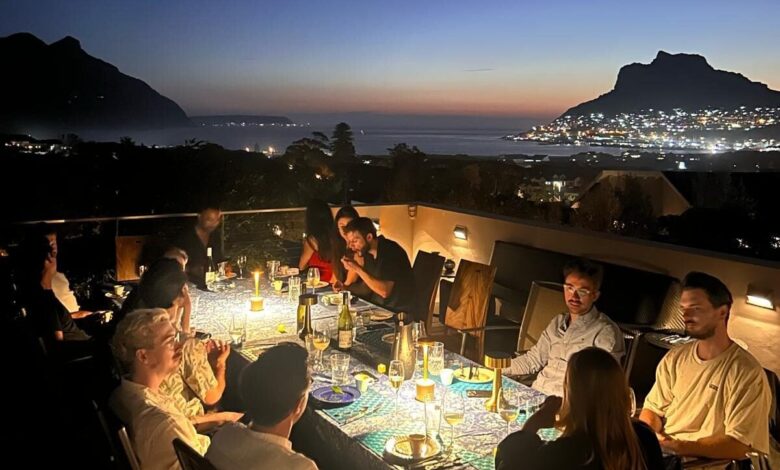
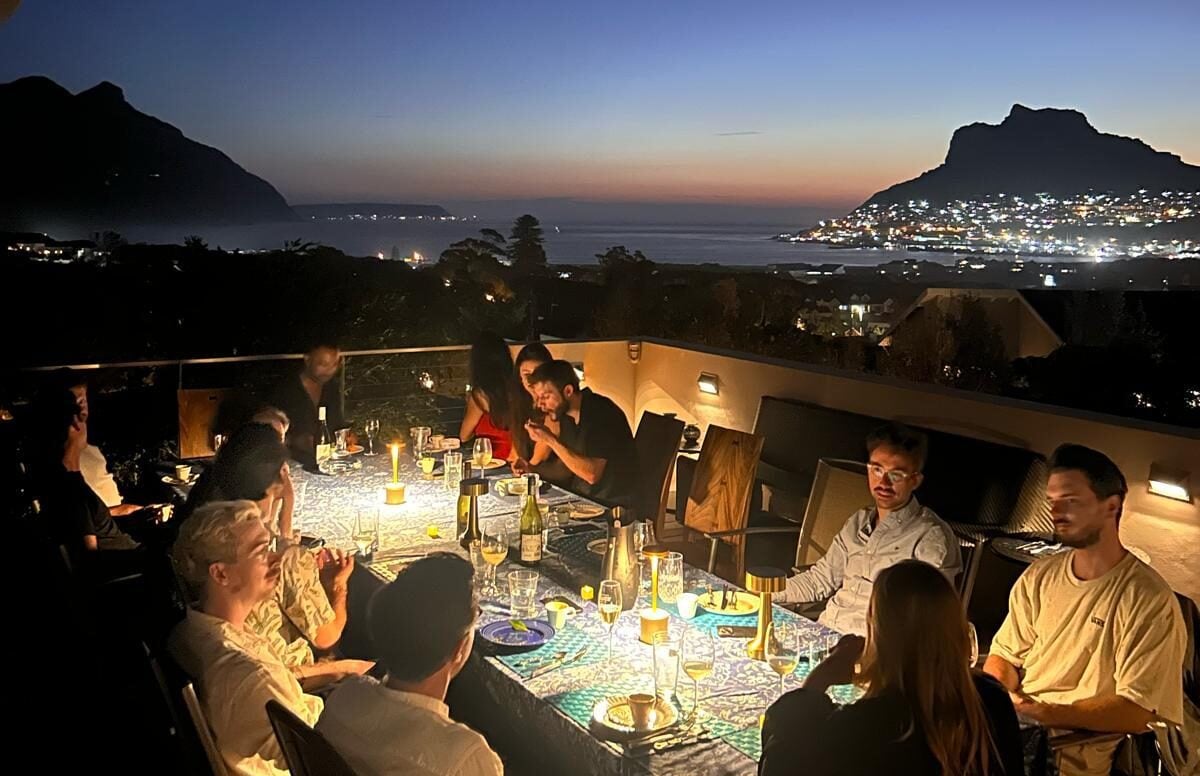
Today I’m sitting in a villa in Cape Town. Infinity pool. Sea view. German founders. investors. Sunset over Clifton. Five kilometers further: Khayelitsha. One of the largest townships in South Africa. Hundreds of thousands of people. High unemployment. Low average incomes. Insecure infrastructure. Five kilometers. Same city. Same sky. Different reality.

The system behind it
South Africa is one of the most unequal countries in the world. The legal minimum wage is the equivalent of a few euros per hour. People work in service, in construction, as drivers, in the informal sector. Without long-term security.
Uber for three euros. Villa service seven days a week. Fine dining at European prices. This works because labor is cheap.
An evening that shows everything
In 2024 I often felt out of place. Fine dining restaurant. Investor dinner. “Where are you going?” – “Upstairs. Dinner reservation.” The view from top to bottom. In the room, white guests sat at the tables, black service staff moved between them. Back then I saw this pattern immediately. It was obvious. Almost tangible.
And suddenly you can’t see it anymore
It was similar in 2026. The rooms have not changed. Neither does the constellation. I just felt it less. And that’s exactly what worries me.
Today I sit at investor dinners, talk about deals, valuations, strategies. I’m fully in conversation. Pool. Discuss. Networks. And only later – sometimes in the bathroom, sometimes on the way home – does this thought occur: Everyone who works here wears my skin color. All. Not 90 percent. Not 95. Not “most.” One hundred percent. And everyone eating, drinking, laughing, talking about investments, sitting at my table and sitting at the other tables is white.
An image without gray areas
It’s not a subtle difference. It’s not a gray area. It’s a clear picture. And what irritates me isn’t the picture itself. It’s that sometimes I can’t see it straight away.
Not because it has changed. But because I’ve gotten used to it. You move around in these spaces long enough and eventually the extreme becomes background noise. You focus on conversations, on opportunities, on performance. You ignore what once immediately caught the eye.
When inequality becomes normal
Maybe that’s adaptation. Maybe survival strategy. Maybe just efficiency.
But the fact that I have to actively remind myself of what lies ahead hits me harder than any single scrutiny ever has.
A good friend, Carmen Hübner, a venture capital lawyer, said after four weeks of her first visit to Cape Town: “I have the feeling we live in a bubble here. We take, take, take – but we don’t get that much of real life.”
In Berlin you open the front door and find yourself in everyday life. There is no clearly drawn line between scene and reality. In Sea Point, on the other hand, there is a matcha shop next to the next Pilates studio, a coworking space next to the next design café. You move between an ocean view and a networking dinner, between the gym and a sundowner. Everything feels easy. Curated. Almost like an extended conference.
Until the trash is put out. And suddenly there are people on the street looking through the bins. Concentrated. Quiet. Systematic.
My story doesn’t stop here
I come from Nigeria and grew up in Germany as an immigrant child. Today I am a founder between Berlin and Cape Town. I don’t know poverty from studies, but from my family.

In Nigeria, my cousins were only allowed to wear their shoes to church on Sundays so they would last longer. Barefoot during the week. Many children in the village had this bloated stomach, this silent sign of malnutrition that no one comments on because it has become normal.
Poverty looked different in Germany, but it was there. There were days when the apartment stayed dark because the electricity bill hadn’t been paid. Candles on the kitchen table. Refrigerator off. You think twice about opening the door to keep the cold in. Or those letters with red borders in the mailbox that you don’t fully understand as a child, but you can tell by the mood: This is serious.
Between two worlds
Today I know capital. Investor dinner. Term Sheets. Reviews. People for whom five-figure amounts are a tactical decision. Of course I move in these spaces.
I know: the world is unfair. Not abstract. Specifically. Biographical. And I also know how easy it is to get used to inequality. How quickly extremes become context. How poverty seems normal when you live in it – and how wealth seems normal when you are surrounded by it long enough.
The question is not: Is this fair? It never was. The question is: what do we do with this knowledge?
Nobody will save this country
We don’t have to save South Africa. Neither can we. But when we are here. When we benefit. When we build networks. Then we can at least be aware.
When I write this, you might think: Now we should all do more. Give more. Take on more responsibility. But many have been doing something for a long time. Quiet. No post, no stage, no impact story on LinkedIn. Not every contribution needs visibility to make a difference.
The more honest question isn’t: Isn’t anyone doing anything? But rather: Is what we are doing enough? And even more honestly: is what I’m doing enough?
It would have to be more specific
I am writing this column. I create attention. I bring people together.
But that costs me little risk and hardly any comfort.
Maybe it should be more concrete: not support a project once, but rather on a long-term basis. Don’t just tip, but consciously pay fairly. Don’t just talk about impact, but enable internships, jobs or real access. Not just connecting capital, but also reality.
Doing nothing at all would be most convenient. Then the five kilometers between the villa and the township would not only be geographical – but mental.
Five kilometers. Between the infinity pool and the corrugated iron roof. Between pitch deck and funding application. The route is short. Not the decision.