
From My Kitchen: When Italy Calls (Even in South Carolina)
The kitchen counter is currently a battlefield of flour dust and lemon rinds, which means either Sebastian has been attempting to build a microscopic LEGO city with edible components, or I’ve been cooking. Today, it’s definitely the latter. Pretzel, my 70lb Border Collie Lab mix, is currently doing her best impersonation of a furry, four-legged dustbuster, meticulously patrolling the floor for any stray bits of pasta or chicken that might have dared to escape my pan. She’s surprisingly effective, although I’m fairly certain her “clean-up” operation is entirely self-serving.
Speaking of Italy, it’s funny how a particular scent can yank you straight back to another continent. For me, the aroma of sizzling lemon and garlic in butter instantly transports me back to a small, sun-drenched trattoria nestled on a cobblestone street in Florence. We were there years ago, Sebastian just a little guy, clinging to a slightly chipped ceramic plate of what I swear was the most vibrant pasta I’d ever tasted. The air was thick with the murmur of Italian conversations, the clatter of forks on plates, and the joyous shouts of children playing in the piazza. Sunlight streamed through the open archways, illuminating dust motes dancing in the warmth and highlighting the faded frescoes on the restaurant’s walls. Each dish that emerged from the kitchen felt like a hug – simple ingredients, prepared with reverence. I remember sitting there, feeling the smooth, cool ceramic of my wine glass, a light breeze carrying the scent of blooming jasmine from a nearby courtyard. While waiting for my n8n workflow to trigger a data sync for my latest LEGO automation project later that evening, I jotted down every flavor note I could recall from that meal. It wasn’t just a dish; it was an experience, a memory woven into the fabric of time. And it’s that memory, that feeling of easygoing elegance, that sparked the creation of today’s recipe: a Lemon Butter Pasta with Chicken Piccata, Artichoke, and Capers that manages to capture a piece of that Florentine magic, right here in our South Carolina kitchen.
The Deep Dive: Unpacking Every Layer of Flavor
When you look at a dish like our Lemon Butter Pasta, it’s easy to get lost in the overall picture. But really, it’s a masterclass in how individual components, thoughtfully prepared, build something truly special. Let’s talk about how each piece plays its part, leading to a meal that’s both comforting and undeniably sophisticated.
First, there’s *the pasta*. This isn’t just a vehicle for sauce; it’s a foundation. For a dish with the robust presence of chicken, you want something substantial. We’re aiming for fettuccine that’s slightly more toothy than usual – a good, firm *al dente* texture that stands up to the weight of the meat without dissolving into submission. This extra bit of chew provides a satisfying counterpoint to the softer elements of the dish.
Then, we turn to *the chicken*. While a traditional piccata often conjures images of a crispy, golden-brown crust, our interpretation for this specific presentation leans into a different kind of perfection. We start with a light flour dredging. This isn’t primarily for crispness here; Rather, the flour serves a dual purpose. It helps to seal in the chicken’s moisture, keeping it incredibly tender, and crucially, it contributes to the luxurious consistency of our sauce. As the chicken gently poaches within the vibrant lemon-butter emulsion, that delicate flour coating dissolves into the sauce, creating a smooth, almost silken surface on the chicken itself, contributing to its tender interior while ensuring the sauce achieves a velvety coating.
And *that sauce*? Oh, that’s where the magic truly happens. This isn’t just a watery broth; it’s a glossy, rich emulsion. The butter and bright lemon combine with the savory pan drippings – what chefs call ‘fond’ – creating a concentrated flavor base. A splash of pasta water or white wine is then introduced, not just to thin it, but to bind everything together into a sauce that’s thicker and more clinging than your standard lemon-butter preparation. It’s designed to hug every strand of pasta and every piece of chicken, ensuring every bite is infused with its bright, tangy richness.
Finally, we have *the accents*: the artichokes and capers. These aren’t just garnishes; they’re essential flavor and texture contributors. The capers, small as they are, deliver a briny, salty snap that cuts through the richness of the butter and brightens the lemon notes. They’re like tiny flavor bombs. The artichoke hearts, with their meaty, slightly fibrous texture, add another layer of substance and a subtle earthy sweetness that complements the chicken beautifully. You get a dual-pop experience: the sharp burst of the caper and the yielding heart of the artichoke, all working in harmony.
If you can’t find quality artichoke hearts, you can absolutely substitute with some roasted asparagus spears or even sun-dried tomatoes for a different but equally compelling flavor profile – just don’t tell my German grandmother; she believes in absolute adherence to the original recipe, especially if it involves a carefully sourced vegetable!
Technique & Context: Mastering the Mediterranean Mingle
Achieving a dish that tastes complex yet feels effortless relies on a few core techniques. It’s not about being a professional chef; it’s about understanding the ‘why’ behind each step, much like debugging a tricky piece of code.
Pro tip for the stove: The biggest mistake I see folks make with delicate sauces like this is rushing the process or overheating the pan. For our chicken, after its light flour dusting, you want to cook it gently. If you’re using a stainless steel pan, ensure it’s adequately preheated but not smoking. Too high a heat will brown the flour too quickly, potentially burning it before the chicken has a chance to cook through or before the sauce can develop that smooth consistency. We’re aiming for a gentle sizzle, not an aggressive sear, particularly when you’re building a sauce that will finish the cooking process.
For the chicken, medium-low to medium heat is key. This allows the chicken to cook through gently while the flour slowly integrates into the developing sauce, contributing to that desired smooth, silken surface rather than a harsh, crispy crust. It prevents scorching and ensures the butter doesn’t burn, keeping the lemon flavor bright and pure. For the sauce itself, a gentle simmer is crucial. Too high, and your emulsion can break, leaving you with greasy butter and separated liquid.
For our chicken, once it’s gently cooked and out of the pan, letting it rest for a few minutes allows the juices to redistribute, ensuring every slice is incredibly tender. For the pasta, cooking it truly al dente and then immediately incorporating it into the sauce with a splash of pasta water is like giving it a brief “rest” and a warm, flavorful embrace, allowing it to fully absorb the sauce without becoming mushy. It’s all about respecting the ingredients’ intrinsic qualities.
Common pitfalls:
- Overcooking the Chicken: This is the cardinal sin. Chicken breast cooks quickly. Keep an eye on it. The goal is tender, juicy pieces, not dry, rubbery ones. The gentle poaching in the sauce helps prevent this.
- Burning the Butter/Garlic: Butter has a low smoke point. If your pan is too hot, the butter will brown too quickly, turning bitter. Same for garlic – a light golden hue is great, dark brown is bad news.
- Under-Salting the Pasta Water: Think of the pasta as the first layer of seasoning. Generously salting your pasta water ensures the noodles themselves are flavorful from the start.
- Skipping the Pasta Water: That starchy, cloudy water from cooking the pasta is liquid gold for your sauce. It helps emulsify the butter and lemon, making it cling beautifully to the pasta. Don’t drain it all away!
- Overloading the Pan: If you’re cooking a lot of chicken, do it in batches. Crowding the pan lowers the temperature, steaming the chicken instead of allowing it to develop that subtle texture.
The Hero Shot: A Visual Feast, Exactly As It Appears
And now, for the moment of truth, the culmination of our kitchen endeavors: the finished dish, laid out with a truly Luminous Mediterranean Flair. This isn’t just food; it’s a picture painted with flavor.
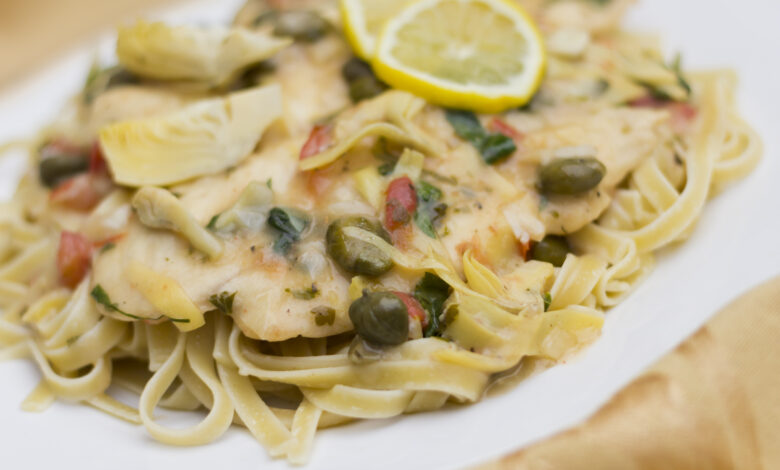
Look closely at that chicken. Far from boasting a conventional golden-brown crust, it reveals a smooth, silken surface. This is a direct result of its tender poaching within the luxurious lemon-butter sauce, a technique that ensures unparalleled moisture and a delicate texture. You can almost see the way the sauce glazes the chicken, giving it a gentle sheen. This isn’t about high-heat searing; it’s about a calm, controlled environment where the chicken slowly absorbs the flavors of its rich bath. To achieve this specific look – that smooth, silken surface instead of a crispy one – you want to ensure your flour-dusted chicken pieces are not aggressively seared. Instead, a gentle sauté over medium-low heat for just a minute or two per side to develop a slight film, then allowing them to finish cooking directly in the simmering lemon-butter sauce. This method prevents browning while encouraging the flour to thicken the liquid, resulting in the beautifully tender, poaching-style finish.
The fettuccine noodles themselves possess a delicate, al dente texture. They’re artfully draped in the vibrant sauce, each strand individually coated, rather than exhibiting any crisp ‘crust’ that might come from over-reduction or too much direct heat at the end. The sauce, a lovely pale yellow from the butter and lemon, shimmers, clinging perfectly to every noodle and piece of chicken, punctuated by the bright green of fresh parsley and the darker, briny notes of the capers and artichokes. It’s an inviting, warm hue, hinting at the sun-drenched flavors within.
Day Two Deliciousness: Storage & Reheating
Let’s be honest, sometimes the best part of a great meal is the anticipation of leftovers. But for this dish, preserving that smooth chicken and al dente pasta takes a little finesse.
Storage: Once cooled, transfer the pasta and chicken to an airtight container. Keep the sauce with it – don’t try to separate it. This keeps everything moist and prevents the pasta from drying out. It’ll keep beautifully in the fridge for up to 3 days.
Reheating: Avoid the microwave if you can. It tends to dry out chicken and make pasta mushy. Instead, reheat gently on the stovetop. Add a splash of chicken broth, water, or even a little extra lemon juice to a pan over medium-low heat. Add your leftovers and gently stir, allowing the sauce to loosen and warm through. The goal is to bring it back to temperature without overcooking the chicken or breaking down the pasta texture. You might even want to add a tiny knob of fresh butter at the very end to revive that glossy, luminous Mediterranean flair.
A Taste of Home, Wherever You Are
And there you have it. A dish that brings a piece of Florence to my South Carolina home, a little piece of sunshine on a plate. It’s more than just a recipe; it’s a memory, a feeling, and a perfectly balanced meal that I hope finds its way into your kitchen, too. Cooking, for me, is about creating those moments, those simple pleasures that remind us of places we’ve been, or places we dream of going. And sharing it with you all, well, that’s just grave. Or in this case, a luscious lemon-butter sauce.
Pretzel sends a happy ‘woof’ – she’s thoroughly cleaned the floor and is now eyeing Sebastian’s empty plate with intense focus.
What’s a specific travel memory that you’ve tried to recreate in your own kitchen? Share your stories in the comments below! I’d love to hear them.
Warmly,
Michael