Jamaica, Angola and Brazil Forge New Tourism Alliance as Bartlett Leads Afro-Atlantic Travel Bridge

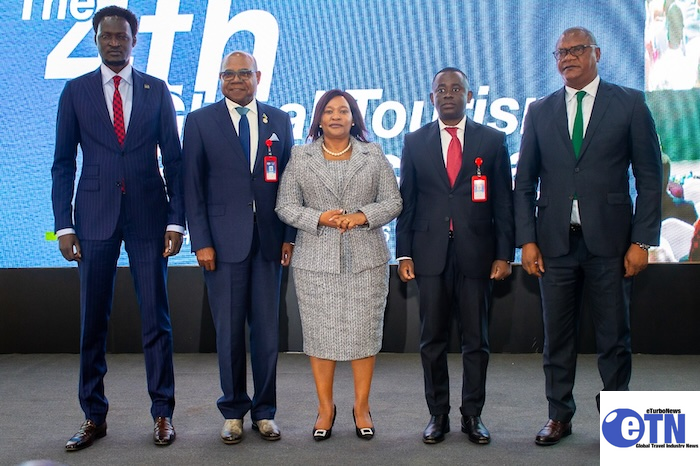
Berlin, Germany — At the just-concluded ITB Berlinthe world’s largest travel trade exhibition, global tourism leaders gathered to discuss trends, partnerships, and the future of travel. Among the many destinations vying for attention, one African nation emerged as the undeniable star: Angola.
Yet the spotlight in Berlin did not shine on Angola alone. Sharing center stage was Edmund Bartlettthe long-serving tourism minister of Jamaicawhose strategic diplomacy and geopolitical awareness are increasingly shaping a new tourism corridor connecting Africa, the Caribbean, and Latin America.
For many observers at ITB Berlin, the conversations unfolding between Angola and Jamaica symbolized something larger than bilateral cooperation. They reflected a deliberate effort to reshape global tourism flows, linking regions bound by centuries of shared history, culture, and diaspora — but until recently, limited direct tourism collaboration.
Angola Takes the Spotlight at ITB Berlin
Angola’s presence at ITB Berlin drew significant attention from travel executives, policymakers, and investors. With its vast Atlantic coastline, diverse ecosystems, and emerging hospitality sector, the country is increasingly positioning itself as one of Africa’s most promising tourism frontiers.
Delegates highlighted Angola’s potential for eco-tourism, heritage travel, and luxury coastal experiences. For Angola, tourism represents an important avenue to diversify its economy beyond natural resources while showcasing the country’s rich cultural identity and natural beauty.
But Angola’s prominence in Berlin also aligned closely with a broader geopolitical tourism strategy emerging from Jamaica — one that seeks to link historically connected regions across the Atlantic.
Bartlett’s Vision: Tourism as Geopolitical Strategy
Few figures in global tourism carry the longevity and influence of Edmund Bartlett. As one of the world’s longest-serving tourism ministers, Bartlett has built a reputation not only as a promoter of Jamaica’s tourism industry but also as a strategist who understands the geopolitical power of travel.
At ITB Berlin, Bartlett’s meetings with African counterparts reinforced a long-standing objective: building a tourism bridge between Africa and the Caribbean — two regions deeply connected through history, culture, and diaspora.
For Bartlett, tourism is more than visitor arrivals and hotel development. It is a diplomatic instrument capable of strengthening cultural ties, economic exchange, and political cooperation.
His approach has been deliberate and incremental. Rather than relying solely on traditional tourism markets in North America and Europe, Jamaica has been expanding partnerships with emerging tourism economies in Africa and Latin America. The goal is to create new travel routes, shared marketing strategies, and institutional frameworks that connect these regions.
Jamaica and Angola: A New Trans-Atlantic Tourism Partnership
A key development at ITB Berlin was the meeting between tourism ministers from Jamaica and Angola, where discussions focused on expanding bilateral cooperation.

Central to these talks was the establishment of a Global Tourism Resilience and Crisis Management Centre in Angola — an initiative pioneered by Jamaica to strengthen the tourism sector’s ability to withstand crises ranging from natural disasters to pandemics.
The Global Tourism Resilience and Crisis Management Centrefirst launched at the University of the West Indieshas evolved into a global network with satellite centers in various regions. The proposed Angolan center would mark another step in expanding the initiative across Africa.
Ministers also discussed convening a historic summit of Caribbean and African tourism ministersbringing policymakers from both regions together to coordinate tourism policies, air connectivity strategies, and investment opportunities.
Such a summit could lay the groundwork for a new trans-Atlantic tourism corridor — one that reimagines the Atlantic connection as a platform for future collaboration.
Building Bridges Beyond Language Barriers
One of the most striking aspects of Jamaica’s expanding tourism diplomacy is its reach beyond traditional linguistic alliances.
While many Caribbean partnerships with Africa have historically focused on English-speaking nations, Bartlett’s outreach to Angola — a Portuguese-speaking country — reflects a broader strategy.
This linguistic expansion aligns naturally with Jamaica’s growing engagement with Brazilthe largest Portuguese-speaking nation in the world and a tourism powerhouse in Latin America.
By linking Angola, Brazil, and Jamaica, Bartlett’s vision creates a triangular tourism partnership across the Atlantic.
Such a network could enable:
- Cultural tourism exchanges rooted in Afro-Atlantic heritage
- Multi-destination travel packages linking Africa, the Caribbean, and South America
- Tourism investment flows across the three regions
- Expanded airline connectivity
In effect, Jamaica is positioning itself as a gateway between these continents.
Expanding Partnerships Across Africa
Angola is only one piece of Jamaica’s broader African tourism strategy.
Over the past several years, Jamaica has forged tourism partnerships with numerous African states, including:
- Rwanda
- Nigeria
- Zimbabwe
- Ghana
- Kenya
- South Africa
These partnerships emphasize knowledge sharing, tourism policy cooperation, and joint destination marketing.
African countries are investing heavily in tourism infrastructure, while Caribbean destinations like Jamaica have decades of experience in building globally competitive tourism industries. The collaboration between these regions therefore offers practical benefits in training, destination management, and crisis preparedness.
Sierra Leone Partnership and a New Resilience Center
Global Tourism Resilience and Crisis Management Center – GTRCMC – Global Tourism Resilience and Crisis Management Center – GTRCMC
A particularly significant milestone occurred earlier this year when the tourism minister of Sierra Leone visited Jamaica.
The visit resulted in the signing of a Memorandum of Understanding designed to facilitate cooperation in tourism policy development, training, and destination marketing.
One major outcome will be the establishment of another Global Tourism Resilience Center in Freetownscheduled for inauguration in November 2026.
The center will focus on research, crisis preparedness, and tourism sustainability — strengthening Sierra Leone’s capacity to respond to global challenges while deepening institutional cooperation with Jamaica.
Kenya Hosts Historic Global Tourism Resilience Day
The collaboration between Jamaica and Africa reached another milestone in February 2026 Kenya hosted the first African observance of Global Tourism Resilience Day.
Held at the Kenyatta International Convention Centre in Nairobithe three-day event from February 16–18 drew more than 1,400 participants from 15 African countries.
Hosted by Kenya’s Ministry of Tourism and Wildlife under the leadership of Rebecca Mianoand supported by Kenyatta Universitythe conference brought together policymakers, academics, and tourism industry leaders.
Five African tourism ministers participated in the gathering, signaling growing political support for deeper cooperation between Africa and the Caribbean.
Diaspora, Culture, and Tourism
Beyond economics, the partnership between Africa, the Caribbean, and Latin America carries deep cultural significance.
Jamaica — globally associated with reggae music and cultural icons such as Bob Marley — shares profound historical ties with Africa and Brazil through the African diaspora.
Tourism cooperation offers a powerful opportunity to celebrate these shared roots through heritage tourism routes, cultural festivals, academic exchanges, and artistic collaborations.
These initiatives would not only attract visitors but also strengthen people-to-people connections across continents.
A Multicultural Tourism Narrative
This expanding Afro-Caribbean–Latin American collaboration also carries significant marketing potential for Jamaica’s traditional visitor markets. By positioning itself at the crossroads of African heritage, Caribbean creativity, and Latin American cultural vibrancy, Jamaica is developing a distinctive multicultural tourism narrative that can resonate strongly with its largest inbound markets in the United States and Canada.