
Real estate for stocks: A tech investor is offering his $4.8 million mansion in exchange for shares in AI startup Anthropic.

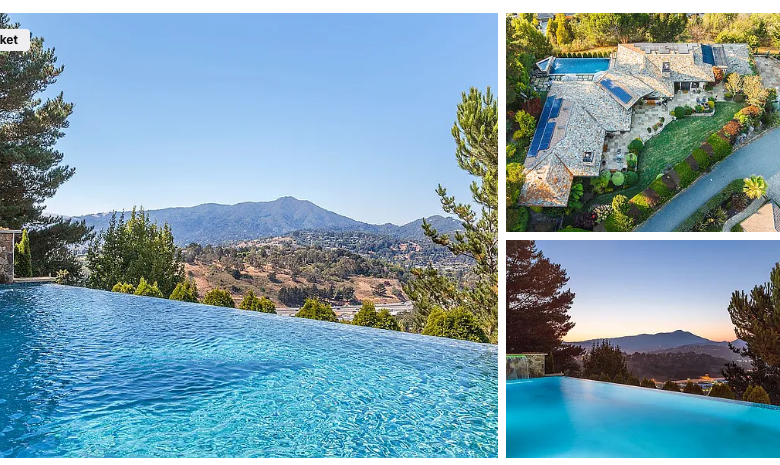
The hunt for the increasingly scarce shares in the AI startup Anthropic is taking on increasingly absurd features: In the past few weeks, demand has increased so much that a tech investor is now even offering his fully furnished property (worth $4.8 million) in Marin County for exchange – including an infinity pool and a view of the San Francisco skyline. The deal: Anthropic shares instead of money.
“When you go fishing, you have to put a worm on the hook,” said Storm Duncan, founder and managing partner of Ignatious, a boutique investment bank specializing in technology, in an interview with us. “What’s my other option? Not being there?”
Villa is specifically offered to AI employees
The offering comes as Anthropic’s valuation in secondary markets has risen to $1 trillion (around €900 billion), driven by investors excited by the rapid sales growth and momentum surrounding AI-powered programming assistant Claude Code.
Duncan, who lives primarily in Jackson Hole, Wyoming, also owns other properties, but he decided to put this one up for sale because he thought it would be particularly attractive to Anthropic employees. “It’s only a 20-minute drive to the Anthropic offices in town,” he said. “Probably no one from Anthropic wants my properties in Miami or Jackson Hole.”

By offering the property, the tech banker hopes to attract attention from employees who have salable shares and a goldmine of Anthropic shares that they can only sell after the company goes public.
Since the offer was published via Zillow, an online real estate marketplace in the United States, he has already received several messages from interested parties. “Some of them are [Anthropic]employees, and others just invested early,” says Duncan. “I think they’re serious, but it’s a complex transaction.”
“There are probably a lot of people sitting in a one-bedroom apartment in San Francisco even though they make $400,000 a year and are worth $100 million,” he says. “But they can’t access it because their stocks are so illiquid, so this gives them an opportunity to diversify.”
When benefits in kind in the tech boom are suddenly worth millions
This is not the first time that there has been an unconventional way to secure shares in tech companies before going public. In 2005, artist David Choe chose Facebook stock instead of $60,000 in cash to paint murals in Facebook’s first office. This decision resulted in an estimated profit of about $200 million when Facebook went public in 2012.
In the dot-com era, some real estate owners asked startups for company stock in exchange for leasing space in San Francisco.
Read too

Exchange offer causes mockery of X
On X, Duncan’s offer is sometimes dismissed as a publicity stunt or a sure sign of the peak of a bubble. Other commentators have joked that the only thing more valuable than Anthropic stock is Bay Area real estate.
Duncan emphasizes that the offer is genuine and that he is not looking for attention. When asked why he didn’t simply buy shares in the company, he replied that a small investor like him could never secure shares directly. “Anthropic can’t waste time on people like me,” he says. “They’re looking for people who can write a check for $100 million.” (The company did not respond to a request for comment.)
The alternative would be to buy shares from early employees or investors on secondary markets. But Duncan believes that such deals are often increasingly dubious. He says the shortage of shares in the secondary market has led to sellers offering deals that can come with high fees and opaque ownership.
Read too

Duncan already owns shares in Anthropic, which he acquired in the 2024 financing round when it was much easier to get shares.
Only recently he was convinced to double his efforts – he was impressed by the results of implementing Claude Code in his company. “This will probably triple our throughput and reduce our costs by 50 percent,” he said. “When I started implementing the platform in my own company, I said to myself that I wanted to get more involved with it.”