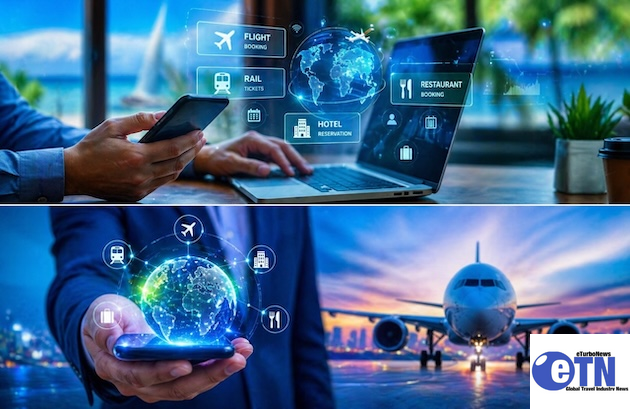
The travel industry has always evolved alongside technology, but in 2026 the transformation feels deeper and more consequential than at any previous point in modern tourism history. This is no longer simply about faster searches, online bookings or digital boarding passes. Travel itself is being reengineered into a frictionless, data-driven experience where artificial intelligence, biometrics, and mobile integration quietly remove barriers at every stage of the journey.
What once required travel agents, paper tickets, and hours of planning can now be completed in minutes through intelligent platforms that understand preferences, predict behavior, and adapt in real time. The result is a travel ecosystem that is faster, smarter and more personalized than ever before.
At the center of this transformation is the modern traveler.

Regional and Sectoral Analysis
WTTC provides comprehensive guidance and forward-looking insights into the opportunities presented by key technologies, from artificial intelligence (AI) to the future of mobility.
The Rise of the Digital Traveler
Today’s traveler begins not with a brochure or travel office, but with a smartphone screen. Within seconds, destinations, hotels, and flights are compared, reviewed, and priced dynamically across multiple platforms. Artificial intelligence-powered recommendation systems now curate suggestions based on browsing behavior, spending patterns, loyalty profiles, and even previous travel history.
Travel discovery has become visual, immediate, and highly personalized. Social platforms, immersive video content, and AI-assisted search tools increasingly influence decisions before a booking is even made.
Research from the travel sector shows that AI-driven personalization is rapidly becoming a standard expectation rather than a luxury, with travel operators accelerating investment in predictive and automated customer experiences.
The modern traveler is informed, empowered and increasingly spontaneous. Weekend escapes are booked hours before departure. Multi-country itineraries can be generated instantly. Travel planning has shifted from a slow administrative process into a fluid digital interaction.
Artificial Intelligence Becomes the Industry’s Operating System
Artificial intelligence is now the engine powering much of global travel.
AI platforms are capable of building complete itineraries tailored to individual preferences, whether travelers seek luxury, sustainability, adventure, or efficiency. A traveler planning a European rail journey, for example, can now receive a fully optimized itinerary integrating transport, accommodation, dining, and local experiences in seconds.
These systems do more than recommend destinations. They analyze weather conditions, event calendars, seasonal demand, and historical pricing patterns to build smarter travel options. Increasingly, AI also adapts during the trip itself, automatically suggesting alternatives when disruptions occur.
Industry analysts note that generative AI is transforming trip planning, customer service, and operational management simultaneously, making travel experiences more predictive and seamless.
For airlines and hotels, AI is improving efficiency behind the scenes as well. Predictive maintenance systems identify potential aircraft issues before they become operational problems, reducing delays and cancellations.
Meanwhile, AI-driven customer service tools now handle booking changes, flight disruptions, and multilingual support instantly, reducing wait times and improving responsiveness.
Dynamic Pricing and Real Time Commerce
Pricing has evolved just as dramatically.
Airlines, hotels, and travel platforms increasingly use sophisticated revenue management systems powered by machine learning. These systems continuously adjust pricing based on demand, seasonality, booking behavior, competitor activity, and external factors such as weather and major events.
For travelers, this creates opportunities to secure better value through flexible timing and real-time offers. For suppliers, it allows more efficient inventory management and improved profitability.
Dynamic packaging has also become more advanced. Flights, hotels, transfers and experiences can now be bundled instantly according to traveler profiles and budgets, eliminating much of the complexity traditionally associated with trip planning.
The result is a travel marketplace that behaves less like a static catalog and more like a constantly adapting digital ecosystem.
eSIM Technology Quietly Ends a Major Travel Frustration
Connectivity, once one of international travel’s greatest inconveniences, has largely been solved through the rapid adoption of eSIM technology.
Travelers moving between countries no longer need to search for local SIM cards or pay excessive roaming fees. Instead, mobile connectivity can be activated digitally within minutes across multiple destinations.
For frequent travelers and digital nomads, this innovation has become essential. It allows uninterrupted access to maps, mobile payments, translation tools, messaging platforms, and airline apps throughout a journey.
Though less visible than AI or biometrics, eSIM technology may be one of the most practical travel innovations of the decade because it removes a persistent point of stress that travelers faced for years.
Airports Become Frictionless Digital Gateways
Nowhere is the technological transformation more visible than at airports.
Biometric systems are rapidly replacing traditional identity verification procedures. Facial recognition, digital identity wallets, and automated border systems are streamlining check-in, security, and boarding processes across major international hubs.
Airports increasingly operate as intelligent ecosystems where passenger movement is optimized through real-time analytics, predictive operations centers, and sensor-driven infrastructure.
Industry trials in Asia and Europe have already demonstrated interoperable digital identity systems that allow passengers to move across international journeys with minimal document handling.
For travelers, the impact is immediate. Shorter queues, fewer manual checks and faster boarding processes create a calmer and more efficient airport experience.
The United States has expanded facial recognition-based security systems across dozens of airports, while hubs such as Singapore Changi and Dubai International continue investing heavily in biometric processing and AI-assisted passenger flow management.
The airport of 2026 increasingly resembles a connected digital environment rather than a conventional transport terminal.
Mobile Integration Places the Entire Journey in the Traveler’s Hand
Airlines have embraced mobile technology as the central interface for modern travel.
Boarding passes, baggage tracking, gate changes, upgrades and disruption notifications are now managed almost entirely through mobile apps. Travelers receive continuous real-time information throughout the journey, reducing uncertainty and improving control.
Mobile ecosystems also integrate loyalty accounts, payment systems, airport navigation and customer support into a single platform.
For airlines, these systems improve operational efficiency and reduce staffing pressure. For passengers, they create a more transparent and responsive experience.
The unpredictability that once defined air travel is gradually being replaced by intelligent communication and automation.
Hotels and Restaurants Embrace Contactless Hospitality
Hotels and restaurants are undergoing a parallel transformation.
Digital check-in, mobile room keys, and app-based concierge services are now becoming standard across major hotel brands and urban destinations. Guests can bypass traditional front desk queues entirely, accessing rooms and services directly from their phones.
Hospitality technology now extends deep into the guest experience. Smart room systems automatically adjust lighting, temperature and entertainment preferences based on guest profiles and loyalty data.
Restaurants are also embracing digital integration through QR menus, mobile ordering and contactless payment systems that streamline service while reducing operational friction.
These technologies are particularly popular among younger travelers who increasingly expect convenience, speed and personalization as part of the standard travel experience.
Loyalty Programs Enter the Platform Economy
Loyalty programs have evolved far beyond traditional mileage schemes.
Today’s rewards ecosystems are deeply integrated across airlines, hotels, banks, ride-sharing services, and travel platforms. Travelers can earn, transfer, and redeem points across multiple providers through connected digital wallets and apps.
Artificial intelligence is also personalizing reward offers according to spending behavior and travel preferences, increasing engagement and customer retention.
Physical membership cards and printed confirmations are rapidly disappearing as loyalty systems move fully into mobile ecosystems.
Smart Luggage and Connected Travel Gear
Travel technology now extends beyond the booking process into physical travel equipment itself.
Smart luggage equipped with GPS tracking, charging ports, digital locks, and integrated weight sensors is becoming increasingly common among frequent travelers.
Although baggage mishandling still occurs, real-time tracking has significantly improved recovery rates and reduced traveler anxiety. Travelers can monitor luggage movements directly through airline and baggage apps, adding transparency to a process that was once highly uncertain.
The integration of connected devices into travel gear reflects a broader trend toward fully digitized mobility.
Sustainability Moves From Marketing to Operational Reality
Technology is also reshaping how the industry approaches sustainability.
Airlines are using AI to optimize routes, reduce fuel consumption, and minimize environmentally damaging risks.
Hotels increasingly rely on smart energy systems that adapt heating, cooling and lighting according to occupancy patterns and environmental conditions. AI-powered waste reduction systems are helping hospitality companies cut food waste and improve operational efficiency.
Airports are investing in decarbonization technologies, renewable energy systems and digitally managed infrastructure to meet increasingly ambitious climate goals.
At the same time, travelers themselves are becoming more environmentally conscious. Digital tools now provide greater transparency around emissions, sustainability practices and eco friendly alternatives.
Industry experts increasingly describe the future not merely as sustainable tourism, but as regenerative travel — experiences designed to actively support communities and restore environments.
The Future of Travel Is Simplicity
The direction of travel technology is unmistakable.
The next era of innovation is not about adding more complexity to the journey. It is about removing friction so thoroughly that technology becomes almost invisible.
Artificial intelligence, biometrics, and mobile integration are converging to create a travel experience where identity, payments, booking, navigation, and customer service operate seamlessly together.
The companies that successfully embrace this transition will define the future of global tourism. Those that fail to adapt risk becoming increasingly irrelevant in an industry now shaped by speed, personalization, and digital trust.
For travelers, the benefits are already clear: fewer queues, smarter planning, better connectivity, and greater control over every stage of the journey.
Travel in 2026 is no longer simply about reaching a destination. It is about creating a smoother, more intuitive experience from inspiration to arrival — and increasingly, technology is making that possible.