
Are we thinking about having a second child? Yes. Every now and then. Some days I can imagine it really well, others not at all, but the thought is there. Sometimes very quietly in the background, sometimes quite present. At the same time, I also realize how much my first pregnancy triggered in me. Not just nice memories, but also a lot of thoughts about how things went differently back then than I would have liked today.
My first pregnancy wasn’t just that magical time of belly rubs, cute baby outfits and cozy nest building. Of course there were moments like that too. But there was also a lot of stress, uncertainty, pressure and this feeling that I had to rearrange my entire life before the birth.
Today, with a little distance and a child in my everyday life, I see many things more clearly. I now know better what was really important and what I made way too difficult for myself.
The family blog on andysparkles

1. I would reduce stress much more consistently
When I think back to my first pregnancy, I immediately think of moving boxes and ImmoScout. Searching for an apartment, planning, appointments, decisions and this constant feeling that everything has to be finished before the baby comes.
Back then, we turned two apartments into one shared apartment. Sounds nice at first, right? Shared home, space for the baby, new phase. In reality, it was just too much. Looking for a new apartment, merging two households, planning furniture, sorting out things, clarifying contracts, organizing a move and being pregnant at the same time. It was a complete life transformation.
I constantly felt like I wasn’t ready. The children’s room, the baby corner, the changing clothes, the hospital bag, the apartment, everyday life. Everything should stand somehow. Today I know: A baby doesn’t need that much in the beginning. It takes closeness, milk, dry diapers, a safe place to sleep and parents who aren’t completely worn out before the birth.
That’s exactly where I would act differently today. I would no longer try to prepare everything perfectly. I would tell myself sooner: It’s enough if half of it happens later. Not everything has to be done before the expected date. And it’s not a personal failure if there’s still a box in the hallway.
Stress during pregnancy is quickly normalized. You just keep functioning because there is so much that needs to get done. But I think today that I should have sorted things out much more strictly. Not with baby clothes, but with tasks. What really has to be? What can wait? What can someone else take over? And what am I doing just because I think that’s how I should do it?
Next time I would protect myself much earlier. Fewer appointments. Less internal pressure. Less I have to do this quickly. Because honestly: being pregnant is a task in itself.

2. I would plan the birth differently
A big point for me was that Choice of maternity hospital. I was very focused on safety back then. It was clear in my head: I absolutely need one Clinic with perinatal center level 1. In case anything happens. For High-risk pregnancies. For maximum medical options. That sounded sensible and reassuring to me.
And yes, safety is of course important. I would never downplay that. If there are medical reasons, then a house like this makes perfect sense. But looking back, I realized that I didn’t really feel comfortable there. It was big, unsettling, very medical and I didn’t have that feeling of security that I would have wanted for a birth.
I think I made my decision very much out of fear at the time. What if something happens? What if I make the wrong decision? What if I later regret not choosing the safest option?
Today I would take a closer look. Not only on the equipment of the clinic, but also on my feeling there. How do people speak to me? Do I feel taken seriously? What is the atmosphere like? Is there enough rest? How is the care during birth? Are individual requests taken into account?
If I didn’t have a high-risk pregnancy, I would probably choose a smaller, quieter house. A birth cannot be planned. I know that very well now. But you can influence the frame. And I would choose exactly this frame much more carefully next time.

3. I would have a nesting party instead of a baby shower
I had a really nice baby shower shortly before the birth, but if I were pregnant again today, I would do it differently. I think I would have had much more from real support back then than from decorations, games and gifts.
That’s why I now find the idea of a nesting party much more appropriate. It’s not about showering the expectant mother with as many baby gifts as possible, but rather about helping in a practical way. For example, sorting baby clothes by size, preparing the changing area, cooking together, putting things away or simply helping out wherever there is a fire.
Especially in your first pregnancy, you often don’t know what to expect. You buy things because others recommend them. You read lists that contradict each other. You want to be prepared, but you end up feeling more overwhelmed.
What I particularly like about the idea: She takes seriously that the time before birth is not only cute and exciting, but also stressful. Help is not seen as weakness, but as something normal. And that’s exactly what I think is so important.
4. I would pay better attention to my diet
This is a point that I hesitated for a long time about whether I should even write it down. Because weight during pregnancy is such a sensitive topic. And because I don’t think anyone should make pregnant women feel guilty. The body does so much during this time. Hunger, nausea, cravings, tiredness, water retention, hormones. This is not a normal everyday life with a bit of a stomach to boot.
Nevertheless, it is part of my truth: I ate a lot during my pregnancy. Really a lot. I was constantly hungry, often for quick, filling things, and it was difficult for me to consistently eat healthy meals. In the end I gained almost 30 kilos.
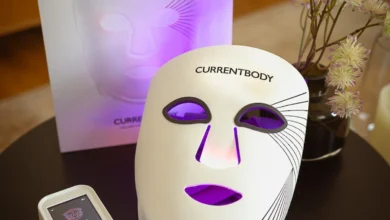
I’m not saying this to beat myself up about it. It was like that. But looking back, I realize that it wasn’t good for me physically. I was heavier, less mobile and at some point had the feeling that I could barely recognize my body. Of course, change is part of pregnancy. But I think I would have felt more stable and comfortable with a different diet. By the way, nutrition is also an important factor for good health Skin care during pregnancy! This is not to be underestimated.
Next time I wouldn’t go on a diet. Absolutely not. But I would make sure that my meals really fill me up and are good for my body much earlier. More proteins, more vegetables, more simple dishes that aren’t complicated. Especially when you’re tired, you don’t need perfect nutrition plans, but rather solutions that work in everyday life.

5. I would consciously take a real break
This is perhaps the point that touches me the most today. I worked until shortly before the birth. Two days before, I shot videos for customers. At the time it seemed somehow normal to me. Be independent, meet deadlines, remain reliable, don’t cancel anything, do everything.
Today I think: Andrea, seriously? I was heavily pregnant. I was facing one of the biggest changes of my life. And instead of really shutting down, I continued to function. I didn’t really take a vacation, didn’t consciously let go, didn’t say: Well, it’s over now. Now I’m just pregnant. Now my body can prepare itself. Now I don’t have to deliver anymore.
That also has a lot to do with it Independence to do. When you are self-employed, there is rarely this clear cut. Nobody automatically says: From now on you’re out. You have to set it yourself. And that’s exactly what I didn’t do well enough.
I think I was afraid of appearing unprofessional. Or miss something. Or disappointing customers. Everyone would probably have understood if I had said earlier: I’m on maternity leave from now on and I won’t take on new projects until later.
Next time I would do it differently. I would set a clear point in time from which I would no longer shoot, accept any new deadlines and not do everything quickly. I would prepare what is important, but not work until the last moment.
Pregnancy is not a disease, that’s true. But it’s also not a normal state in which you just have to carry on doing everything the same as before. The body is constantly working. The head too. And at some point you can take yourself seriously.

What I learned from my first pregnancy
My first pregnancy showed me how much I tend to want to do things on my own. I wanted to be prepared, be strong, be organized, be reliable. And somewhere in between, I often forgot that I wasn’t just working through a list, but that I was having a child.
I would soften a lot of things today. Not to the outside world, but to myself. Less perfection. More help. Less fearful decisions. More gut feeling. Less perseverance. More breaks.
At the same time I also know: You can’t make a pregnancy completely ideal. Something always comes up. The body does its own thing. Life goes on. Relationships don’t suddenly become conflict-free just because you’re pregnant. Work doesn’t get done by itself. And some things you just don’t realize until you’re in the middle of it.
That’s why I don’t want to badmouth my first pregnancy. She led me to my child. And despite all the stress, there were so many moments when I looked at my stomach and thought: Something incredible is really happening.
Only today I would be more careful that I don’t completely drown during this incredible time.
How was it for you? What would you do differently after your first pregnancy?